Table of Contents
Broome County Courts, NY *

Broome County lies in the Southern Tier of New York, with Binghamton being the county seat and administrative center. This means that the majority of governmental and judicial activity takes place here. The county has a well-developed court structure with multiple levels. With about 200,000 people living in Binghamton and nearby towns such as Johnson City, Endicott, and Vestal, there is a wide variety of civil, criminal, family, probate, and local court cases, resulting in a large volume of court records.
In accordance with New York's Public Records Act, Freedom of Information Law (FOIL), almost all of the court documents in Broome County are available to the general public. Individuals who use these records for various purposes include residents, lawyers, title researchers, genealogists, employers, and scholars.
Overview of the Broome County Court System
The courts of Broome County function within the New York State Unified Court System, which the Office of Court Administration oversees at the state level. While Florida has an efficient two-tier trial court system, New York State's court system consists of different types of courts, each with its own jurisdiction over particular case types. As such, records in the Broome County court system may be kept in various courts depending on the type of case.
Broome County belongs to the 6th Judicial District, which comprises the counties of Broome, Chemung, Chenango, Cortland, Delaware, Madison, Otsego, Schuyler, Tioga, and Tompkins. Court proceedings in Broome County are mostly held at the courthouse complex in Binghamton. The Broome County Clerk is responsible for maintaining records in the Supreme Court and County Court, while other courts, such as Family Court and Surrogate's Court, have their own record-keeping systems.
Types of Courts in Broome County, New York
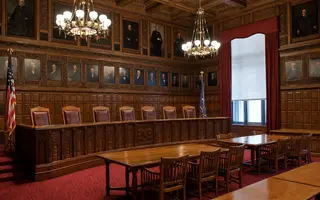
New York State has numerous courts, so locating the appropriate court is the first step when seeking records in Broome County. Each court has its own jurisdiction, generates its own records, and stores them independently.
 Supreme Court
The Supreme Court of the State of New York, 6th Judicial District, is a court of general jurisdiction. It has jurisdiction over major civil suits and indicted felonies in Broome County. Although the name "Supreme Court" may suggest that it is the highest court, it is actually not; the Court of Appeals is the highest in New York. The Supreme Court is just the highest trial court in New York.
Primary Location: Broome County Courthouse
Jurisdiction of the Supreme Court in Broome County includes:
- Major civil actions (dollar limitation is absent)
- Criminal actions that may have been charged in a municipal court
- Felony criminal actions that have been indicted
- Actions to protect the rights and welfare of children
- Equitable remedies and injunctive relief
Supreme Court records are among the most important court records in Broome County. Such records include major civil decisions, divorces, and dispositions of felony cases. The Broome County Clerk keeps these records, which are often requested by attorneys, scholars, and title insurance companies conducting ownership research.
 County Court
The Broome County Court is responsible for hearing felony criminal cases and selected civil cases. The County Court in New York operates in parallel with the Supreme Court and handles the majority of criminal cases in the county.
Primary Location: Family and County Courts Building
County Court jurisdiction covers:
- Felony criminal cases
- Civil cases where amounts are up to $50,000
- Appeals from lower courts, such as the City Court and Justice Courts
County Court records, especially those related to felony criminal cases, sentencing reports, and civil judgments, are frequently requested by employers for background checks, by lawyers for research, and by individual citizens for personal record searches. County Court records can be obtained through the Broome County Clerk.
 Family Court
The Broome County Family Court is an independent court that handles all matters related to family relationships and the well-being of children in the county. The court maintains its own filings and records.
Primary Location: Family and County Courts Building
The family court's jurisdiction includes:
- Child custody and visitation cases
- Child support disputes
- Orders of protection and family offense complaints
- Juvenile delinquency and persons in need of supervision (PINS) cases
- Foster care, adoption, and child abuse and neglect cases
- Paternity proceedings
Access to Family Court records needs special consideration. Though many proceedings are open, some Family Court records are statutorily sealed or confidential, such as proceedings involving juveniles, child abuse and neglect, and adoptions. Anyone interested in accessing Family Court records should contact the Family Court Clerk directly.
 Surrogate's Court
All matters involving the estates of deceased persons and the interests of minors in estate proceedings are dealt with in the Broome County Surrogate's Court. It has its own clerk, its own court records system, and is a specialized court.
Primary Location: Broome County Courthouse
The Surrogate's Court has the following jurisdiction:
- Probate of wills and administration of estates
- Guardianship of minors' property
- Adoptions
- Trust accountings/disputes
Some of the most common records sought by genealogists, title researchers, and families dealing with estate matters are kept at the Surrogate's Court. Wills, letters testamentary, estate inventories, and guardianship orders are all part of the Surrogate's Court record system. The clerk of the court is the custodian of these records.
 Binghamton City Court
Binghamton's City Court deals with the minor issues of both civil and criminal nature that emerge in accordance with the municipal law of Binghamton. As part of the state's unified court system, the City Court is solely concerned with municipal issues.
Primary Location: Binghamton City Hall
Issues handled by the City Court:
- Criminal cases involving misdemeanors and violations
- Civil cases with a limit of $15,000
- Small claims cases with a limit of $5,000
- Landlord-tenant and eviction cases
- Traffic cases inside the city limits of Binghamton
The records from the City Court, such as misdemeanor files, small claims judgments, and eviction files, are often checked by landlords, employers, and the individual litigants. The records are stored in the City Court office and differ from those stored by the County Clerk of Broome County.
 Town & Village Justice Courts
There are 19 local Justice Courts scattered throughout Broome County in places like Vestal, Endicott, Johnson City, and other nearby locations. These courts attend to the smallest, most neighborhood-level disputes and maintain their own case records, distinct from those maintained by Broome County's primary record book.
Primary location: Individual town or village halls throughout the county.
Here are the types of cases that Justice Courts take care of, which are fairly minor:
- Traffic offenses
- Misdemeanor charges
- Small claims cases of up to $3,000
- Issues related to local ordinances
The records of each town or village Justice Court are protected independently, without going through Broome County's Clerk. To obtain records from an individual Justice Court, contact that individual court specifically, as these documents are not available through Broome County's resources.
How to Access Broome County Court Records
New York State allows its citizens to access most of the state's court records. Some exceptions include closed criminal cases, juvenile files, some Family Court proceedings, adoption records, and those records that have been ordered sealed by a court. Accessing these records depends on the type of court and the age of the record.
 Online Access
The New York State Courts Electronic Filing system (NYSCEF) is the main online access portal for electronic civil case records filed in New York State's Supreme and County courts. Case information for civil matters can also be accessed using the eCourts case search portal, where one will find out about case status, filing history, and court appearance dates, among others. To achieve the best search results, try to have a full legal name, index number, or filing year.
 Alternative Online Sources
Official government sources cover many types of cases, but can be complicated to use, especially in instances where one does not know which court or county holds the records. CourtCaseFinder is a private website that compiles public court records from various jurisdictions. Records include case filings, divorces, arrests, and other court proceedings. This platform can be a good place to begin a search, especially in instances where individuals have not identified the court of record.
 In-Person Requests
For certified copies of court records, older court records that have not been digitized, and records from courts not enrolled in NYSCEF, in-person requests should be made. The Broome County Clerk deals with Supreme Court and County Court records, while Family Court, Surrogate's Court, and Binghamton City Court have their own respective clerk's offices. One should provide as much information as possible, such as full legal names, index or case numbers, and filing year, to facilitate faster searches.
 Archived Records
Some older records are only available in hard copy and may be stored at courthouse archives or even at the office of the county historian. If individuals are looking for Surrogate's Court records, older civil judgments, and early criminal cases, among other historical records, contact the relevant clerk's office to identify the exact location of these records.
Court records before 1847 are primarily available at the New York State Archives. They have an extensive collection of over 10,000 cubic feet of trial and appellate court records dating back to the 1660s. If one needs to look for historical cases at the Supreme Court and its predecessors in Broome County before the mid-nineteenth century, start the investigation at the New York State Archives through their court records pathfinder.
For Attorneys and Legal Professionals
Civil actions in Broome County are filed through NYSCEF, New York's required Electronic Filing System for the vast majority of civil actions in the Supreme and County Courts. For lawyers who do not practice in the County, refer to the 6th Judicial District's administrative directives about motion practice and submission requirements. Among other useful practical procedural assistance and attorney references are the New York State Bar Association and the Broome County Bar Association.
Legal practitioners looking for historical records from past proceedings may need to be informed that pre-1847 records are located with the New York State Archives, located in Albany. More contemporary records can be found in the Broome County Clerk when it comes to records filed in the Supreme and County Courts. In cases concerning the Family Court and the Surrogate's Court, there are dedicated clerk's offices in their specific locations.
How to File a Case in Broome County
To file a case in Broome County, the individual should know which court to use, the procedures to follow, and the forms to file. Failure to select the correct court or to complete the proper forms may result in delays, increased costs, or dismissal.
Step 1: Choose the Court
The type of matter and its monetary value determine the appropriate Court for its hearing. For example, serious civil disputes and matrimonial proceedings can be heard by the Supreme Court. Criminal felonies and civil lawsuits up to $50,000 go to the County Court. Disputes involving family matters, such as child custody, spousal support, and juvenile proceedings, will be brought before the Family Court. Probate actions and estate matters fall under the jurisdiction of the Surrogate's Court. Misdemeanors and civil claims up to $15,000 in Binghamton will be decided in the City Court.
 Step 2: Complete Required Forms
The New York court forms are accessible through the New York State Unified Court System's forms portal. Different forms are used for particular courts and types of matters. To prevent rejections at filing, the applicant should carefully read the instructions before completing a form.
 Step 3: File the Case
To initiate the case, one must present the completed forms to the clerk of the appropriate court. All major civil matters in the Supreme and County Courts can now be filed through NYSCEF. However, there is still an opportunity to file these matters in person at the Broome County Clerk's office.
 Step 4: Pay Filing Fees
Depending on the court and the type of case, filing fees vary. For Supreme Court civil index numbers, they start from about $210. Index numbers at other levels also have specific fee schedules, payable upon filing. If the fees are high and difficult to pay, the individual may apply to proceed as an impoverished person under CPLR Section 1101. It will enable a waiver or deferment of the fee.
 Step 5: Serve the Other Party
For the case to proceed, the other party must be officially notified by service of process under the Civil Practice Law and Rules. It needs to be done by an adult who is not a party to the action. An affidavit of service needs to be submitted to the court clerk as evidence of this procedure. Any hearings or default proceedings can occur only after such evidence has been received.
 Step 6: Monitor the Case
Once the case is opened, it is possible to track its progress, upcoming hearing dates, and orders entered in the case using the index or case number allocated through eCourts. It is important to keep track of docket actions to help stay informed about orders entered between hearings.
Broome County Courthouse Directory
Court functions in Broome County take place mainly in Binghamton at the local courthouse. Here, city courts function together with the separate town and village Justice Courts.
Broome County Courthouse, Binghamton
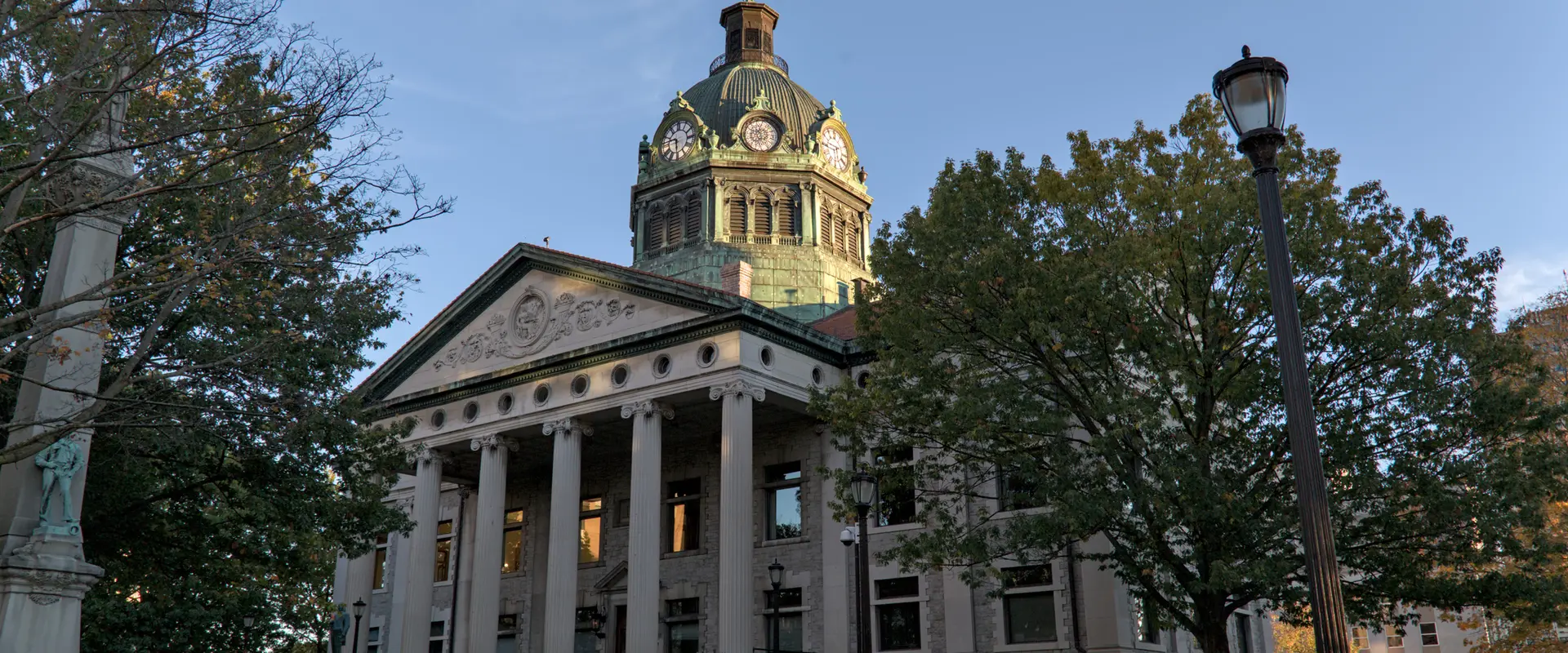
Home to the four most important courts of Broome County: the Supreme Court and County, Family, and Surrogate Courts. The County Clerk's office in the Broome County Courthouse building maintains files of all cases heard in the Supreme and County Courts.
Binghamton
Address: 92 Court St, Binghamton, NY 13901
Supreme Court, 6th Judicial District: (607) 240-5779
Broome County Court: (607) 240-5779
Broome County Family Court: (607) 240-5800
Broome County Surrogate's Court: (607) 240-5807
Broome County Clerk: (607) 778-2255
Binghamton City Court
Handles criminal proceedings (misdemeanors), civil cases not exceeding $15,000, small claims, and landlord-tenant disputes within the Binghamton city jurisdiction. Its records are independent of other county court cases.
Binghamton
Address: 38 Hawley St, Binghamton, NY 13901
Phone: (607) 240-5830
Website: Binghamton City Court
Town/Village Justice Courts
In Broome County, there is a separate Justice Court in each town and village for hearing matters related to traffic, ordinances, and small claims. They maintain their own records, which are not submitted through the county clerks' offices. For any details, contact the Justice Court for the particular town/village concerned.
Legal Help and Self-Help Resources
When dealing with various court procedures, several nonprofit and governmental organizations offer assistance, providing relevant information on available documents and legal services that can be helpful to individuals in the area under consideration. These include:
When dealing with various court procedures, several nonprofit and governmental organizations offer assistance, providing relevant information on available documents and legal services that can be helpful to individuals in the area under consideration. These include:
 Free Legal Assistance
The Legal Aid Society of Mid-New York provides pro bono legal assistance in civil cases to those with income levels eligible for such assistance in the Southern Tier. Areas of service include family law, housing, public benefits, and consumer law. One may access the application form online. If an individual's income level does not meet the requirements for pro bono legal help, they may contact the New York State Bar Association's Lawyer Referral Service to get help choosing a lawyer. Court clerks at the courthouse can assist with procedural issues and locating necessary legal documents; however, they cannot provide legal assistance.
Local Legal Support
Residents of Broome County also have access to legal information from the New York State Courts Self-Help Center, which offers self-help materials, instructions, and court documents organized by case type. Apart from that, people in the area can also find assistance through the Legal Services of Central New York and the volunteer attorney programs offered by the Broome County Bar Association. Litigating one's case without the help of lawyers remains possible when the case in question is quite simple and does not include any complications.
FAQs
Where can I find court records in Broome County?
Records of cases heard by the Supreme and County courts can be searched online via the eCourts portal using the parties' names or index numbers. Civil records filed electronically can be accessed through NYSCEF as well. Criminal, Family, and Surrogate courts' case files should be obtained directly from the clerk's office at the Broome County Courthouse.
Are Broome County court records public?
Yes, most Broome County court records are open to public access under the New York Freedom of Information Law. Sealed cases and criminal convictions, sealed adoption records, juvenile court records, some of the Family Court cases, and restricted records by court order are exempt from the rule. If individuals cannot find a record online, they should contact the corresponding clerk's office to verify its status.
Where can Broome County eviction records be found?
Different courts carry out evictions depending on where the disputed property is located. Cases related to properties in Binghamton are tried in the Binghamton City Court, whereas Justice Courts adjudicate cases related to properties in the rest of Broome County. The Broome County Clerk's office can provide individuals with the necessary information about which court heard the case. Alternatively, one can try the eCourts portal or CourtCaseFinder.
What is the small claims limit in Broome County?
The small claims limit depends on the court. In Binghamton City Court, the small claims limit equals $5,000, whereas in justice courts of towns and villages of Broome County, it amounts to $3,000. Self-filing is typical for these types of cases.
How long does it take to obtain court records in Broome County?
Records that can be located through eCourts and NYSCEF are generally instantaneously available for electronically filed cases. Requests made to the clerk's office of the county in person are usually completed the same day if the file is ready. Processing time for requests made by mail is usually one to two weeks. Please get in touch with the office beforehand regarding more complicated requests.
Other Counties in New York
- Albany
- Allegany
- Bronx
- Cattaraugus
- Cayuga
- Chautauqua
- Chemung
- Chenango
- Clinton
- Columbia
- Cortland
- Delaware
- Dutchess
- Erie
- Essex
- Franklin
- Fulton
- Genesee
- Greene
- Hamilton
- Herkimer
- Jefferson
- Kings
- Lewis
- Livingston
- Madison
- Monroe
- Montgomery
- Nassau
- New York
- Niagara
- Oneida
- Onondaga
- Ontario
- Orange
- Orleans
- Oswego
- Otsego
- Putnam
- Queens
- Rensselaer
- Richmond
- Rockland
- Saint Lawrence
- Saratoga
- Schenectady
- Schoharie
- Schuyler
- Seneca
- Steuben
- Suffolk
- Sullivan
- Tioga
- Tompkins
- Ulster
- Warren
- Washington
- Wayne
- Westchester
- Wyoming
- Yates
Table of Contents