Table of Contents
Orleans County Courts, NY *

Orleans County is on the shores of Lake Ontario, bordering Genesee and Monroe counties. It was formed in 1824 through an act of the New York State Legislature. The administrative center of Orleans County is Albion, which is home to the county's primary courthouse. The Orleans County Courthouse hosts several courts. While some of these institutions handle all types of cases, including misdemeanors, felonies, and divorces, others address specific legal matters related to family law, estate administration, wills, and guardianships.
Overview of the Orleans County Court System
Orleans County courts are part of the 8th Judicial District, which also includes courts in Genesee, Allegany, Niagara, Chautauqua, Erie, Wyoming, and Cattaraugus. The courts operate within the New York State Unified Court System, which means they're all under the state administration. Each court has specific jurisdiction and authorities, though, as defined by the New York State Constitution and statutes.
The Orleans County Courthouse in Albion houses the County Court, the Supreme Court, the Family Court, and the Surrogate's Court. Albion is home to other courts as well, including several town and village courts.
Types of Courts in Orleans County, New York
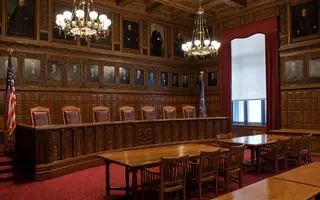
Orleans County has multiple courts that help residents resolve civil, criminal, family, and surrogate matters. Since these institutions have different jurisdictions, residents should do some research to determine the correct court in which to file their cases. This prevents the cases from being dismissed due to the loss of legal standing and saves all parties both time and money. Here's an overview of Orleans County courts and the specific cases they handle.
 Supreme Court
Located in the Orleans County Courthouse, the Supreme Court is a trial court with general jurisdiction.
It hears a wide range of cases, including:
- Felony criminal cases
- Equity cases
- Contract disputes
- Mortgage foreclosures
- Divorce, separation, and annulment cases
- Domestic violence cases
- Civil cases involving amounts above $25,000
The Supreme Court typically oversees cases outside the jurisdiction of the lower Orleans County courts, including appeals from the latter. Since some of these cases are complex and require lengthy procedural motions, resolving them could take months or even years. It's also worth mentioning that the Supreme Court is the only court authorized to handle divorce and annulment cases in Orleans County.
 County Court
The County Court, which also sits in the courthouse, is tasked with the prosecution of all criminal activities in Orleans County.
Jurisdiction includes:
- Felonies
- Misdemeanors
- Civil lawsuits involving claims of up to $25,000
- Appeals from lower courts
- Real property actions
Although the New York Supreme Court can hear felony cases in Orleans County, the County Court is the primary trial court responsible for handling them. The County Court's jurisdiction extends to civil cases, too, but it is limited to claims of at most $25,000. If the amount exceeds $25,000, then the case is transferred to the Supreme Court.
 Family Court
Orleans County residents who go to the Family Court at the courthouse usually have cases related to domestic and juvenile matters.
Its jurisdiction includes:
- Child custody
- Child visitation
- Child support
- Adoption
- Paternity cases
- Abuse and neglect cases
The Orleans County Family Court also handles juvenile justice matters. These include cases involving children aged between 8 and 16 who are charged with offenses that would be crimes if an adult were to commit them. The Family Court also has the authority to issue protection orders for domestic violence victims in Orleans County. Even so, divorces are outside of its jurisdiction.
 Surrogate's Court
The Surrogate's Court shares the Orleans County Courthouse with the Supreme, County, and Family courts.
Some of the cases it hears include:
- Administration of estates
- Probate of wills
- Article 17 and Article 17-A guardianships
- Adoptions
Orleans County residents use the Surrogate's Court to resolve legal matters involving both Article 17 and Article 17-A guardianships. The former may center on appointing the best guardian for a minor who will inherit property or money exceeding $10,000. Article 17-A guardianships, on the other hand, may require the judge of the Surrogate's Court to choose a guardian for an individual with intellectual or developmental disabilities. More often than not, the Surrogate Court allows the relatives of the person with a disability to make medical, financial, and personal decisions on behalf of the latter.
 Town & Village Justice Courts
Justice Courts are lower-level town and village courts scattered across Orleans County.
Their jurisdiction includes:
- Misdemeanors
- Traffic violations
- Evictions
- Arraignments
- Civil cases below the County Court's jurisdictions
Orleans County has 11 town and village courts located in Albion, Ridgeway, Barre, Clarendon, Kendall, Shelby, Carlton, Gaines, Murray, Yates, and Medina. These Justice Courts focus on low-level criminal and civil cases. Although they lack felony jurisdiction, they can preside over preliminary hearings for felony criminal cases before they are heard in the County Court. In most cases, when an appeal originates from a Justice Court, it goes to the County Court, which often serves as the appellate court.
How to Access Orleans County Court Records
The clerk's office is the primary custodian of Orleans County court records. Individual courts may also maintain their own records, depending on the cases they handle. Residents can access a majority of these records, but some may be restricted or sealed to protect the privacy of victims and minors. This is usually the case when the legal matters involve child custody, domestic violence, and juvenile justice. Here are several ways Orleans County residents can find court records.
 Online Access
Orleans County residents can access court records by visiting the eCourts Case Search portal. Maintained by the New York State Unified Court System, this platform allows users to search for relevant case information by case number or the names of the parties involved, including the attorneys. While this service is usually free, fees may apply for certified copies. The eCourts Case Search Portal also provides an eTrack service to help residents track active court cases. However, some court records may not be available online due to legal restrictions and privacy reasons. Only attorneys and parties directly involved in the case may have access.
 Alternative Online Options
Third-party services like CourtCaseFinder provide access to Orleans County court records. These platforms typically compile important information on a variety of court cases, including civil, criminal, traffic, and property lawsuits, and then offer residents reports with details such as party names, filing dates, and comprehensive case summaries. Some of the advantages of using these websites include broad coverage across counties and immediate availability of records.
 In-Person Requests
Residents who can't find the Orleans County court records they need online can put in a formal request at the county or court clerk's office. Once their requests are approved, they can view or have a copy of the files. These include older archived records, current court records yet to be uploaded on the eCourts Case Search portal, and certified copies. The case number and names of parties involved are just some of the details the clerk will ask for to aid the retrieval process.
 Archived Records
The clerk's office manages archived Orleans County court records. These range from probate and divorce records to civil court and property lien records dating back to 1824, when the county was created. While recent records may be accessible via the eCourts Case Search, archived files may require residents to visit the clerk's office or the New York State Archives.
For Attorneys and Legal Professionals
Before visiting the Orleans County clerk's office or searching online to find court records, legal professionals should conduct some research. Gathering as much information as possible about specific cases, including case numbers and accurate dates, can expedite their search. Calling ahead is also advisable, especially when accessing the court records they want requires making appointments.
Attorneys should also familiarize themselves with court locations and rules to avoid missing hearings or making procedural errors that could result in unfavorable rulings. They should also be aware of the fact that although court clerks and the supporting staff can help retrieve court records, they don't provide legal advice or help with filing. That said, if the legal professionals cannot make it to the clerk's office, they can search for court records online through the eCourts Case Search portal.
How to File a Case in Orleans County, NY
The process of filing a case in Orleans County is pretty straightforward. Even so, it might differ from one court to another, depending on the amount in dispute and the type of case. Residents can follow these steps for a hassle-free filing experience.
Step 1: Choose the Correct Court
Since each court in Orleans County has specific jurisdiction that limits the legal matters it can address, it's important to file cases in the right institution. Failure to do so could lead to delays or dismissal. The Supreme Court, for instance, can hear divorce cases, unlike Family, County, and Justice Courts.
 Step 2: Complete Required Forms
After deciding on the right court to file their cases, Orleans County residents should download and complete the necessary forms. These documents are usually available on the New York State Unified Court System's official website. Alternatively, residents can generate forms to file cases through the NYS Court Help website. Court clerks can also advise on and provide the correct forms.
 Step 3: File the Case
Orleans County residents and legal professionals can file cases electronically. For civil cases in the Supreme Court, electronic filing is mandatory and usually done through the New York State Courts E-Filing (NYSCEF) system. The County and Surrogate's courts support NYSCEF e-filing as well, unlike Family and Justice courts. Those filing cases in Family and Justice courts should do so in person.
 Step 4: Pay Filing Fees
Once a person files a case in Orleans County, they must pay the required fees for the case to move to the next step. The NYSCEF system allows residents to make the payment online via credit card. However, for paper submissions, ask the clerk's office for payment instructions. If one cannot pay the court filing fees, they can request a waiver.
 Step 5: Serve the Other Party
When the plaintiff successfully files their case and pays the necessary filing fees, they must notify the defendant of the lawsuit. Personal delivery, in which the papers are directly given to the defendant by an approved server, is a common method of serving in Orleans County. Some residents prefer Substituted Service, a method that requires dropping off the papers at the defendant's place of business or home. This is usually done by a person who's at least 18 and not a party to the case. After completing the service, the plaintiff or their lawyer must file proof of service with the court as evidence that the defendant was informed of the lawsuit.
 Step 6: Monitor the Case
Plaintiffs must monitor their cases through the eTrack service or court clerks to ensure compliance with legal protocols and procedural standards. Keeping updated on case developments can also help them get a better grasp on the trajectory of their legal matters and potential outcomes.
Orleans County Courthouse Directory
Orleans County Courthouse
Houses the Supreme Court, County Court, Family Court, and Surrogate's Court.
Albion
Address: 1 South Main Street, Suite 3, Albion, NY 14411
Supreme Court: (585) 283-6622
Family Court: (585) 283-6656
County Court: (585) 283-6657
Surrogate's Court: (585) 283-6640
Town & Village Justice Courts
Spread across Orleans County, the courts have jurisdiction over a range of local legal matters. These include traffic violations, misdemeanors, landlord-tenant disputes, and small claims. Locations of all Orleans County Justice Courts.
Legal Help and Self-Help Resources
Orleans County residents can access legal assistance and various self-help resources through both local and statewide organizations,
 Free Legal Assistance
Orleans County residents may struggle to get justice, especially without adequate funds to support the legal process. Thankfully, various resources and services are available to provide the legal assistance they might need. LawHelpNY, for instance, is a non-profit that offers free legal information and can refer someone to free legal service providers. Neighborhood Legal Services provides free legal services to the people in Western New York, including Orleans, Erie, Wyoming, and Genesee counties. Those who need legal aid can get it by walking in, calling to schedule an appointment, or applying online via their website.
Local Legal Support
Residents may experience challenges navigating the complex legal procedures in Orleans County. Those who need court advocacy and help with family law matters can turn to the Orleans County Department of Social Services. Its legal support includes a Domestic Violence Program that offers accompaniment to court when necessary. At the same time, seniors above 60 in Orleans County can access legal assistance through the Orleans County Office for the Aging.
FAQs
Do Orleans County courts handle felony criminal cases?
Yes, Orleans County has the authority to conduct felony criminal trials. When filing felony criminal cases, residents usually follow the standard New York State criminal procedure, which includes the arraignment of the defendant in court so they can be informed of the charges brought against them and informed of their rights. Other steps include a preliminary hearing to determine whether there is probable cause, the selection of the grand jury, and the issuance of an indictment.
Can residents access Orleans County court records online?
Although access to certain court records in Orleans County may be limited, residents can easily access others through various platforms. The eCourts Case Search Portal, for example, is the go-to for people looking for civil case information such as filing dates, case status, and parties involved. Alternatively, residents can consider an electronic service such as CourtCaseFinder, which provides access to criminal, traffic, and property court records.
What kind of family matters are heard in Orleans County Family Court?
The Orleans County Family Court usually hears cases involving child support, child custody, visitation, paternity, domestic violence, juvenile delinquency, and the neglect and/or abuse of children. Contrary to popular opinion, the Orleans County Family Court doesn't handle divorce cases, which the Supreme Court exclusively manages. Residents can visit the Orleans County Family Court's official website to learn more information about its jurisdiction and access essential forms and legal resources.
Are town and village courts in Orleans County connected to the New York State court system?
Yes, Orleans County town and village courts are all under the New York State Unified Court System. But despite being a part of the state's judicial system, they are administered and funded locally. This also means that justices are from the local communities. Having said that, the justices, who do not necessarily have to be lawyers, may receive oversight and training from the New York Office of Court Administration (OCA).
How does the appeal process work in Orleans County?
The New York State Unified Court System handles the appeal process in Orleans County. The specific pathway and time limits, however, usually hinge on the court from which the appeal originates and the type of case. For example, for most criminal and civil cases, residents must file a Notice of Appeal within at least 30 days of the judgment.
What accessibility services does the Orleans County Courthouse provide?
The Orleans County Courthouse offers ADA-accessible entrances that residents can access via a call button. Like in all New York State courthouses, visitors must pass a security screening, which involves going through a metal detector and having all personal belongings scanned through an X-ray machine. They will find elevators on all public floors and restrooms to facilitate movement to relevant offices within the building.
How does electronic filing work in Orleans County courts?
Since September 2021, electronic filing in Orleans County has been done through the NYSCEF system. As such, all authorized filing agents and attorneys must use NYSCEF for cases in the Supreme and Surrogate's Courts. Other courts in Orleans County, including County, Family, and Village and Town courts, do not accept filings using the NYSCEF e-filing program, as of this writing.
Other Counties in New York
- Albany
- Allegany
- Bronx
- Broome
- Cattaraugus
- Cayuga
- Chautauqua
- Chemung
- Chenango
- Clinton
- Columbia
- Cortland
- Delaware
- Dutchess
- Erie
- Essex
- Franklin
- Fulton
- Genesee
- Greene
- Hamilton
- Herkimer
- Jefferson
- Kings
- Lewis
- Livingston
- Madison
- Monroe
- Montgomery
- Nassau
- New York
- Niagara
- Oneida
- Onondaga
- Ontario
- Orange
- Oswego
- Otsego
- Putnam
- Queens
- Rensselaer
- Richmond
- Rockland
- Saint Lawrence
- Saratoga
- Schenectady
- Schoharie
- Schuyler
- Seneca
- Steuben
- Suffolk
- Sullivan
- Tioga
- Tompkins
- Ulster
- Warren
- Washington
- Wayne
- Westchester
- Wyoming
- Yates
Table of Contents