Table of Contents
Montgomery County Courts, NY *

Montgomery County is located in the east-central portion of New York State. The county is located right in the heart of the Mohawk Valley region, with a population of around 50,046 residents. Montgomery County was formed in 1772, right before the Revolutionary War. Montgomery County has its county seat situated in Fonda.
The Montgomery County court system performs its judicial duties as part of the 4th Judicial District under the New York State Unified Court System. The people of Montgomery County and its surrounding areas trust the Montgomery County Court System to handle minor and major disputes, including criminal cases, civil disputes, family law matters, and probate matters. The Montgomery County Clerk is the custodian for court records in Montgomery County and helps attorneys and students conduct legal research, and people pursuing legal matters, like attending hearings, filing lawsuits, and responding to lawsuits in Montgomery County Courts, navigate the court system without any problems.
Overview of the Montgomery County Court System
The Montgomery County Court System is responsible for handling legal disputes and administering justice for the people of Montgomery. Therefore, if someone wants to pursue a legal matter in the county, they should first understand how the court system is structured and how it operates. The Montgomery County court system comprises several courts responsible for various legal matters, including criminal cases, civil cases, family law matters, traffic violations, misdemeanors, and affairs of the deceased.
Types of Courts in Montgomery County, New York
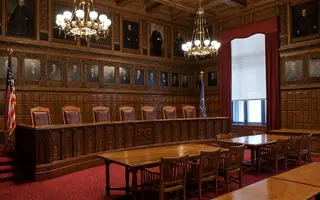
Individuals pursuing legal matters, whether it's to access court records, file a case, appeal, or follow a public hearing, should know the types of courts in Montgomery County. Once an individual understands the structure of the courts, they can identify the respective court with jurisdiction over their legal matter. Having knowledge of the court system ahead of time means that if someone wants to file a case, they'll know the correct court to file in and access records. They will also understand procedural rules that govern the court system.
 Supreme Court
The Montgomery County Supreme Court is the highest state-level trial court in the Montgomery County Court System. The Supreme Court operates with general jurisdiction and has the following duties:
- Contested divorces
- Legal separations
- Annulments
- High-value civil claims
- Medical malpractice claims
- Breach-of-contract
- Equity and injunctions
- Real estate litigation
- Commercial and residential foreclosure actions
- Boundary claims
- Eminent domain battles
The Supreme Court has jurisdiction over all civil cases with high dollar amounts above $25,000. The Montgomery County Supreme Court operates as the county's primary trial-level court for civil cases.
Primary Location: Montgomery County Courthouse
 County Court
The Montgomery County Court is the primary trial court with official but limited jurisdiction to handle major criminal cases in Montgomery County. The County Court has jurisdiction over the following:
- Major criminal cases
- Lower-level misdemeanor appeals
- Grand jury indictments
- Civil cases below $25,000
- Reviewing, granting, or revoking firearms and concealed carry permits
Criminal cases, such as homicide, burglary, felony DWI, and grand larceny, are a responsibility of the County Court and are prosecuted by the Montgomery County District Attorney. Individuals dissatisfied with the rulings of the judges of the Town and Village Courts may appeal to the County Courts.
Primary Location: Montgomery County Courthouse
 Family Court
The Montgomery County Family Court is a specialized trial court tasked with ensuring families receive justice. The Family Court is responsible for family cases involving children, domestic relationships, and family dynamics, including:
- Child custody and visitation
- Child support enforcement
- Paternity
- Abuse and neglect
- Family offenses like domestic violence
- Child protective proceedings
- Adoptions & guardianships
- Juvenile justice
The judges of the Family Court are elected by a nonpartisan election every ten years. If one is pursuing a legal family case within the jurisdiction of Montgomery County Family Court and cannot afford legal counsel, the court can appoint one.
Primary Location: Montgomery County Courthouse
 Surrogate's Court
The Montgomery County Surrogate's Court is a specialized trial court responsible for handling the affairs of the deceased in Montgomery County, as well as for families seeing adoption or guardianship. The Surrogate's Court is responsible for the sensitive transition of these legal cases:
- Probate of wills
- Small estates
- Trusts and accountings
- Adoptions & guardianships
The Montgomery County Surrogate's Court is the primary custodian of historical property and ancestral records and is responsible for authenticating the wills of the deceased in the county.
Primary Location: Montgomery County Courthouse
 Town & Village Justice Courts
There are 13 Town and Village Justice Courts in Montgomery County. The Montgomery County City, Town, and Village Courts are also called the Justice Courts or the People's Courts. The courts have jurisdiction over the following:
- Traffic violations
- Vehicle and traffic tickets
- Minor criminal violations
- Small claims up to $3,000
- Landlord and tenant evictions
- Initial arraignments for criminal offenses
The Justice Courts have limited jurisdiction and are responsible for minor civil disputes of up to $3,000 for town and village courts and up to $15,000 for city courts. These courts do not follow a schedule; they operate when they choose, mostly in the evenings and sometimes during the daytime. If an individual is pursuing a legal matter in these courts, they should confirm the schedule.
Primary Location: Various City Halls and Municipal Buildings throughout the county
How to Access Montgomery County Court Records
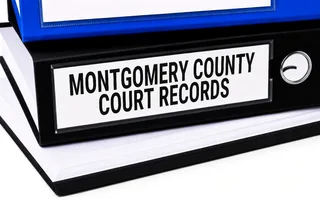
Court records in Montgomery County are public information available to all members of the public, including self-representing litigants, students, and attorneys. They can access criminal, family law, and civil records, as well as archived records, case filings, hearing dates, and court orders. The platform one uses to access court records depends on the type of case and whether records are available online, by mail, or with an in-person request. Learning how to access court records is helpful if an individual wants to do so effectively and exercise their constitutional rights.
 Online Access
The fastest way to access court records today is from the comfort of an electronic device. Thankfully, most Montgomery County court records are available online. It is the responsibility of the county clerk to scan thousands of court records and upload them online on various statewide platforms. Individuals searching for Civil and Supreme Court records can access them through the NYSCEF Portal. E-filed records can also be accessed through this platform. Lastly, for criminal records of Montgomery County, one can use the statewide CHRS platform.
 Alternative Online Options
Apart from official statewide platforms, court records are also available online through third-party case finders such as CourtCaseFinder. The best thing about third-party platforms is that they aggregate records from multiple jurisdictions into one portal. For example, if someone is searching for a case in New York State, they can search multiple jurisdictions at once. Third-party platforms have an edge over statewide portals because they offer records of different cases under one roof. Statewide platforms are specific and require one to visit multiple websites to access records from other courts.
 In-Person Requests
If an individual has exhausted statewide portals and third-party finders and is still unable to access court records, they can visit the courthouse where the records were filed. In-person requests are also recommended for certified original records. The Montgomery County Clerk's Office has a public terminal with computers for searching court records such as civil lawsuits, active felonies, child custody cases, or estate probates. Court records involving traffic, small claims, and local ordinances are available at the respective City, Town, or Village courts.
 Archived Records
A court record is archived when the court is no longer actively using it. In Montgomery, archived records are stored offsite at the old courthouse and are in the custody of the Montgomery County Department of History & Archives. Before one visits in person to search for archived records, they must make an appointment through the Montgomery County Historian Portal. Apart from searching archived records in person, one can use online platforms such as FamilySearch and other non-profits to search archived court records.
For Attorneys and Legal Professionals
Attorneys and legal professionals enjoy special access to judicial portals and can easily access court records compared to members of the public. Electronic filing is mandatory for attorneys using the NYSCEF Portal (New York State Courts Electronic Filing). On this platform, they can view and manage case dockets and pleadings. Alternatively, they can also access court records in person at the Montgomery County Courthouse. Criminal defense lawyers, public defenders, and prosecutors use Webcrims.
Similarly, attorneys pursuing legal matters with the Montgomery courts should familiarize themselves with the court system. They should understand filing procedures, courthouse schedules, motion practices, and judicial assignment rules. They are required to monitor hearing dates, review dockets, filings, judgments, and court calendars, which are also available online and in person at the Clerk's office. They can also file a case online or in person at the clerk's office. Bringing identification information, such as case number, filing year, and party names, will help speed up the process. If one is unsure, they can confirm with the clerk's office to avoid delays and confusion and have a seamless experience.
How to File a Case in Montgomery County
Individuals who want to pursue a case in Montgomery County must learn how to file it while adhering to the county's procedural requirements. In Montgomery County, filing is available online through various portals and in person at the respective courts.
Step 1: Choose the Correct Court
During filing, one needs to identify the court with jurisdiction over their case. This is important because if one files with the wrong court, the case will not proceed to the hearing stage. One can identify the court with jurisdiction by monetary value, severity of the offense, or family relationships. For example, most civil matters with high-dollar damage claims are filed in the Supreme Court. For family matters, residents would file in the Family Court. The Surrogate's Court is responsible for matters of the deceased. Lastly, for criminal issues, one can file paperwork with the Supreme Court. People can always ask the Clerk's Office for further clarification.
 Step 2: Complete Required Forms
After choosing the correct court, the next step is to complete the required forms. One should use standardized filing forms and not random forms pulled from the internet. Self-representing litigants can generate official legal forms using the New York State CourtHelp DIY Forms Portal. Alternatively, one can download court forms through the New York Courts Forms Hub. Residents should complete additional documents such as summonses, petitions, and cover sheets, depending on their case. Individuals filing in person can obtain forms at the Clerk's Office.
 Step 3: File the Case
In Montgomery County, electronic filing is mandatory for attorneys. Self-represented litigants can file online or submit original forms and a copy for the defendant at the clerk's office. To file electronically, residents can create an account on the NYSCEF Portal. After that, one should convert the forms, such as summonses, complaints, and petitions, into PDF format and upload them. Alternatively, self-represented individuals can file a case in person by submitting the paperwork (the original documents and a copy for the respondent) at the clerk's office.
 Step 4: Pay Filing Fees
The County Clerk is required to provide the plaintiff with an official Index Number during filing. One is required to pay filing fees before the clerk hands them the receipt. Additionally, for those filing electronically using the NYSCEF Portal, the clerk can only apply a digital stamp on the documents after they pay the filing fees. Statutory filing fees are mandatory, and individuals who cannot afford filing fees must apply for a waiver, also called Poor Person's Relief.
 Step 5: Serve the Other Party
Once the plaintiff pays the filing fees, they must notify the opposing party of the lawsuit. This is called the service of process. New York State Law requires the plaintiff to notify the defendant by hand delivery without fail. The plaintiff must use a neutral third party to effect service, including the Montgomery County Sheriff's Civil Office or a professional private process server. The server must complete the Affidavit of Service with the clerk's office to complete the service of process.
 Step 6: Monitor the Case
The last step in filing a case is to monitor the case. This is crucial for tracking the defendant's answer because once they are served, they have a short window to file a response. If they fail to answer within this window, they are in default, and the judge could offer a default judgment. The best way to track discovery, mediation, and hearing stages is by setting email alerts using eTrack. People can also contact the Court Clerk if they need help tracking their case.
Montgomery County Courthouse Directory
Here are the respective locations, phone numbers, and websites for the various courts in Montgomery County.
Montgomery County Courthouse
The primary trial courts of Montgomery County all operate in a centralized location at the Montgomery County Courthouse, including the Supreme Court, County Court, Family Court, and Surrogate Court.
Fonda
Address: 58 Broadway, Fonda, NY 12068
Supreme Court: (518) 853-4432
County Court: (518) 853-3834
Montgomery County Family Court: (518) 853-8133
Montgomery County Surrogate's Court: (518) 853-8108
City Courthouse (Amsterdam City Court)
The City Courthouse is the hub for legal matters in Amsterdam City. The courts are responsible for city ordinances, traffic infractions, and civil actions.
Amsterdam
Address: 1 Guy Park Avenue Extension, Amsterdam, NY 12010
Phone: (518) 842-9510
Website: Amsterdam City Court
Town & Village Justice Courts
Operate from multiple courthouses in their municipalities and jurisdictions. The current courthouse directory for these courts is available through the Montgomery County Courts Directory.
Legal Help and Self-Help Resources
Legal help and self-help resources are available to self-representing litigants in Montgomery County who cannot afford an attorney. Non-profit organizations and legal aid clinics across Montgomery offer Pro Bono services and free self-help advice. Those who need help should seek assistance at an early stage of their case to ensure they receive justice.
 Free Legal Assistance
If an individual is facing a criminal case and they cannot afford a private attorney, the Montgomery County Public Defender's Office will provide free legal representation. One can apply by completing the Financial Affidavit - Criminal or the Financial Affidavit - Family for family matters. Additionally, for family law and child support services, the Montgomery County Support Collection Unit offers support such as conducting local and interstate location searches to locate non-custodial parents, paternity establishment, petitions and modifications, and administrative enforcement. Alternatively, one can use the LawHelpNY Platform to search for relevant free legal service programs available at the time in Montgomery County.
Local Legal Support
The primary free legal aid provider in Montgomery County is Legal Aid Society of Northeastern New York (LASNNY). Low-income self-representing litigants can reach out to LASNNY for free legal advice, advocacy, and representation for foreclosure prevention, domestic violence, and eviction defense. LASNNY also matches low-income individuals with local attorneys in Amsterdam through its Private Attorney Involvement Program. Another nonprofit organization providing legal help in domestic violence, elder law, and family law to low-income people in Montgomery County is The Legal Project. It also runs specialized clinics and workshops for military veterans and individuals seeking uncontested divorce.
FAQs
Are court records public in Montgomery County?
Yes. Court records are public in Montgomery County according to New York State Judiciary Law. Students, attorneys, self-representing litigants, and journalists can view, inspect, download, and print court records in Montgomery County. Court records unavailable to public access include family law, individual privacy, and sensitive records. Such records are restricted, redacted, or sealed from the public.
Where can I find eviction records?
To find eviction records in Montgomery County, one needs to check the lower municipal tier of the state judiciary system. Alternatively, one can search active and pending eviction records on the WebCivilLocal. Digitized eviction records are also available through NYSCEF. For evictions by the local town and village courts, records aren't available online; one has to contact the clerk of the respective justice court.
Are online court record searches always accurate?
No. Online court records aren't always accurate, especially in searches involving incomplete or outdated information. Delays in data entry and processing at the clerk's office could lead to incomplete and outdated records. New records take time to be scanned and uploaded to the relevant online portal. Inaccurate search results could also be due to human error and clerical mistakes, such as spelling errors.
When is it helpful to use a third-party records finder?
It is helpful to use a third-party record finder, such as CourtCaseFinder, when one wants to conduct a broader court search. The platform aggregates data from multiple court systems, allowing one to access records from different municipalities, counties, and states. Additionally, when one wants to conduct a background search or due diligence, they can use CourtCaseFinder anonymously. The platform is also helpful to individuals who want to search without a case or index number. They can search using the name and still get accurate results.
What kind of records can I find online?
Several types of court records of Montgomery County are available online. Court records are spread across multiple official statewide platforms. For example, Civil and Supreme Court records are available on the New York e-Courts platform. Historical and Family Genealogy Records are also available online through the Montgomery County Department of History & Archives. On the other hand, local dockets such as traffic violations are not available online, while family court records involving minors are sealed and restricted.
Can I save or download records for future reference?
In addition to viewing and inspecting, the New York State Judiciary Law allows members of the public to download court records for personal use. And for legal research for attorneys and law students. Alternatively, legal professionals can download original court records that are legally binding and usable in a case. One can access and download Montgomery County court records through the NYSCEF and e-Courts.
Other Counties in New York
- Albany
- Allegany
- Bronx
- Broome
- Cattaraugus
- Cayuga
- Chautauqua
- Chemung
- Chenango
- Clinton
- Columbia
- Cortland
- Delaware
- Dutchess
- Erie
- Essex
- Franklin
- Fulton
- Genesee
- Greene
- Hamilton
- Herkimer
- Jefferson
- Kings
- Lewis
- Livingston
- Madison
- Monroe
- Nassau
- New York
- Niagara
- Oneida
- Onondaga
- Ontario
- Orange
- Orleans
- Oswego
- Otsego
- Putnam
- Queens
- Rensselaer
- Richmond
- Rockland
- Saint Lawrence
- Saratoga
- Schenectady
- Schoharie
- Schuyler
- Seneca
- Steuben
- Suffolk
- Sullivan
- Tioga
- Tompkins
- Ulster
- Warren
- Washington
- Wayne
- Westchester
- Wyoming
- Yates
Table of Contents