Table of Contents
Wayne County Courts, NY *

Wayne County, located on the southern shore of Lake Ontario, is a community in Upstate New York, consisting of small towns and rural communities. The County is deeply rooted in agriculture. From apple orchards and vegetable farms to dairy operations, agriculture has long been the backbone of Wayne County.
Wayne County depends on its local courts to address and solve day-to-day legal issues that arise within the county. For citizens, these courts are often the first place they interact with the legal system, especially when faced with issues such as disputes. The courts in Wayne County are responsible for handling a broad range of cases, ranging from family disputes, civil cases, criminal charges, and probate cases, all of which represent the interests of the community they serve.
Overview of the Wayne County Court System
Wayne County courts are part of the New York State Unified Court System, which is the statewide system governing all trial and appellate courts in New York's 62 counties. As a result, the case procedures, as well as filing rules and case management requirements, are the same throughout the state. Wayne County is part of the 7th Judicial District.
The majority of the daily functioning of the courts is at the Wayne County Hall of Justice in Lyons. This courthouse is home to the Supreme and County Court, the Family Court, and the Surrogate's Court. Most people accessing the Wayne County Court system will start at the Wayne County clerk's offices, where the staff are generally happy to assist with whatever one may need, whether it's accessing records or filing.
Types of Courts in Wayne County, New York
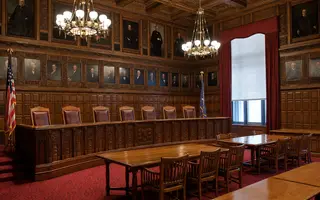
The first error people make when interacting with the court system is going to the wrong court. In Wayne County, each court has its own jurisdiction. Filing with the wrong one can lead to rejections, delays, and potentially starting over from the beginning. Before an individual does anything else, they need to take a few minutes to confirm which court actually has jurisdiction over their issue.
 Supreme Court
The Wayne County Supreme Court is the highest trial court in the County. It is located at the Wayne County Hall of Justice.
Its jurisdiction includes:
- Civil matters exceeding $25,000
- Divorce
- Mortgage foreclosures
- Appeals from lower courts
The Wayne County Supreme Court occupies the highest position in the hierarchy of the local courts. This court handles cases with serious consequences. Such cases encompass large civil claims, major divorce proceedings, and foreclosures.
 County Court
The Wayne County Court is responsible for all of the county's felony criminal cases. The court is located at the Wayne County Hall of Justice.
Its jurisdiction includes:
- Felonies
- Criminal appeals from Town, City, and Village Courts
- Civil cases involving claims up to $25,000
Once a felony complaint has been reviewed and addressed in a lower court, it will move to the County Court. From assault and drug offenses to burglary and weapons charges, these are the kinds of cases on its docket. Anyone facing prosecution here needs an attorney.
 Family Court
The Wayne County Family Court handles legal matters involving families and children. It can be found at the Wayne County Hall of Justice.
Its jurisdiction includes:
- Child custody
- Child support
- Orders of protection
- Juvenile delinquency matters
In Wayne County Family Court, emotions can really run high, and that is one of the reasons why there are no juries. A judge or magistrate will listen to all the facts and make the decision. Cases are often ongoing, meaning they are not heard and resolved in a single court date; custody and support issues are classic examples.
 Surrogate's Court
The Wayne County Surrogate's Court steps for adoption and guardianship issues, as well as when someone dies, and their estate requires legal oversight. The court is located at the Wayne County Hall of Justice.
Its jurisdiction includes:
- Probate of wills
- Administration of estates without a will
- Guardianships
- Voluntary administration of small estates
- Adoptions
If there is a will, the Surrogate's Court will determine the validity of the will and supervise the administration of an estate accordingly. If the deceased died without a will, the Surrogate's Court will start an administration proceeding and appoint a person to administrate the estate under state laws.
 Town & Village Justice Courts
The Town and Village Justice Courts are the places where the vast majority of legal problems in daily life are initiated. They are dispersed throughout Wayne County.
Jurisdictions include:
- Traffic violations
- Misdemeanors
- Small claims disputes
The Towns and Village Justice Courts are most commonly the gateway into the legal system. For many, these courts will be the first experience in their lives to have any direct interaction with the legal system; such an encounter might be unforeseen, as in the case of a traffic stop or a landlord dispute.
How to Access Wayne County Court Records
Court records in Wayne County are usually public information, but that does not necessarily mean they are easily obtainable. Certain records, such as those involving juvenile proceedings, sealed records, or highly sensitive family law cases, are often restricted. Requests for certified copies of court records in Wayne County can be made through the clerk's office for a small per-page fee.
 Online Access
Internet access to court records in Wayne County relies on New York's statewide electronic court systems. These systems often show basic case information such as party names, dates filed, case status, and scheduled court dates. However, these programs are not particularly easy to search unless an individual knows specific details about the case. Searches are only successful when one provides the full legal name, an approximate filing date, and the type of court the case is in.
 Alternative Online Options
When the official system is too cumbersome to access, most individuals and professionals utilize third-party records search services. Websites, such as CourtCaseFinder, compile publicly available court information from numerous jurisdictions into one portal. These types of search services are no substitute for official court records, but can be useful as a preliminary research tool if jurisdiction and type of case are unclear.
 In-Person Requests
Although most new cases can be viewed online, older cases and certified records requests are still handled in person at the Wayne County Clerk's office. In-person requests may involve access to:
- Physical case files
- Archived or historical documents
- Official certified copies
Wayne County Clerks will provide assistance in searching and explaining what is available. However, what clerks will and are able to search relies heavily upon the information provided to them by an individual. Requests with the complete and legal name, approximate date of filing, type of case, and case number will give optimal search results.
 Archived Records
In many cases, very old records may not have been converted to electronic data. These older records may be stored as actual files within the court archives. If a file does not exist as digital data within the records management system, the physical file needs to be retrieved from the County Clerk's office. In certain situations, especially for historical cases, records may also be stored at the New York State Archives. That's typically where older legal documents eventually end up once they're no longer actively used by the courts.
For Attorneys and Legal Professionals
Though an attorney who frequently practices in Wayne County may be familiar with local court procedures, out-of-town attorneys will need some time to acclimate. Filing requirements, Clerk expectations, and court processes are all different from one county to the next, and the differences can affect the ease with which a case proceeds.
Most civil actions in Wayne County now use mandatory e-filing, which has already made submissions and case management smoother. Documents can not only be submitted and viewed online but also tracked without attending each phase of a filing in person. Older records and certified documents that are not available online will be requested via the County Clerk's Office.
How to File a Case in Wayne County
Filing a case in Wayne County isn't complicated in theory, but it does require attention to detail. The biggest pitfall people encounter is filing in the wrong court or not including all of the required documents. That alone can slow down a case significantly.
Step 1: Choose the Correct Court
The first step in filing a case is identifying the correct court based on the type of issues involved. Wayne County has multiple courts with distinct responsibilities, and each one only has authority over specific case categories. It may be tempting to underestimate this step, but filing a case in the wrong court will only slow the case down. In fact, it may end up being rejected, transferred, or one may be required to go through the whole filing procedure again.
 Step 2: Complete Required Forms
After identifying the appropriate court, one should prepare the required forms. The New York State Unified Court System has many standard forms that can usually be accessed through the Court's website. The files may be printed or completed online. The filings must be absolutely accurate; any errors, including missing signatures, incomplete sections, or incorrectly stated party names, could mean denial or lengthy delays in processing.
 Step 3: File the Case
Once the documents have been prepared, they must be formally filed with the court. For most civil cases filed in Wayne County, filing occurs via New York State's e-filing system. This system allows attorneys to file documents online, which will then be automatically assigned to the right court docket. When it is accepted, the case will be assigned a case number that will be used for all future filings and changes to the case.
 Step 4: Pay Filing Fees
Filing most cases in Wayne County comes with a court fee. Civil suits, motions, and certain filings have different fee requirements, all of which are determined under state court rules. For those who cannot afford the initial filing costs, the New York State court system offers a fee waiver option often called a "poor person application", through which the fee can be waived (fully or partially) if a judge approves. Generally, no further action can be taken on a case until filing fees are paid or waived.
 Step 5: Serve the Other Party
After filing, nothing happens until the other side has officially been notified of the lawsuit. This part of the process is called "service of process" and is important because it guarantees that every party is aware of an action and has the opportunity to be heard in court. Service of process is almost always done by someone who has no connection to the case: a registered process server, the sheriff's office, or an eligible adult who is at least 18. After the service process has been completed, one will submit proof of service to the court. If not, the court will not proceed with the hearings.
 Step 6: Monitor the Case
Once the case becomes active, focus will turn to tracking its progress. Each case is tracked through its case number, allowing review of scheduled notices, filings, and any updates on the status of the case as it proceeds through the judicial system. In Wayne County, nearly all case tracking is accomplished via the eCourts system. The New York eCourts system is generally used to track court hearing dates and case status for civil and criminal matters.
Wayne County Courthouse Directory
Wayne County Hall of Justice
The Hall of Justice in Lyons serves as the central courthouse for Wayne County, housing the Supreme Court, County Court, Family Court, and Surrogate's Court under one roof.
Lyons
Address: 54 Broad Street, Lyons, NY 14489
Supreme and County Courts: (315) 665-8117
Family Court: (315) 665-8115
Surrogate's Court: (315) 665-8119
Website: Wayne County Hall of Justice
Town and Village Justice Courts
Wayne County contains over 20 Town and Village Justice Courts spread throughout the county. These courts handle the everyday legal issues the average citizen will likely encounter.
Legal Help and Self-Help Resources
Several state and local government entities, along with nonprofit organizations, are available to guide individuals new to the legal system on their rights, how to complete forms, and all other aspects of the judicial process.
 Free Legal Assistance
For residents who cannot afford an attorney, there are organizations in and around Wayne County that provide civil legal help at no cost to those who qualify.
- Legal Assistance of Western New York (LawNY): Offers free legal aid to Wayne County residents dealing with civil legal problems. If someone is facing eviction, has been wrongfully denied unemployment insurance or public assistance benefits, or is at risk of losing their home to foreclosure, LawNY may be able to help.
- New York Courts Help Center: Residents can also access self-help tools and resources from the New York Courts Help Center, run by the New York Unified Court System. These resources can be very useful for people who are representing themselves.
Local Legal Support
Wayne County residents can also benefit from local bar associations, volunteer attorneys, or legal clinics within the county. The issues addressed by these programs typically include family law issues, small claims or disputes about housing, or uncontested matters. New York Free Legal Answers is a virtual pro bono clinic run through the American Bar Association and the New York State Bar Association. It allows eligible New Yorkers to post civil legal questions online and receive written responses from volunteer attorneys at no cost.
FAQs
How do I search for a criminal case in Wayne County?
One should use NYSCEF when searching for Supreme and County Court Criminal Cases. Many can be accessed through the guest access function. When dealing with Town and Village Court matters, contact the court clerk of the village or town in question.
Are court records public in Wayne County?
In Wayne County, court records are generally open to the public; case files, judgment sheets, and dockets can all be reviewed by individuals in many situations. Sealed records do exist, but these generally only open when a court order is granted or when someone has proven they have a legitimate reason for wanting the file.
Can I file a small claims case online?
E-filing is not available for Town and Village Courts in Wayne County. Therefore, filings for local courts generally need to be made in person to the actual local court that will preside over the case. It is a good idea to call the court ahead of time to ask for the requirements, so as to avoid multiple trips.
How long does it take to get records in Wayne County?
Online searches through NYSCEF return results immediately. In-person requests at the clerk's office are often fulfilled the same day or within a few business days. Certified copies take a bit longer, and archived records can take significantly more time. Submitting a request with as much detail as possible speeds up the process.
When is it helpful to use a third-party records finder?
A tool like CourtCaseFinder is useful when one doesn't know the exact court or jurisdiction, or wants to see multiple types of records at once. Instead of looking at the different court websites individually, the tool has the ability to retrieve public records from various sources through a single search.
What do I do if I can't find my case online?
It is possible that the case has been filed with a court that is not yet fully integrated with NYSCEF, such as a Town or Village Court. The case may also be sealed, limited, or filed under a slightly different name. The most effective course of action is to contact the Clerk of Court directly.
Other Counties in New York
- Albany
- Allegany
- Bronx
- Broome
- Cattaraugus
- Cayuga
- Chautauqua
- Chemung
- Chenango
- Clinton
- Columbia
- Cortland
- Delaware
- Dutchess
- Erie
- Essex
- Franklin
- Fulton
- Genesee
- Greene
- Hamilton
- Herkimer
- Jefferson
- Kings
- Lewis
- Livingston
- Madison
- Monroe
- Montgomery
- Nassau
- New York
- Niagara
- Oneida
- Onondaga
- Ontario
- Orange
- Orleans
- Oswego
- Otsego
- Putnam
- Queens
- Rensselaer
- Richmond
- Rockland
- Saint Lawrence
- Saratoga
- Schenectady
- Schoharie
- Schuyler
- Seneca
- Steuben
- Suffolk
- Sullivan
- Tioga
- Tompkins
- Ulster
- Warren
- Washington
- Westchester
- Wyoming
- Yates
Table of Contents