Table of Contents
Ontario County Courts, NY *

Ontario County was formed in 1789 from Montgomery County, with the county seat located in Canandaigua and a population of 113,400 residents. The county is urban, but with a mix of suburban and rural areas. Some of the locally influenced cases include property disputes, agricultural issues, hunting violations, and timber rights.
The court system in the county handles a variety of cases, including civil disputes, criminal cases, family matters, and probate issues. Landlord-tenant disputes, divorce and child custody cases, and criminal matters ranging from traffic violations to serious felonies are also heard in the county's courts.
Overview of the Ontario County Court System
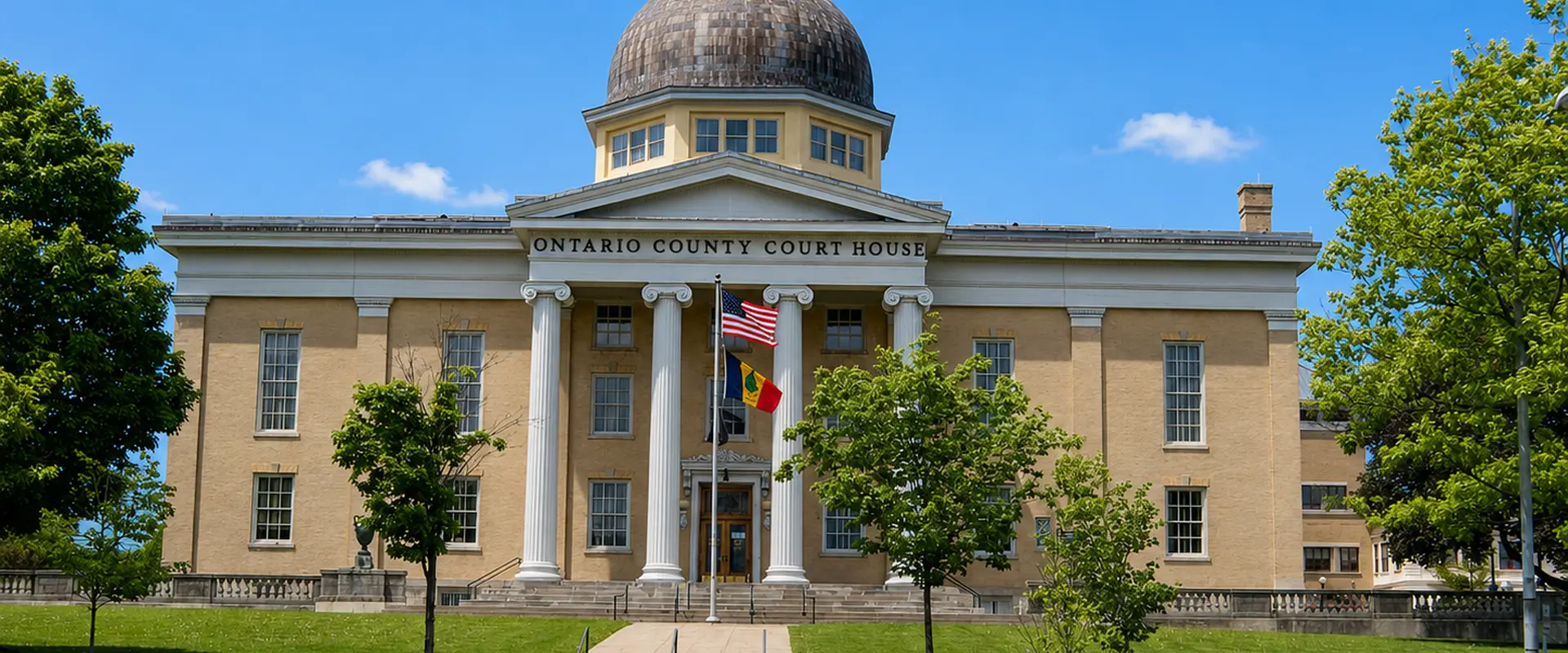
Ontario County courts are organized under New York State's Unified Court System and within the 7th Judicial District. It has four state-level courts, including the Supreme Court, County Court, Family Court, and Surrogate Court, with all of them located at the Ontario County Courthouse. The Supreme Court is the one with the broadest jurisdiction. It is the only court that can grant divorces, annulments, and separations. The County court handles other matters, including civil cases and felony prosecutions, while the Surrogate's Court handles adoptions, estate matters, and wills. The Family Court handles child custody, support, and juvenile matters.
The county also operates two city courts, namely Canandaigua City and Geneva City. They handle minor offenses and violations that occur within the respective city limits. Ontario County hosts 17 town and village courts operating at the municipal level.
Types of Courts in Ontario County, New York
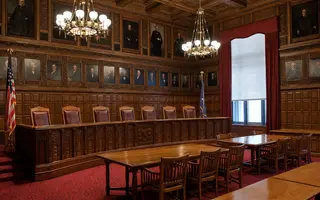
Residents should begin by determining the court that handles their case type by reviewing the information here or by visiting the clerk's office at the courthouse in Cannandaigua, where they can get the clarification they need.
 Supreme Court
The Supreme Court of the 7th Judicial District is the general jurisdiction court with unlimited civil jurisdiction, meaning there is no limit on the dollar amount of a case that it can hear. Cases heard in this court include:
- Large civil disputes without any monetary caps
- Negligence and malpractice actions
- All divorce, separation, and annulment proceedings
- Personal injury claims with significant damages
This court sometimes hears felony matters, but on a supervisory basis. Filings and trials for felony cases go to the County Court.
Primary Location: Ontario County Courthouse
 County Court
The Ontario County Court has exclusive authority to conduct felony trials involving its residents. Crimes committed by its residents and within its boundaries go through this court at some point in the process, either through a jury proceeding, an arraignment, a plea, or a full trial. Some of the cases the court handles include:
- Felony cases
- Civil disputes less than $25,000
- Appeals from lower courts
- Misdemeanor trials
Complex cases that involve complex claims and terms or amounts exceeding $25,000 go to the Supreme Court.
Primary Location: Ontario County Courthouse
 Family Court
The Family Court has jurisdiction over family matter cases in Ontario County. Records from this court are treated with heightened confidentiality, which means they are not available to the public. Some of the cases the court handles include
- Child custody and visitation disputes
- Child support orders
- Termination of parental rights
Calling the Clerk's office ahead of time can help residents better plan their visits.
Primary Location: Ontario County Courthouse
 Surrogate's Court
The Surrogate's Court is the probate court for Ontario County. Matters involving the handling of one's estate after they die are heard here. Some of the cases the court handles include:
- Validating wills and overseeing estate administration
- Resolving disputes among beneficiaries
- Managing guardianships for minors who inherit property
- Adoption cases
The court seals records from cases where minors are involved once the case concludes. Estate tax proceedings are also sealed by law. Other records are open to the public.
Primary Location: Ontario County Courthouse
 City Courts
Ontario County operates two city courts, one in Canandaigua and the other in Geneva. These courts handle lower-level matters that occur within their respective city limits. Some of the cases the court handles include:
- Criminal misdemeanors and violations
- Civil cases up to $15,000
- Small claims not exceeding $10,000
Cases beyond the jurisdiction of these courts but that occur within the city limits are handled in the other listed courts.
Primary Locations: Canandaigua Courthouse and Geneva Courthouse
 Town & Village Justice Courts
Ontario County operates multiple town and village courts commonly known as Justice Courts across the county. Some of the cases the courts handle include:
- Local criminal misdemeanor and violations
- Vehicle and traffic violations
- Small claims
- Evictions and local landlord-tenant issues
Matters arising in specific towns or courts are heard in these courts, provided they are within their jurisdiction.
How to Access Ontario County Court Records
The public can access most court records in Ontario County under New York Law. Certain cases are sealed where minors are involved, as well as other records that the judge finds confidential.
 Online Access
New York's Unified Court system has an eCourt platform that residents use as the main online gateway to the county's court records. One can access civil records cases by using an index number, party name, or attorney name through the WebCivil Supreme portal. The New York State Courts Electronic Filing System (NYSCEF) provides access to files and documents in cases handled by the Supreme Court. The Ontario Clerk's office also provides a portal on its website where they can search records for land and civil filings.
 Alternative Online Options
One can only search Ontario County records using the county portals. If one is unsure which county holds the records one needs, or a wider search across counties or the state is needed, alternative sites such as CourtCaseFinder are an alternative. They aggregate court records from multiple sources and consolidate them into one simple report.
 In-Person Requests
To search older records or acquire certified ones, a visit to the courthouse in person may be necessary. Visitors should consult with the County Clerk if they need to copy records from the books. The clerk will need to see an ID before making copies. The court requires one to pay copying fees and other applicable fees depending on the type of record requested.
 Archived Records
Ontario County was founded in 1789, way before the digital age, meaning that some historical records are not available on any of the online platforms. But the Ontario County Records and Archives Center (RAIMS) in Canandaigua houses historical records for the county. The Historical Society of the New York Courts also maintains historical records specifically for Ontario County legal history. Residents should expect to peruse the records themselves and find what they need because the organization does not currently offer any research assistance for specific court records.
For Attorneys and Legal Professionals
Practitioners in Ontario County have access to several electronic filing tools, which they can select based on their case type. Attorneys can register on the NYSCEF portal if they are handling a Supreme Court case where they can file a case and serve documents electronically. The Ontario County E-Filing Protocols document, available through the court's website, outlines specific procedures for submission, working copy requirements, and how to handle technical failures. Judges require working copies of e-filed documents, and the confirmation notice from NYSCEF must be attached to any hard copy submission. The system allows one to pay fees online and to receive email notifications.
Filing on the NYSCEF platform is mandatory for probate cases, but citizens representing themselves are exempt, provided they fill out an opt-out form. If one's case involves overlapping criminal and family court matters, then one should contact the Ontario County Integrated Domestic Violence (IDV) Court Coordinator located in the Canandaigua courthouse. For questions about specific judge rules or IAS Part requirements, attorneys should consult the individual judge's part rules, which are posted on the 7th Judicial District website.
How to File a Case in Ontario County
Filing a case in Ontario County follows a systematic process that begins by determining the court that handles the case based on the nature of the case, such as the location where it occurred or where the defendant resides.
Step 1: Choose the Correct Court
Residents should begin by determining which of the listed courts hears their case. Major civil cases are heard in the Supreme Court, criminal ones in the County Court, probate matters in the Surrogate's Court, and cases where minors are involved in the Family Court. A minor civil case or small claim of less than $3,000 land in one of the Town or Village Courts. Residents should file in the right court to avoid costly delays.
 Step 2: Complete Required Forms
Filers can download forms for their case from the New York State Unified Court System. Specific forms available for family court matters include petition forms, orders to show cause, and child support worksheets. The system also hosts various forms and paperwork for petition and probate matters heard in the Surrogate's Court. Courts require filers to fill out their forms carefully to avoid making errors because even minor ones can stall a case.
 Step 3: File the Case
Ontario County residents have two options for filing their cases. One can deliver the forms and all the necessary paperwork to the Clerk's Office at the Canandaigua Courthouse. Another option is to file the case via the NYSCEF electronic filing portal. This option is only available for some case types, especially those filed by attorneys in Supreme Court matters.
 Step 4: Pay Filing Fees
Each court in Ontario has its own fee regime based on the case type one files. The Supreme Court requires filers to pay an index fee that the court determines based on the dollar amount in dispute. Before filing, one can contact the Clerk's office to clarify these fees and other requirements. The Poor Person's Relief application is available to county residents who cannot afford the filing fees. It allows the judge to waive filing fees if they determine that one meets the income threshold.
 Step 5: Serve the Other Party
When someone files cases, the other parties or defendants do not receive automatic notifications. New York's Civil Practice Law and Rules (CPLR) indicates that filers are responsible for notifying the other parties by serving them with the legal process. Litigants cannot serve the papers themselves and must use a constable, sheriff, or private server to deliver the papers to the other party. The litigant should present the proof or affidavit of service to the court once it is complete.
 Step 6: Monitor the Case
One should track the developments in their case using their assigned case number. Filers issue an index number in civil cases and a docket number for criminal cases; these are the numbers one uses when searching for their case through the eCourts platform.
Ontario County Courthouse Directory
Most of the main courts are concentrated at the main courthouse in Canandaigua.
Ontario County Courthouse
The Supreme Court and the County Court are located in this courthouse. These courts handle major civil cases, felonies, misdemeanors, and appeals from the city and village courts.
Canandaigua
Address: 27 North Main Street, Canandaigua, NY 14424
Phone: (585) 396-4239
Website: nycourts.gov/courts/7th-judicial-district/ontario-supreme-county-court
Family Court
Family legal matters are heard in this court, including domestic violence, juvenile delinquency, family offense cases, and child support.
Canandaigua
Address: 27 North Main Street, Canandaigua, NY 14424
Phone: (585) 412-5299
Website: nycourts.gov/courts/7th-judicial-district/ontario-county-family-court-m-b
Surrogate's Court
This court hears estate matters, including adoptions, wills, estates, and guardianship.
Canandaigua
Address: 27 North Main Street, Canandaigua, NY 14424
Phone: (585) 412-5301
Website: nycourts.gov/courts/7th-judicial-district/ontario-county-surrogates-court
Town & Village Justice Courts
Ontario County has 17 town and village courts providing local legal services.
Website: Town & Village Justice Courts
Canandaigua City Court
This court hears cases that occur within the city limits of Canandaigua.
Canandaigua
Address: 2 North Main Street, Canandaigua, NY 14424
Phone: (585) 396-5011
Geneva City Court
This court hears cases that occur within the city limits of Geneva.
Geneva
Address: 255 Exchange Street, Geneva, NY 14456
Phone: (315) 789-6560
Legal Help and Self-Help Resources
If one cannot afford an attorney, they can access various free legal help and resources in the county via programs that serve the county's residents. Each program determines one's eligibility based on federal poverty guidelines. Below are some available resources.
 Free Legal Assistance
Low-income residents in Ontario County can access free legal assistance from Legal Assistance of Western New York. The platform offers residents help with housing, eviction, domestic violence, foreclosure, unemployment claims, public assistance, and re-entry matters. Rural Law Center of New York offers free remote legal assistance to New York residents. Some of the legal help they provide includes uncontested divorce clinics, custody and visitation, civil legal services, and other family law petitions.
The Consumer Legal Assistance and Resource Office offers free legal consultation on consumer debt matters to Ontario County residents. The attorneys offer advice on debt collections, credit reporting, and lawsuits from creditors.
Local Legal Support
LawHelpNY provides Ontario County residents with guides and free legal information for residents who represent themselves. A step-by-step program on the platform asks users questions and uses the answers to prepare personalized forms and instructions a litigant can follow when filing their case. New York State Court Access to Justice Programs can help residents prepare personalized court forms via courthelp. Like LawHelpNY, it also uses online programs to ask users a series of questions concerning their case.
FAQs
Can I download civil case documents for free from WebCivil Supreme?
No. The court does not permit full document download through the platform. One can only access information summarizing their case, including index numbers, upcoming court dates, and the party names. The NYSCEF platform provides downloadable court documents for cases filed electronically.
Where can one access court records dating back to the 1800s in Ontario County?
Residents can access records dating back to the 1800s by contacting the County Clerk's office in the Canandaigua courthouse, which maintains naturalization records and minutes and records of other cases from that period to the present. They can visit the County Clerk's webpage to access some of the historical records.
Are court records available for online viewing in Ontario County?
Yes. The WebCivil portal hosts Civil Supreme Court case records, while the WebCrims portal provides searchable case information for cases in the criminal dockets. NYSCEF provides full access to electronically filed documents. In case one finds these records insufficient for their particular use case, then they can use CourtCaseFinder, a platform that aggregates public records from multiple counties and states.
How can I access divorce records in Ontario County?
One can access divorce records through the County Clerk's Office. These records are sealed to the public and are only accessible by the parties involved. Residents can visit in person or contact the office on the official website.
Where should residents search property records in Ontario County?
They can access property records via the County Clerk's web page. Some of the records residents can obtain from this system include real property records, deeds, mortgages, and liens. The system indexes the records by name, and residents can access these records for a fee. Residents can also visit the Clerk's Office in Canandaigua in person, where they can access the system via public access terminals.
Other Counties in New York
- Albany
- Allegany
- Bronx
- Broome
- Cattaraugus
- Cayuga
- Chautauqua
- Chemung
- Chenango
- Clinton
- Columbia
- Cortland
- Delaware
- Dutchess
- Erie
- Essex
- Franklin
- Fulton
- Genesee
- Greene
- Hamilton
- Herkimer
- Jefferson
- Kings
- Lewis
- Livingston
- Madison
- Monroe
- Montgomery
- Nassau
- New York
- Niagara
- Oneida
- Onondaga
- Orange
- Orleans
- Oswego
- Otsego
- Putnam
- Queens
- Rensselaer
- Richmond
- Rockland
- Saint Lawrence
- Saratoga
- Schenectady
- Schoharie
- Schuyler
- Seneca
- Steuben
- Suffolk
- Sullivan
- Tioga
- Tompkins
- Ulster
- Warren
- Washington
- Wayne
- Westchester
- Wyoming
- Yates
Table of Contents