Table of Contents
Ulster County Courts, NY *
Ulster County, with its beautiful landscape, sits in the Hudson Valley region. The County operates under the layered court system that assigns distinct jurisdictions to various courts to help residents get justice in cases including felony crimes, family disputes, traffic violations, civil cases, and misdemeanors, among other offenses. While the courts exist to help people find justice, understanding how the court's procedures work is important in spite of a person's profession because they eventually interact with the justice system.
Being conversant with activities such as filing a case in court and knowing how and where to find court records is critical because it helps eliminate potential frustration and reduces time wastage during these processes.
Overview of the Ulster County Court System
Ulster County operates under regulations set by New York State, which also applies to other counties within the state's boundaries. It follows the New York State Unified Court System, which classifies courts into courts with limited jurisdiction (Surrogate's Court, Family Court, and County Court), courts of general jurisdiction (Supreme Court), and the local courts comprising Village Courts, Town Courts, and City Courts.
In Ulster, the unified structure is administered by the Third Judicial District, which collectively oversees trials in seven counties in New York State. The courts operate seamlessly without interference as their roles and cases are distinctively explained. For instance, the criteria for choosing a specific court are geographical jurisdiction, monetary value of the case, and the subject matter of the case (estate, family, criminal, or legal).
While Ulster County has a network of Town and Village Courts across the county, its seat is Kingston, which is home to most of its courts.
Types of Courts in Ulster County, New York
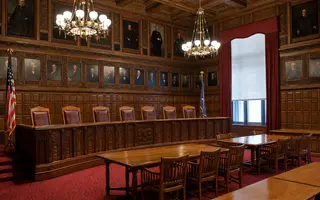
With each court having its own scope of cases, it remains important to understand the jurisdiction of every court within Ulster County. Notably, every court in the county's justice system can be determined in a specific court. Understanding a case at hand is important because it helps to decide the right court in which to file or where to find records.
 Supreme Court
The Supreme Court is the highest court in the County of Ulster and is specifically meant to determine major civil cases. It is described as the court of general trial because it has unlimited jurisdiction. It handles all cases that may not be heard in the lower courts for lack of authority. Specifically, the Supreme Court handles the following cases:
- Major civil cases exceeding $25,000
- Separation
- Annulment proceedings
- Major felony crimes
- Probate of wills
Overall, matrimonial disputes typically reach the Supreme Court because they are some of the high-stakes disputes that arise from time to time.
Primary Location: Ulster County Courthouse
 County Court
The County Court in Ulster handles cases that involve more serious felony crimes. In a normal scenario, it is most likely going to end up at the Ulster County Court. The County Court handles the following cases:
- Determining civil cases with monetary equivalent not exceeding $25,000
- Conducting jury trials
- Felony crimes
- Appealed cases from the lower-level courts (City, Town, or Village)
Except for high-level cases, this court acts as a mid-level appellate body.
Primary Location: Ulster County Courthouse
 Family Court
The Family Court handles cases relating to children and family relationships. It is important to note that while it covers nearly everything revolving around the domestic sphere, it does not hear divorce cases, which are determined at the Supreme Court. Specifically, this court hears and determines the following disputes:
- Child custody and visitation
- Juvenile delinquency proceedings
- Proceedings on adoption and foster care
- Parental rights termination
- Persons in Need of Support (PINS) for minors
- Protection orders in the situation of domestic violence
- Child support
While the proceedings in the Family Court usually seem simple and casual, they carry serious legal implications. More information on Guardianship, around which matters children and family revolve, is available on Guardianship Basics.
Primary Location: 2 Development Court, Kingston
 Surrogate's Court
The Surrogate's Court is another specialized court that handles issues that mainly relate to deceased persons. Usually, people leave behind assets, which should be fairly distributed to their beneficiaries regardless of the existence of a will. At this point, the Surrogate's Court comes in to settle any arising disagreements. In Ulster County, this court settles the following disputes:
- Estate administration
- Will probate proceedings
- Adoptions
- Guardianship, especially for persons unable to manage their affairs
Overall, the Surrogate's Court exists to legally validate the will of the deceased and provide oversight on asset distribution.
Primary Location: The Ulster County Office Building
 City Court
Ulster County has Kingston as its only city, meaning it has only one city court in the county. Kingston City Court handles various crimes and petitions locally confined to the city's jurisdiction. The court handles the following disputes:
- Landlord-tenant disputes
- Small claims of amounts up to $5,000
- Civil suits involving amounts not exceeding $15,000
- Misdemeanor cases
- Traffic infraction
Additionally, felony cases are arraigned, and their preliminary hearing is done in this court before they are transferred to the County Court.
Primary Location: Kingston City Courthouse
 Town & Village Justice Courts
Ulster County has a network of justice courts spread across its geographical location. It is at the Town and Village Courts that most residents' cases enter the legal system. Notably, they handle a range of petitions and cases but strictly within their geographical jurisdictions. The justice courts handle the following cases:
- Traffic infractions
- Small civil disputes
- Minor violations
- Misdemeanor offenses
- Traffic tickets
Primary Location: Town Courts and Village Courts across Ulster County
How to Access Ulster County Court Records
From a general perspective, New York State treats court records as public records with a slight but strict exception of a few records because of the nature of the information they carry. Some of the private records include those of family matters proceedings, juvenile delinquencies, and those that have been sealed by law and marked as confidential. The public records remain important to citizens, and they may access them through the following means:
From a general perspective, New York State treats court records as public records with a slight but strict exception of a few records because of the nature of the information they carry. Some of the private records include those of family matters proceedings, juvenile delinquencies, and those that have been sealed by law and marked as confidential. The public records remain important to citizens, and they may access them through the following means:
 Online Access
For civil cases filed at the Supreme Court in Ulster County, the New York State Unified Court System has standardized the use of New York State Courts Electronic Filing (NYSCEF) in the filing of civil cases at the Supreme Court. This platform gives the opportunity for one to visit it and find information about a case in which they have an interest. The eCourts platform is the other option, which has various tools an individual can use to find court records. All one needs is to search using things like case number, party's name, and lawyer's name to gain access.
 Alternative Online Options
Alternative online options have undeniably helped find court records in Ulster County. Using CourtCaseFinder can be helpful because the public can utilize the platform to find court records. The tool collates various court records available on multiple websites across all jurisdictions. With this, the public can easily locate a case regardless of the court in which the case was filed.
 In-Person Requests
This method works best when an individual is looking for certified documents, which are typically unavailable online. In Schuyler County, these documents are maintained by the County Clerk, who can provide records upon request and may share them for a modest fee. It is worth noting that separate clerk offices handle these records in the Surrogate's Court and Family Court. Usually, people are advised to contact the Clerk's Office before visiting to avoid the inconvenience of waiting for office staff to locate the document.
 Archived Records
Depending on how long the record has existed and the type of case in question, older records are stored either at the courthouse or transferred to the New York State Archives in Albany. Also, cases filed in the Surrogate's Court are maintained permanently, while small claims cases in the Town and Village Courts are not retained for long. Whenever residents or researchers are trying to access estate records, archivists suggest that people make an appointment and give office staff some lead time for the retrieval of the records. When visiting, it is critical to carry as much case information as possible. Things like the party's name, case number, citation number, and the date a case was filed will make the process easier and faster.
For Attorneys and Legal Professionals
Attorneys and legal professionals have real-time access to Ulster County's court records through the New York State Courts Electronic Filing (NYSCEF), which is used for all civil petitions filed at the Supreme Court. Alternatively, they can find any other information outside this scope directly from the clerk's office, as some records may be outside the electronic filing. Using eCourts may also come in handy, even as it supplements the Ulster County Court Library.
Local rules and court-specific filing requirements are maintained by the New York State Bar Association. Despite two courts being from the same county, these rules may differ. Resources for attorneys are provided by the Third Judicial District, which details jurisdiction-specific procedures that they must comply with and use as a guide. Lawyers should take time to review them before proceeding with any court process.
How to File a Case in Ulster County
To avoid mistakes that could weaken a case's chances of success, it is important to have sufficient knowledge of how to file a case in Schuyler County.
Step 1: Choose the Correct Court
Choosing the right court determines whether the case will be accepted or not. Serious civil matters with claims of $25,000 or more are handled in the Supreme Court, while serious felony matters are taken to the County Court. The minor issues are handled at the Town and Village Courts. For family matters and probate issues, the Family Court and Surrogate's Court handle them respectively. Choosing the right location to file the case reduces the chances of dismissal.
 Step 2: Complete Required Forms
New York State has different standardized forms for each case type. They are accessible online through the NY Courts forms library or physically at the court offices. Accuracy in choosing the correct court and filling out the forms is key. Another place to get forms for Supreme Court and County Court Cases is New York State Courts Electronic Filing (NYSCEF) when filing online. Filing a small claims case requires different forms than those used by justice courts. A small mistake can lead to a case dismissal or delays, denying the plaintiff justice. The court clerks are always available to help citizens who are unsure which forms to use to locate the correct ones.
 Step 3: File the Case
Most of the cases presented in the Supreme and Surrogate's Courts are filed through the New York State Electronic Filing (NYSCEF). Legal action officially commences when residents complete the filing and receive a docket or index number. Residents without legal representation can also use the site to file their case, but it is not mandatory. In-person submission of paperwork at the appropriate clerk's office is allowed in Ulster County.
 Step 4: Pay Filing Fees
Fees paid are on a case-by-case basis. The Supreme Court civil case costs $210, while minor claims in the lower-level courts charge roughly $10. The New York State Unified Court System provides detailed fees charged at New York State Filing Fees. If unable to meet the cost of filing the case, submit an Application to Waive Court Costs, Fees, and Expenses for approval.
 Step 5: Serve the Other Party
Following a successful filing of the case, one must formally serve the other party with the filed petition within the stipulated timeline. While emails may work for small claims, process servers work best for civil cases filed at the Supreme Court. It is worth noting that service must be done by persons other than the filing party, who are of the majority age of 18 years or older. Consequently, proof of service has to be recorded back at the Court.
 Step 6: Monitor the Case
Finally, having taken every step correctly, the court schedules the appearance dates, which parties must strictly adhere to. Noncompliance may lead to a default judgment, dismissal, or an arrest warrant. Use tools such as eCourts and New York State Courts Electronic Filing (NYSCEF) in tracking the case with the provided case number. People who are unfamiliar with the electronic system can always ask a court clerk for assistance to monitor their case.
Ulster County Courthouse Directory
The Supreme Court and County Court are hosted in the same courthouse, with the other courts spread across Ulster County.
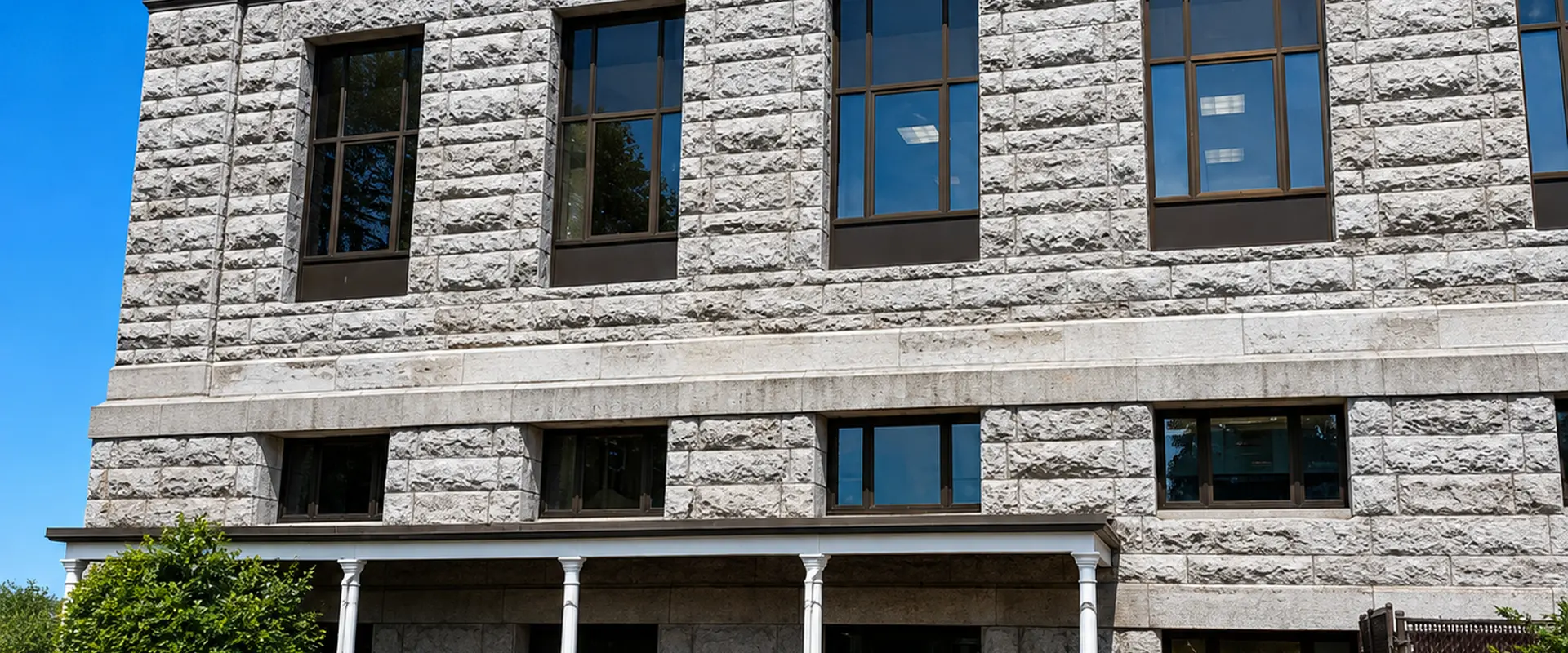
Ulster County Courthouse
Hosts the Supreme Court and Ulster County Court.
Kingston
Address: 285 Wall Street, Kingston, NY 12401
Phone: (845) 481-9375
Website: nycourts.gov/courts/ulster-county-supreme-county-courts
Family Court
Addresses matters of children and family.
Kingston
Address: Ulster County Family Court, 2 Development Court, Kingston, NY 12401
Phone: (845) 481-9430
Surrogate's Court
Handles issues relating to probate, wills, and estate administration.
Kingston
Address: 244 Fair Street, Kingston, NY 12401
Phone: (845) 481-9338
Website: nycourts.gov/courts/ulster-county-surrogates-court-0
Kingston City Court
Takes care of minor legal issues within the city of Kingston.
Kingston
Address: 1 Garraghan Drive, Kingston, NY 12401
Phone: (845) 481-9350
Town and Village Courts
These 21 Justice Courts, within their geographical jurisdictions, handle traffic violations, small claims, and misdemeanors, among other cases. One can access the contact details through a single directory webpage below.
Directory Webpage: Town and Village Courts
Legal Help and Self-Help Resources
Some people only need guidance as they step into the courtroom to represent themselves, while others may always need legal services, which they are accorded freely if they qualify. Either way, the whole activity can be quite stressful, and people need legal assistance and support from time to time.
 Free Legal Assistance
In Ulster County, the public is able to utilize the legal aid offered by Legal Services of the Hudson Valley. They offer legal aid of a civil nature that cuts across employment, housing, family law, and general public benefits. They rely on the federal income guidelines to consider an individual as eligible. Also, the state of New York provides a Help Center with plain-language forms and instructions to help self-represented litigants. Lastly, the Prisoners' Legal Service of New York serves incarcerated people by offering criminal legal assistance and civil rights.
Local Legal Support
First, New York State provides for a Self-Help Center, which supplies instructional videos, forms, and guides to guide those who represent themselves. Some of the topics include family court, consumer debt, small claims, and landlord-tenant. Low-wage workers also receive assistance from the Worker Justice Center of New York, especially those who are denied justice. They also cover matters of immigration, employment, and farm workers.
FAQs
How do I search for a criminal case in Ulster County?
There are various ways one can use to search for a criminal case in Ulster County. For instance, a person may make an in-person visit to the clerk's office and specify which case whose information they wish to get. They may receive this information in printed copies at a small fee or share it via email. Online searches will also typically provide criminal case records.
Are court records public in Ulster County?
Court records in Ulster County are generally free and open to the public, as the law here aligns with the New York State justice system. However, there are exceptions when it comes to records containing family proceedings, minors, juvenile delinquency, and cases that have been labeled as confidential by law. Therefore, the public is not allowed access to such information.
Are online court record searches always accurate?
Online court records in Ulster County are accurate. These records are updated by the office of the clerk, who happens to be the custodian of all court records. At times when they have not been updated, paying a visit to the clerk goes a long way.
When is it helpful to use a third-party records finder?
Third-party records finders are increasingly becoming effective in searching court records. CourtCaseFinder leads the way in assisting with finding court records online. It aggregates information from multiple databases and collates it into one report. Therefore, it becomes easy to find records of a case despite being unaware of the exact court where that case was filed.
Can I save or download records for future reference?
One can download records and save them for future reference. It is worth noting that some records may not be available online for confidentiality reasons. As one downloads information for future reference, they must note the stage at which the case is during download because updates are done continuously when a case is incomplete. As such, there is a risk of using information that is not up to date.
Other Counties in New York
- Albany
- Allegany
- Bronx
- Broome
- Cattaraugus
- Cayuga
- Chautauqua
- Chemung
- Chenango
- Clinton
- Columbia
- Cortland
- Delaware
- Dutchess
- Erie
- Essex
- Franklin
- Fulton
- Genesee
- Greene
- Hamilton
- Herkimer
- Jefferson
- Kings
- Lewis
- Livingston
- Madison
- Monroe
- Montgomery
- Nassau
- New York
- Niagara
- Oneida
- Onondaga
- Ontario
- Orange
- Orleans
- Oswego
- Otsego
- Putnam
- Queens
- Rensselaer
- Richmond
- Rockland
- Saint Lawrence
- Saratoga
- Schenectady
- Schoharie
- Schuyler
- Seneca
- Steuben
- Suffolk
- Sullivan
- Tioga
- Tompkins
- Warren
- Washington
- Wayne
- Westchester
- Wyoming
- Yates
Table of Contents