Table of Contents
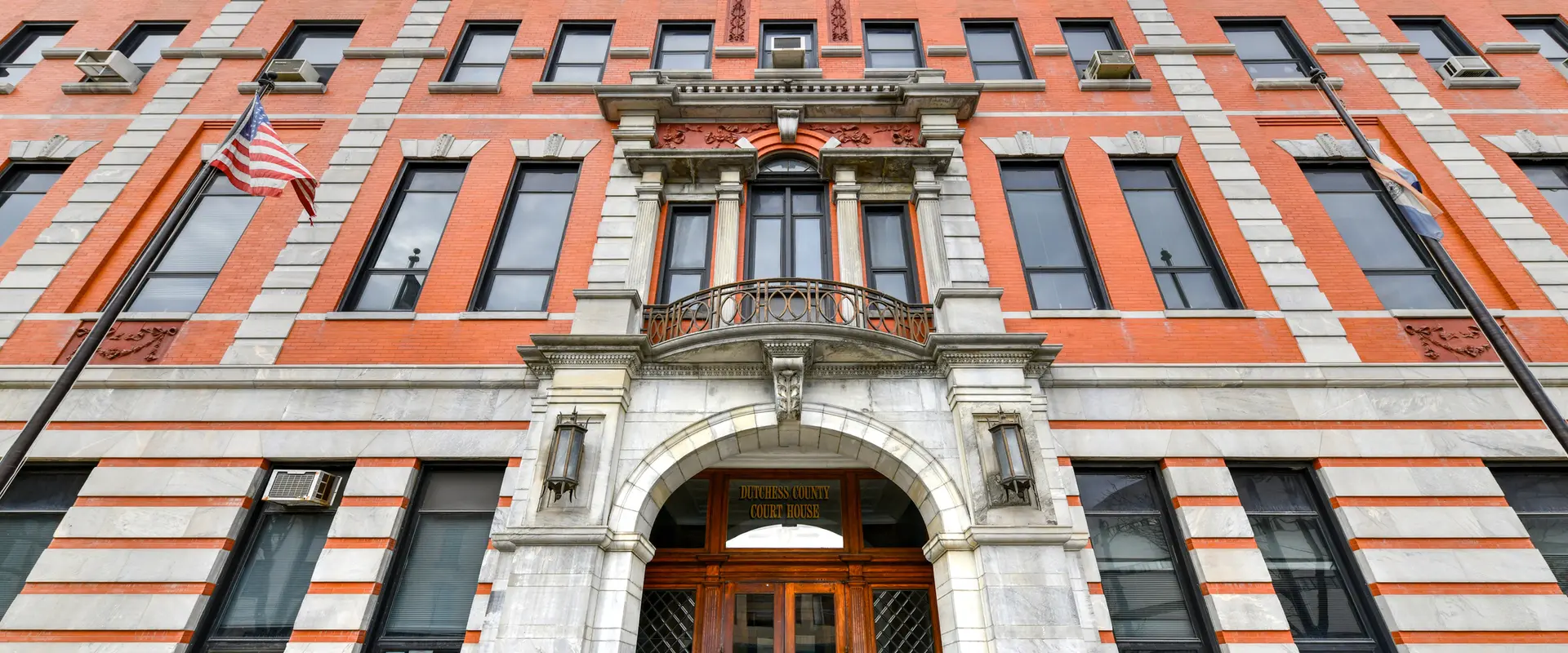
Dutchess County Courts, NY *
Dutchess County, like most counties within New York State, relies on a just judicial system to solve day-to-day crimes and petitions. With a population of nearly 300,000, it emerges as one of the most populous rural counties but is generally overlooked in the wider New York State. Access to justice is undeniably critical for the residents of this county, as they face a high volume of cases, ranging from felony crimes to traffic violations and probate matters.
With the myriad legal challenges the populace is bound to face in Dutchess County, it is increasingly important that parties to legal proceedings adequately understand how New York's Unified State System applies there. For instance, it is imperative to ensure that they file cases in the relevant courts to avoid delays and that they file their petitions in courts with the required jurisdiction.
Overview of the Dutchess County Court System
The courts in Dutchess County work in a manner that aligns with the New York Unified Court System. For instance, most serious and high-stakes civil cases are heard and determined at the Supreme Court, while County Courts address smaller civil cases and criminal cases appealed at the Town and Village Courts. There is the Family Court, which handles cases related to families such as adoption, paternity petitions, and child support.
The surrogate comes in to handle the issue of estate administration following a person's death. With the Village and Town Courts addressing smaller petitions and cases within their scope, the justice system in Dutchess County is able to run smoothly. For this reason, it is important for the public to be informed about how the legal issues are run in the whole county as the courts continue to support them in this course.
Types of Courts in Dutchess County, New York
Dutchess County has several courts, each with its own jurisdiction. The first step for residents seeking legal services is to know the authority level of each court. The section below describes the different courts and their role in the judicial structure.
 Supreme Court
Unlike other states where theSupreme Court is the highest court of appeal, in New York, the Supreme Court is a trial court that handles the highest-stakes civil actions and felony prosecutions. While it is the final judicial authority in the county, residents can appeal its ruling at the New York State Court of Appeals. The court hears:
- Dissolutions of marriage
- Class A felonies
- Declaratory judgment actions and equity actions
- Civil claims with over $25,000 worth
- Disputes about government agency measures
The Supreme Court handles all matrimonial cases involving divorce, as the lower courts do not have exclusive jurisdiction over the matter.
Primary location: Dutchess County Courthouse
 County Court
The County Court is another trial court that focuses on felony cases and major civil cases in Dutchess County. It is at the same courthouse facility as the Supreme Court to allow the same judges to preside over matters in both courts with efficiency. The general jurisdiction of this court is over:
- High-level criminal cases
- Appeals from the lower courts
- Civil matters with a dollar cap of $25,000
- Pre-indictment proceedings and those involving a grand jury
Residents who appeal to the County Court should be aware that the issues are not reviewed from the records of the lower courts. The court treats the case as new and may deliver a different ruling.
Primary location: Dutchess County Courthouse
 Family Court
The Family Court in Dutchess County is mainly concerned with domestic issues involving children, parental rights, and custody. Most of these cases are not available for public view, and researchers may encounter redacted records. Specifically, the Family Court determines matters involving:
- Parental visitation rights and guardianship
- Child maintenance through spousal payments
- Persons in Need of Supervision (PINS)
- Juvenile misconduct
- Petitions on domestic violence and protection orders
- Offenses against family members
Residents with cases in the Family Court should not be worried about privacy, as most hearings are confidential. If the case is about custody and visitation, an attorney is appointed as the voice of the child.
Primary location: Dutchess County Family Court Building
 Surrogate's Court
All matters involving estate, trust, and guardianship for descendants in Dutchess County are referred to the Surrogate's Court. This court does not have the authority to handle divorces; instead, it focuses on children's welfare arising from the separation. The Surrogate's Court oversees:
- Estate administration where the deceased did not have a will, or it is present but not signed
- Verification of trust and accounting issues
- Guardianship of juveniles and incapacitated adults
- Specific adoption proceedings for deceased persons
While most of the matters are taken before a judge, the Surrogate's Court can allow some cases to be settled through a mediator. Families with limited resources benefit from this provision as it saves on the high costs demanded throughout the contested hearings.
Primary location: Dutchess County Courthouse
 City Courts
Dutchess County has two city courts, which are Poughkeepsie City Court and Beacon City Court, that deal with minor criminal offenses and civil violations within city boundaries. They are also responsible for arraignments and preliminary hearings for felony charges before they are assigned to the County or Supreme Court. The court hears:
- Civil matters of less than $15,000
- Criminal offenses and violations
- Small claims cases with limits of $5,000
- Traffic and vehicular violations within the city
A ruling in City Court does not necessarily result in a fine. Some defendants may be assigned community service if they are unable to meet the costs. Residents who have a case in this court should update their contact information, as reminders are automated and sent to parties to reduce missed deadlines.
Primary location: Poughkeepsie City Hall, City of Beacon Municipal Center
 Town & Village Justice Courts
Town and Village Justice Courts complement the City Courts and are spread throughout Dutchess County. They have jurisdiction over minor criminal charges and civil claims made outside the cities of Beacon and Poughkeepsie. The courts exercise authority over:
- Small claims of less than $10,000
- Eviction notices concerning unlawful confiscation and entry to tenants' residences
- Setting bail for defendants with local charges
- Traffic and vehicle infractions beyond Beacon and Poughkeepsie
Residents seeking court records should consult the specific courts, as they operate independently. Besides, the way cases are digitally indexed varies with jurisdiction.
Primary location: Town and Village Courts
How to Access Dutchess County Court Records
Residents in Dutchess County can expect to find court records upon performing basic inquiries. However, the court retains the power to withhold certain cases and information if they are sensitive and may compromise the parties' privacy and safety.
 Online Access
The New York State Courts Electronic Filing (NYSCEF) is the main online platform the Dutchess County courts are using to allow the public access to court records. Notably, in the county, this system has been adopted and is used by the Surrogate's Court and the Supreme Court. Here, the user may choose attorney information or index number, among other search criteria, to find their court record of interest. eCourts have remained helpful in helping the public find the information they need. This option provides various sub-tools that are easy to use, and the courts are always willing to train users on how to navigate the platforms.
 Alternative Online Options
A reliable third-party court record holder is CourtCaseFinder. It is most useful when one is unsure where the case was filed. It aggregates data on civil, criminal, and probate matters from all US courts, which can be narrowed down to Dutchess County. Also, third-party search engines are great when there is missing or incomplete information about a case. It has records for civil and criminal cases from the Supreme and County Courts. Even when using official sources, it is advisable to verify the results with the office to ensure they are correct.
 In-Person Requests
Residents in Dutchess County can make in-person requests for court records if they want stamped copies. The starting point should be the Dutchess County Clerk's office, as it is the main repository for cases in the trial courts. If the requester wants records on probate matters, they can visit the Surrogate's Court Clerk's office. Matters involving child welfare are best retrieved from the Family Court.
 Archived Records
Some records may not be found through local search tools if they have been moved from local repositories. These are mostly older court records, which in Dutchess County can be maintained physically at the County Clerk's office. Requesters initiate searches if they have at least the case number or the date the case was filed. The New York State Archives offers broader results and is more reliable because cases are indexed by year. A written request sent via email, stating the type of record and the case name, initiates the inquiry.
For Attorneys and Legal Professionals
Attorneys in Dutchess County do not have the same access levels as the general public. They can use their Bar ID in the New York State Courts Electronic Filing system (NYSCEF) to get full access to records in which they are the standing counsel. They can view preliminary arguments and the full docket history to know how the opposing representatives present their motions.
The WebCriminal portal is another site that helps defense lawyers and prosecutors remain organized throughout an active case. It is integrated with eTrack, which sends notifications whenever updates are made. Even with the clearance level, restricted records are unavailable and can only be obtained through written requests that indicate the requester is a party to the case.
How to File a Case in Dutchess County
For the purpose of filing cases in the courts, Dutchess County's justice system provides a straightforward and step-by-step guide on how to effectively file a case.
Step 1: Choose the Correct Court
The case type directly influences the court level where it is done and subsequently heard and determined. Serious felony crimes and major civil cases are handled by the Supreme Court, with the County Court addressing the same cases but of lower monetary value. While the Surrogate's Court addresses issues of estates and probate wills, family proceedings are referred to the Family Court as they are specialized in these areas. The City Courts handle minor cases, but they remain limited to the city boundaries, as claims under $10,000 are filed at the Town or Village Justice Courts.
 Step 2: Complete Required Forms
Filers can get forms for all case levels from the main directory provided by the Dutchess Courts when one is looking for the right document to complete before filing. Alternatively, individuals can request forms through the County Clerk. Residents who encounter problems when filing the form can get guidance through the CourtHelp center. They can also call or visit the County Clerk for additional help. County Clerks are wonderful sources of information on documents, records, and court procedures.
 Step 3: File the Case
The completed forms can be submitted digitally to the New York State Courts Electronic Filing System (NYSCEF). Users must register an account to begin the process. The other option is to take the forms in person to the selected court office. People in Dutchess County can choose to file online or in person, and the county offers hybrid options. Residents can always call the County Clerk to check on their options for their case.
 Step 4: Pay Filing Fees
Residents in Dutchess County can get a complete breakdown of the costs from the County Clerk's Fee Schedules. Those who are unsure about the fees can get assistance from the court office handling the case. If the costs are too high, filers should attach a Poor Person Status form with supporting documentation, such as a past year's financial statement, to demonstrate their inability to pay. The court must approve the status before filing fees are waived.
 Step 5: Serve the Other Party
The next step after filing is to formally notify the opposing party about an open case. In Dutchess County, these summons are done through "nail and mail", or an officer approved by the Sheriff's office. The "nail and mail" clause, if used, must be satisfied before a judge will accept it. First, the party must prove they made a genuine, diligent effort to serve the defendant in person or hand the documents to a responsible adult at their home/office. Second, the plaintiff must put a copy on the door of the residence and send another copy to their last known residence or place of business via first-class mail. An Affidavit of Service is expected to be filed with the correct court. It should have the parties' names, method of delivery, and date delivered.
 Step 6: Monitor the Case
The last step is to follow up on the case status to avoid missing important court updates. Residents in Dutchess County can use the New York State Courts Electronic Filing System (NYSCEF) to know how the case is proceeding. The eCourts portal is also useful for tracking specific civil, criminal, and family matters. Residents can always call the County Clerk or City Clerk for help with case monitoring.
Dutchess County Courthouse Directory
Dutchess County has multiple courts that may not be clustered in one place. The directory below is comprehensive and indicates how residents can contact the different courts.
Dutchess County Courthouse
It is the main facility for the Supreme, County, and Surrogate's Court.
Supreme Court
10 Market St., Poughkeepsie, NY 12601
(845) 431-1710
County Court
10 Market St., Poughkeepsie, NY 12601
(845) 431-1710
Surrogate's Court
10 Market St., Poughkeepsie, NY 12601
(845) 486-2235
Dutchess County Family Court Building
Houses the Family Court, where family issues are handled.
Poughkeepsie
Address: 50 Market Street, Poughkeepsie, NY 12601
Phone: (845) 431-1850
Website: Dutchess County Family Court
City Courts
The courts that deal with minor issues within the city.
Poughkeepsie City Court
Address: 62 Civic Center Plaza, Poughkeepsie, NY 12601
Phone: (845) 483-8200
Website: Poughkeepsie City Court
Beacon City Court
Address: 1 Municipal Plaza # 2 Beacon, NY 12508
Phone: (845) 431-1900
Website: Beacon City Court
Town and Village Justice Courts
Courts distributed in different locations to deal with local minor issues.
Legal Help and Self-Help Resources
Since legal issues arise all the time, residents in Dutchess County can use the following resources to get familiar with the court system.
 Free Legal Assistance
Residents in Dutchess County have access to the legal assistance below:
- CourtHelp is a program provided under the New York State Unified Court System with the responsibility to guide residents before and during a case hearing and after it is closed.
- LawHelpNY is available to all New Yorkers seeking assistance on civil matters such as housing and family issues. It also has a "Find Lawyer" program that connects residents to local legal providers.
- The New York State Bar Association Lawyer is available to both attorneys and the general public. Legal professionals with substance abuse issues are supported through the Lawyer Assistance Program (LAP).
Local Legal Support
The following services are available for residents who may prefer in-person assistance:
- The Dutchess Supreme Court Law Library is for any resident who wants to understand the law and legal procedures. The librarian guides users who have difficulties locating information.
- Legal Services of the Hudson Valley (LSHV) directly serves Dutchess County, assisting low-income residents who cannot afford legal representation.
- The Public Defender department connects clients with licensed attorneys as soon as their eligibility is approved through in-person interviews.
FAQs
How can residents search for a criminal case in Dutchess County?
The WebCriminal portal maintains criminal court records in Dutchess County, which residents can obtain by searching using the case number or parties' names. It contains data for case status, hearing dates, and disposition for trial and city courts. If researchers do not find the records online, the alternative option is in-person requests at the County Clerk's office.
Are court records public in Dutchess County?
Court records in Dutchess County are generally available for public access. However, restricted files require a court order. The New York State Courts Electronic Filing system (NYSCEF) is the main portal residents can use to find digitized cases. In-person requests can also be made in the court office where the case was filed.
How long does it take to get records in Dutchess County?
Residents can get immediate results when they use the New York State Courts Electronic Filing system (NYSCEF) to locate a court record. In-person requests are not immediate but can be handled the same day. More time should be allowed for inquiry into archived records and restricted cases that require a court order.
When is it helpful to use a third-party records finder?
Third-party sites are most useful when residents do not have the specific details about the case. CourtCaseFinder is practical for finding out if a case is on record. It pulls up all the cases filed in Dutchess County through a name-based search. Once the specific details are identified, residents can follow up on the case through official channels.
Can court records be saved or downloaded for future reference?
Yes. The New York State Courts Electronic Filing System (NYSCEF) allows residents to view and download copies of court records, but they have to pay a fee. While the records are official, it is always advisable to verify the details with the court's office to ascertain that they can be used for legal purposes.
Other Counties in New York
- Albany
- Allegany
- Bronx
- Broome
- Cattaraugus
- Cayuga
- Chautauqua
- Chemung
- Chenango
- Clinton
- Columbia
- Cortland
- Delaware
- Erie
- Essex
- Franklin
- Fulton
- Genesee
- Greene
- Hamilton
- Herkimer
- Jefferson
- Kings
- Lewis
- Livingston
- Madison
- Monroe
- Montgomery
- Nassau
- New York
- Niagara
- Oneida
- Onondaga
- Ontario
- Orange
- Orleans
- Oswego
- Otsego
- Putnam
- Queens
- Rensselaer
- Richmond
- Rockland
- Saint Lawrence
- Saratoga
- Schenectady
- Schoharie
- Schuyler
- Seneca
- Steuben
- Suffolk
- Sullivan
- Tioga
- Tompkins
- Ulster
- Warren
- Washington
- Wayne
- Westchester
- Wyoming
- Yates
Table of Contents