Table of Contents
Wyoming County Courts, NY *
Wyoming County was formed in 1841 from Genesee County. Its county seat is located in Warsaw, which handles various case types filed by the county's residents. The county has a population of about 40,000 according to recent census estimates. Approximately 59% of the residents live in rural, non-farm areas, and about 5.6% residing on farms.
The cases heard in the county's courts are influenced by the mix of rural and urban characteristics of the county. Some of the cases include agricultural disputes, land boundary issues, hunting violations, and timber rights. These cases fall under civil disputes, criminal cases, family matters, and probate issues. Divorce and child custody proceedings, landlord-tenant disputes, and traffic violations are also heard in the county's courts.
Overview of the Wyoming County Court System
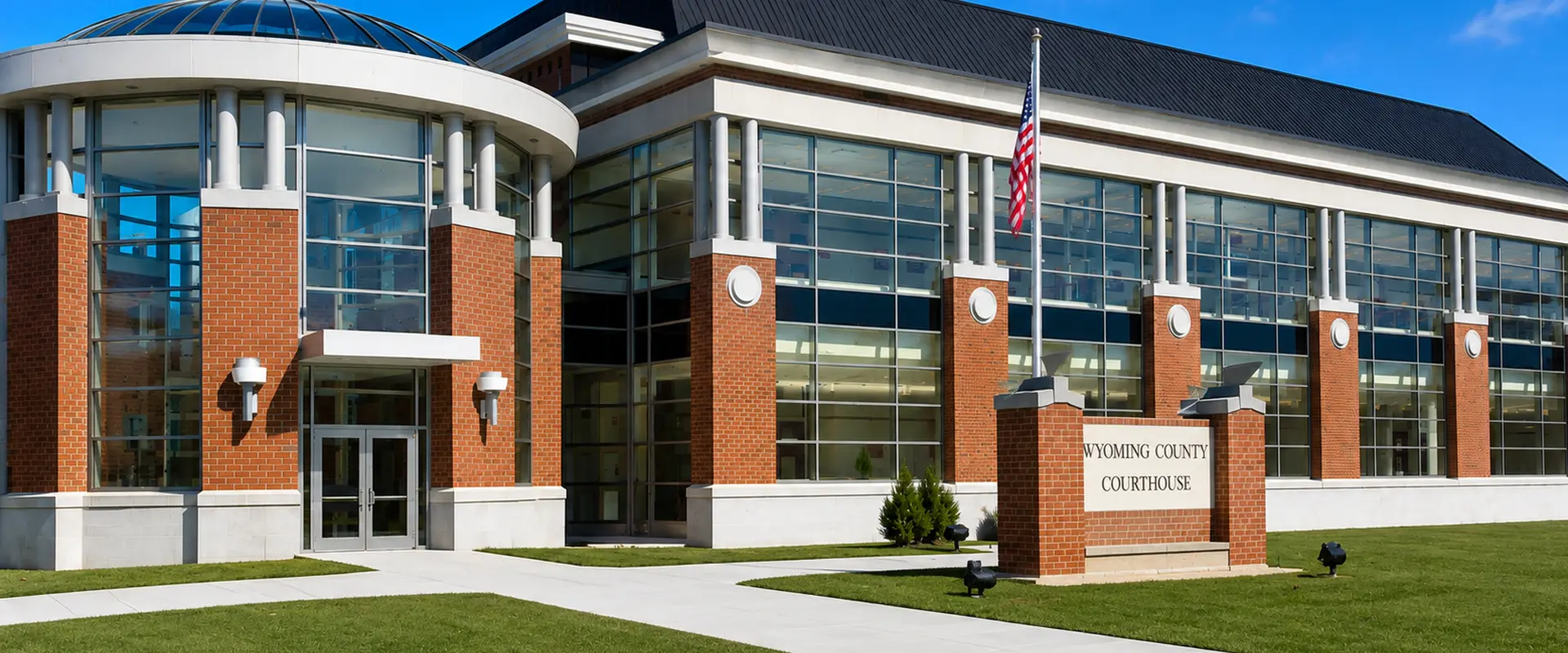
All the courts in the county are located in the Wyoming County Courthouse. This facility houses the Supreme Court, County Court, Family Court, and the Surrogate's Court. These courts operate under the 8th Judicial District of New York's Unified Court System. Residents filing Court of Claims matters can do so in the Rochester District, which also hears cases from Genesee, Livingston, Monroe, Ontario, and Orleans counties.
The County Clerk's office provides access to court records and other records, such as land records, while residents can access electronically filed documents from the New York State Courts Electronic Filing (NYSCEF) platform.
Types of Courts in Wyoming County, New York
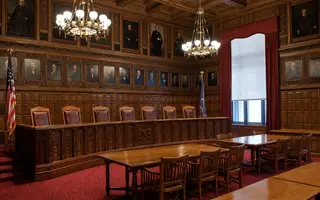
Determining the court that handles one's case type is the first step. The court types and the cases they hear are found below. Residents can also contact the clerk's office if they need further assistance.
 Supreme Court
The Supreme Court, which is found in the 8th Judicial District, is the general jurisdiction court in Wyoming with unlimited civil jurisdiction. Cases heard in this court include:
- Civil matters involving amounts more than $25,000
- Divorce, separation, and annulment proceedings
- Post-judgment enforcement in civil cases
- Personal injury claims and medical malpractice actions
The court requires that residents file their Supreme Court cases electronically via the NYSCEF system.
Primary Location: Wyoming County Courthouse
 County Court
The Wyoming County Court conducts all the felony trials in the county. Some of the cases the court covers include:
- Felony trials
- Civil disputes up to $25,000
- Misdemeanor trials
- Appeals from town and village courts
The Supreme Court has higher jurisdiction and handles cases that involve complex claims and terms or amounts exceeding $25,000.
Primary Location: Wyoming County Courthouse
 Family Court
The Family Court has jurisdiction over family matter cases. Some of the cases include:
- Child custody and visitation disputes
- Termination of parental rights
- Family offense proceedings
- Child support orders
Residents should plan to arrive early if they need an emergency hearing because the court has a deadline for cases that one wants the judge to hear on the same day.
Primary Location: Wyoming County Courthouse
 Surrogate's Court
The Surrogate's Court has jurisdiction over decedents' estates in Wyoming County. Some of the cases the court handles include:
- Probate of wills
- Administration of estates
- Guardianships for minors who inherit property
- Conservatorships for estate beneficiaries
If a decedent's estate needs administration, then this is the right court for the case. Residents can file adoption cases in this court, too, but they need to first consult with the clerk's office.
Primary Location: Wyoming County Courthouse
 Town & Village Justice Courts
Wyoming County operates 21 Town and Village Courts that hear low jurisdiction matters. Some of the cases the court handles include:
- Vehicle and traffic matters
- Local criminal misdemeanor and violations
- Evictions and local landlord-tenant issues
- Small claims up to $3,000
- Other civil matters within their jurisdiction
Matters arising in specific towns or courts are heard in the respective courts. Residents should confirm the correct court depending on the location where the incident occurred.
How to Access Wyoming County Court Records
Most court records in Wyoming County are public according to New York law. The courts might seal some records depending on the case type or a judge's determination. Some of the cases where the judge can seal court records include adoption files, juvenile cases, and other confidential ones.
 Online Access
Wyoming County residents can access court records via the eCourts portal. They can search using their case information, such as party name, attorney name, or docket number, which makes using the platform straightforward. The NYSCEF portal provides residents with immediate access to court records in most cases. Attorneys can also use it to file cases and receive service of papers electronically, as well as other notifications regarding their cases.
Residents can access records in criminal cases via WebCrims, a platform that provides information on upcoming cases. Litigants in Wyoming County can utilize other online platforms listed or can visit the courthouse in person.
 Alternative Online Options
The Wyoming County online platforms contain most of the records litigants need. Residents unable to access their court records via those options can use CourtCaseFinder, which aggregates court information for various case types and from multiple official sources. One should search for critical information through the official court system.
 In-Person Requests
Litigants searching for older records that have not yet been digitized should visit the courthouse in person and speak with the clerk. The courts encourage individuals to bring as much information as possible, including their identification documents and other information pertinent to the case. The court staff can help one find the records they need, but they do not offer extensive search assistance or legal advice. In addition, copying records requires one to pay copy fees and other applicable fees for certified copies.
 Archived Records
Wyoming County was founded well before the digital age; consequently, some records exist only in paper or microfilm. The New York State Archives might hold some of the records dating back to the 1800s. But the county has digitized some of the records from this period, and they are available on genealogy platforms. The coverage might be inconsistent, meaning residents should always double-check information before printing or downloading. The Historical Society of the New York Courts also maintains historical records.
For Attorneys and Legal Professionals
Licensed attorneys can visit the New York State portal and create an Attorney Online Services Account, which provides access to both the NYSCEF Live System for case filings and the Online Attorney Registration System. If one already has an attorney registration account, the same credentials work, so they do not need to create a separate login.
Attorneys can track their cases in real time and manage filings across multiple counties by using this single dashboard. The NYSCEF Resource Center has detailed guidance on forms, authorization procedures, and training resources for those new to the platform. If one's case involves overlapping criminal and family court matters, such as Treatment Court, then one should contact the Wyoming County Integrated Domestic Violence (IDV) Court Coordinator located in the County's courthouse. For probate cases, filing on the NYSCEF platform is mandatory.
How to File a Case in Wyoming County
The filing process in Wyoming is systematic, with specific requirements. Litigants should complete each step before proceeding to the next. Below are the main steps
Step 1: Choose the Correct Court
One should start by determining the court that handles their case before filling out any forms. The Supreme Court has unlimited civil jurisdiction, while the County Court handles felony trials and civil claims up to a maximum of $25,000. The Family Court hears custody, child support, visitation, termination of parental rights, and domestic violence protection orders. The Surrogate's Court handles wills, administration of estates, guardianships for minors, and adoption, while the various town and village courts across the county handle small claims up to $3,000, evictions, and vehicle and traffic matters.
 Step 2: Complete Required Forms
There are court-specific forms that need filing, which may not apply across other courts. Therefore, to avoid being rejected, one must make sure they complete the correct set of forms. TheNew York Courts website is a responsive and highly resourceful platform providing all the information one needs, with downloadable forms that one needs to complete, depending on the nature or type of case. These cases may vary from adoption, divorce, name change, or guardianship.
 Step 3: File the Case
The first option for litigants when filing the case after they fill the forms is to hand deliver or send to the clerk's office by mail. A second option is to file the case via the NYSCEF electronic filing portal. If one uses the first option, they need to bring their identification documents and the filing fees. The clerk will stamp the filing date on the case documents and provide a case number. Litigants should keep the copies for future reference.
 Step 4: Pay Filing Fees
Based on the case type and court, filing fees in Wyoming County vary. The fees for small claims filed in town or village courts range between $10 and $15, depending on the amount in dispute. The Poor Person's Relief application is available to low-income residents, which allows the judge to waive filing fees if they determine that one meets the federal income threshold.
 Step 5: Serve the Other Party
New York's Civil Practice Law and Rules (CPLR) indicates that filers are responsible for notifying the other parties. The court does not send automatic notification whenever one files a case; instead, residents should ensure that the service of process is fulfilled before the case can proceed. If one cannot serve the papers to the other parties involved, they may use a constable, sheriff, private server, or service by publication in a local Wyoming County newspaper. The court also requires that the litigant present proof or an affidavit of service once it is complete.
 Step 6: Monitor the Case
The success of a case significantly depends on careful monitoring. A slight misunderstanding or missing an update could lead to an unintended judgment by the court. A judge may issue a warrant of arrest or a default judgment for a criminal or civil case, respectively, if one fails to appear in court. The NYSCEF sends automatic notifications and email alerts if one files the case online.
Wyoming County Courthouse Directory
Residents should carefully select the court that hears their case type. Below are the main courthouses, their location, and contact information.
Wyoming County Courthouse
The Supreme Court, County Court, Family Court, and Surrogate's Court are located in this courthouse.
Warsaw
Address: 147 North Main Street, Warsaw, NY 14569
Phone: (585) 228-3200
Appellate Division, Fourth Department
This court hears appeals from the Supreme Court, County Court, Surrogate's Court, and Family Court.
Rochester
Address: 50 East Avenue, Rochester, NY 14604
Phone: (585) 530-3000
Website: nycourts.gov/courts/ad4/
Town and Village Courts
These courts hear traffic violation cases, small claims, and misdemeanors within their respective jurisdictions.
Directory: Town & Village Courts of Wyoming
Legal Help and Self-Help Resources
Litigants can navigate Wyoming County's court system without an attorney. Filing some cases, such as small claims, is relatively straightforward. Below are some resources available to litigants in case they want to handle their case themselves or would like to consult a lawyer.
 Free Legal Assistance
Low-income residents in Wyoming County can access free legal assistance from Legal Assistance of Western New York. Services include representation in housing matters, family, and other benefit matters. Self-represented filers can also access help from the New York State Courts CourtHelp program for guidance and descriptions in plain language on topics such as family proceedings and small claims cases. Law Help NY is another resource Wyoming County residents can use to guide them on common legal problems.
Local Legal Support
Litigants looking for attorney referrals can contact the Wyoming County Bar Association, while the New York State Bar Association's Lawyer Referral Service allows litigants to search licensed attorneys who practice in the relevant law area. Citizens filing or wanting to access genealogical and historical records can visit the courthouse in Wyoming, where they can get assistance. Meanwhile, the County Appointed Special Advocates (CASA) program can connect residents with volunteer advocates handling cases where minors are involved.
FAQs
Can I download civil case documents for free from WebCivil Supreme?
No. One cannot download civil case records using this platform. Index numbers, upcoming court dates, and party dates are the only information one can access from this portal. The NYSCEF system provides information and records for cases filed electronically. Not all case types are eligible for electronic filing. For example, divorce cases and Mental Hygiene Law proceedings are confidential according to the law, and one cannot access them without a court order.
Where can people access court records dating back to the 1800s in Wyoming County?
The Wyoming County Clerk's Office in Warsaw maintains old court minutes, naturalization records, and historical case files. By visiting the office, one can get the information they need, considering that some of the records from old cases have not been digitized yet. The FamilySearch collection contains naturalization records that genealogical researchers need. The collection contains information from 1791 to 1980.
Are court records available for online viewing in Wyoming County?
Yes, but it depends on the case type. The WebCivil portal hosts Civil Supreme Court case records, but residents should file a Request for Judicial Intervention first. The WebCrims portal provides searchable case information for cases in the criminal dockets, while the NYSCEF provides full access to electronically filed documents. In case one finds these portals insufficient for their particular use case, then they can use CourtCaseFinder. This platform aggregates public records from multiple counties and can prove useful to residents in many case types.
How can one access divorce records in Wyoming County?
In divorce cases, the court seals the records, which are only accessible by the parties involved or their attorneys. Non-involved parties will need to obtain a court order before they can access these records. Divorce cases filed electronically can be accessed via the NYSCEF platform, but confidentiality restrictions apply. Moreover, the County Clerk's archives might store older records in such cases.
Where should residents search property records in Wyoming County?
They can go to the County Clerk's office, which serves as the official registrar for real property records. The webpage offers online access to records such as mechanics liens, foreclosure filings, deeds, mortgages, easements, and survey maps. In case one cannot find the records they need on the page, they can visit the office in person, where they can use the public access terminals.
Other Counties in New York
- Albany
- Allegany
- Bronx
- Broome
- Cattaraugus
- Cayuga
- Chautauqua
- Chemung
- Chenango
- Clinton
- Columbia
- Cortland
- Delaware
- Dutchess
- Erie
- Essex
- Franklin
- Fulton
- Genesee
- Greene
- Hamilton
- Herkimer
- Jefferson
- Kings
- Lewis
- Livingston
- Madison
- Monroe
- Montgomery
- Nassau
- New York
- Niagara
- Oneida
- Onondaga
- Ontario
- Orange
- Orleans
- Oswego
- Otsego
- Putnam
- Queens
- Rensselaer
- Richmond
- Rockland
- Saint Lawrence
- Saratoga
- Schenectady
- Schoharie
- Schuyler
- Seneca
- Steuben
- Suffolk
- Sullivan
- Tioga
- Tompkins
- Ulster
- Warren
- Washington
- Wayne
- Westchester
- Yates
Table of Contents