Table of Contents
Tioga County Courts, NY *

Tioga County is located in southwest New York State. The county was established in 1791 and has a population of 50,000; its county seat is in Owego. Tioga County gets its name from an Iroquoian word that means "at the forks", highlighting its position along the Susquehanna River and local creeks.
The Tioga County Court System is part of the 6th Judicial District of the overall New York State Unified Court System. The people of Tioga County and its surrounding areas depend on the Tioga Court System for dispute resolution, interpretation and application of the law, judicial review and constitutional safeguards, and most importantly, to protect their rights and liberties. They can file cases, retrieve court records, respond to a lawsuit, and attend hearings at the Tioga County Courts.
Overview of the Tioga County Court System
The Tioga County Court System comprises several courts, each responsible for specific legal matters within the county. The Tioga County Court System is part of the 6th Judicial District of the New York State Unified Court System. The courts in Tioga County are categorized by case type and severity. High-level courts in this system have general, unlimited jurisdiction, while the Justice Courts operate with limited jurisdiction within their municipalities. There are no City Courts in Tioga County, but there are 13 Town and Village Courts.
The countywide trial courts of Tioga include the Supreme Court, the County Court, the Family Court, and the Surrogate's Court. These courts are responsible for high-level cases such as felonies, major civil cases, and estates of deceased persons. The Justice Courts, also called the Town and Village Courts, are responsible for minor offenses such as traffic violations at the ground level. The Tioga County Clerk's Department is responsible for all administrative duties within the county court system, such as maintaining court records and filing cases.
Types of Courts in Tioga County, NY
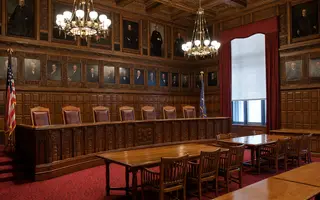
Residents and non-residents should understand the types of courts in Tioga County so they know how and where to file legal documents, where to go for hearings, and about civic duties such as jury service as they fulfill their constitutional rights.
 Supreme Court
The Tioga County Supreme Court operates within the 6th Judicial District of the New York State Unified Court System, handling civil litigation and matrimonial cases. The Supreme Court has jurisdiction over the following:
- Contested divorces
- Legal separations
- Annulments
- High-value civil claims
- Medical malpractice claims
- Breach-of-contract
- Equity and injunctions
The Tioga Supreme Court is the only trial-level court of unlimited general jurisdiction. Residents can access court records and file a case with the Tioga Supreme Court through the New York State Courts Electronic Filing (NYSCEF) portal.
Primary Location: Tioga County Courthouse
 County Court
The Tioga County Court is responsible for criminal and felony prosecutions and significant civil lawsuits in Tioga County. The Tioga County Court has jurisdiction over the following:
- Major criminal cases
- Lower-level misdemeanor appeals
- Grand jury indictments
- Civil cases with damages below $25,000
- Firearm and concealed carry permits
The Tioga County Court has jurisdiction over primary felonies such as drug trafficking, homicide, burglary, felony DWI (Driving While Intoxicated), and grand larceny cases.
Primary Location: Tioga County Courthouse
 Family Court
The Tioga County Family Court resolves cases involving children, families, and domestic relationships as part of the 6th Judicial District of the New York State Unified Court System. The Family Court has jurisdiction over the following:
- Child custody and visitation
- Child support enforcement
- Paternity
- Abuse and neglect
- Family offenses like domestic violence
- Child protective proceedings
- Adoptions & guardianships
- Juvenile justice
The Tioga County Family Court is responsible for all civil cases involving minors and domestic family units except for terminating a marriage, granting divorces, or dividing marital property.
Primary Location: Tioga County Courthouse
 Surrogate's Court
Another high-level trial court in Tioga County is the Tioga County Surrogate's Court. The Surrogate's Court is a special court responsible for handling the affairs of the deceased in Tioga County, as well as other matters. The Surrogate's Court has jurisdiction over the following:
- Probate of wills
- Small estates
- Estate administration
- Trusts and accountings
- Adoptions
- Legal guardianships
The Tioga County Surrogate's Court oversees the distribution of the estates of the deceased according to their will or testament. This court can appoint a legal guardian if the deceased did not leave a will, as well as for people who need a guardian due to age or disability.
Primary Location: Tioga County Courthouse
 Town & Village Justice Courts
Tioga County Town & Village Justice Courts are independent of the County Court system except for when an individual wants to appeal a ruling of these courts to the trial-tier County Court. The Justice Courts have jurisdiction over the following:
- Traffic & vehicle violations
- Criminal authority
- Civil claims
- Housing disputes
- Town code violations
There are 13 Justice Courts in Tioga County, each responsible for handling trials and traffic violations within its municipality's limits daily.
Primary Location: Various towns and villages throughout Tioga County
How to Access Tioga County Court Records
Members of the public and attorneys can access Tioga County Court records through various online platforms and in-person requests at the Tioga County Clerk's office. It does not matter whether it's for personal research or for an active court case; the Tioga County Clerk ensures that court records are public information except for restricted records.
 Online Access
Individuals can access court records using the New York eCourts platform. Users of this platform also get access to its multiple sub-portals to search for specific court records. For example, one can search for criminal records using the Webcrims sub-portal, the WebCivil Supreme for Supreme Court records, and the WebCivil Local for digitized City, Town, and Village Court records. Those searching for Family Court records can use WebFamily and WebSurrogate to access Surrogate Court records. In addition to filing a case, one can use the NYSCEF portal to access Tioga County court records. Court records available include, but are not limited to, Civil and Supreme Court records.
 Alternative Online Options
Tioga County court records are also available through third-party search engines such as CourtCaseFinder. The platform has some outstanding features that one might not experience on the statewide platforms. Users can search for court records across multiple jurisdictions, which is also not the case with statewide platforms. And if someone doesn't have all the case details, they can search using single parameters such as party names, the filing date, and so on. They can also search for open and closed criminal cases across multiple counties and states.
 In-Person Requests
Tioga County court records are available through in-person requests at the Tioga County Clerk's Office or the respective clerks handling the case one is searching for. At the Tioga County Clerk's Office, one can find the Supreme Court, County Court, Family Court, and Surrogate Court. If an individual is looking for court records of the Justice, they can access them at the specific Town or Village court. Records can be searched using public terminal computers provided by the Clicks office. For undigitized files, one can request them at the clerk's counter by providing case details, such as the name, filing date, index number, and so on.
 Archived Records
Archived court records in Tioga County are physically stored in two main locations. First, to access archived records, one can confirm with the Tioga County Clerk's Office. If the records are unavailable there, one can confirm with the Tioga County Records and Archives Center. Some archived court records one is likely to find here include historical court files on microfilm. One can also access archived records for newer or semi-recent civil matters, deeds, or judgments online through the Tioga County Clerk eSearch Tool and the New York State Archives Court Records Pathfinder.
For Attorneys and Legal Professionals
There are multiple specialized, expedited platforms that attorneys and professionals in New York can use to access court records and file cases. Electronic filing is mandatory for attorneys through the NYSCEF. Additionally, they can track cases, view opposing counsel details, or review docket histories and track calendars through the New York eCourts platform. Attorneys can also request court records in person at the respective clerk's office. In-person requests are recommended for attorneys searching for older physical dockets, non-digitized files, or cases requiring certified seals.
The same rules and procedures apply to attorneys and legal professionals visiting Tioga County Courts as they do in other courtrooms statewide. Legal professionals should learn how the Tioga County Court System works, including filing procedures, courthouse schedules, motion practice, and judicial assignment rules. Those coming to file a case should bring identification information, such as the case number, filing year, and party names, to help speed up the process. They should learn how to file and where to file since case filing is available online and in person at the Clerk's office. If one is unsure, they can confirm with the Clerk's Office to avoid delays and confusion and have a seamless experience.
How to File a Case in Tioga County
Individuals who want to file a case in Tioga County should understand the steps they must follow to do so successfully. If residents don't follow the steps or the rules, the judge might not accept their case.
Step 1: Choose the Correct Court
The first step to filing a case in Tioga County is to choose the appropriate court with jurisdiction over the case. If an individual files a case at the wrong court, they risk losing their filing fees because the judge will not accept the case. This means they have to start the process again until they get it right. Individuals with small cases, such as traffic violations, can file at the Town and Village Courts near them. Similarly, they can file with the Family Court for family-related legal matters and the Surrogate's Court for matters involving the deceased.
 Step 2: Complete Required Forms
The next step is to obtain and complete the appropriate forms. One can get forms in person at the respective courthouses. Individuals who want to file electronically can download forms from statewide court portals, such as the NY CourtHelp DIY Forms Portal, for an interactive do-it-yourself experience. Individuals filing should not use random forms; the courts require standardized forms, which they can download from the New York Courts website. The court requires one to follow formatting rules and notarization.
 Step 3: File the Case
Self-representing litigants (people who are suing or being sued by someone else) can choose to file in person or online. If a resident is at the courthouse, they can file the case at the clerk's counter. The forms should include original documents and copies for the plaintiff. Those filing electronically can use the New York State Courts Electronic Filing (NYSCEF) platform. Electronic filing using NYSCEF is mandatory for attorneys. Filing through this platform is as simple as creating an account, converting files to PDF format, and clicking upload.
 Step 4: Pay Filing Fees
The next step in the filing process is to pay statutory fees. Individuals filing online can pay electronically on the NYSCEF System, while those filing in person can pay over the counter at the Clerk's Office. If one cannot afford the statutory fees, they must apply for a fee waiver, also called Poor Person Relief. Once the judge signs and approves, the judge will issue an order waiving the fees.
 Step 5: Serve the Other Party
Once an individual files a case, the court requires them to officially notify the defendant through a third party, who will deliver the court papers in person. One must use a third party because the law doesn't allow them to perform the "service of process" themselves. Examples of third parties one can use include the Tioga County Sheriff's Office, professional process servers, or a neutral third party, such as an uninvolved friend or relative who must be over 18 years old. The server must complete the NYS Affidavit of Service Form, have it notarized, and file it with the clerk.
 Step 6: Monitor the Case
The defendant is required to monitor the case because if they don't, they are likely to miss important case updates, such as judges' orders and hearing dates. One can monitor online using the all-in-one eTrack platform. Using this platform, one can set automatic email alerts to get notified when the court shares updates. Another platform one can use to track a case is the NYSCEF portal. Automatic notifications are available through this platform as well.
Tioga County Courthouse Directory
Here are the locations, phone numbers, and websites for the respective courts in Tioga County.
Tioga County Historic Courthouse
The Supreme Court, the County Court, the Surrogate's Court, and the Family Court of Tioga all operate from the Tioga County Historic Courthouse.
Supreme Court: (607) 689-6102
County Court: (607) 689-6102
Surrogate's Court: (607) 689-6099
Family Court: (607) 689-6077
Local Town & Village Justice Courthouses
There are 13 Justice Courts in Tioga County, and each court operates from the specific courthouses available in its municipalities.
Legal Help and Self-Help Resources
Legal help and self-help resources are available to self-representing litigants in Tioga County who cannot afford an attorney. Non-profit organizations, legal aid clinics, and state bars across Tioga County offer Pro Bono services and free self-help advice. Those who need help should seek assistance at an early stage of their case to ensure they receive proper justice.
 Free Legal Assistance
Individuals facing criminal cases but cannot afford an attorney have a right to be provided with a court-appointed attorney by the Tioga County Public Defender Department. Individuals battling family law cases such as child safety, family stability, and protection from abuse, who cannot afford an attorney, the public defender will also provide an attorney for them. Additionally, low-income individuals facing civil matters can find help from the Legal Services of Central New York (LSCNY). LSCNY provides free legal help for housing justice, economic security, consumer rights, and civil rights.
Local Legal Support
Residents of Tioga County can find Civil legal aid from Legal Assistance of Western New York (LawNY). LawNY is a nonprofit organization that ensures low-income individuals in Tioga County receive appropriate assistance with noncriminal issues such as evictions, foreclosure prevention, bankruptcy, and public benefits denials. They can receive the same services through the Legal Aid Society of Mid-New York. Another non-profit organization supporting low-income individuals is A New Hope Center (ANHC). Through this organization, victims of crime, abuse, and domestic and sexual violence receive legal advocacy and safe housing.
FAQs
How do I search for a criminal case in Tioga County?
Criminal cases, court records, and information in Tioga County are available through in-person request at the Tioga County Clerk's Office. The Clerk's Office is responsible for maintaining court records from criminal, civil, supreme, and family courts. Alternatively, one can search for a criminal case online using Webcrims. Alternatively, they can search through the New York Criminal History Record Search (CHRS).
Are court records public in Tioga County?
Yes. In Tioga County, court records are public information except for sealed, restricted, or confidential court records. Court records are available for viewing, inspection, download, and printing online or in person at the Tioga County Clerk's Office. Court records from the Supreme Court are available online through the NYSCEF Guest Search portal, and criminal records through CHRS. For records from the other Tioga County Courts, one can use the New York eCourts platform.
How long does it take to get records in Tioga County?
Individuals requesting court records online in Tioga County can receive them immediately with just a few clicks. On the other hand, records requested in person at the Tioga County Clerk's Office might take a little bit longer, depending on whether the files were still in active use by the court or have been archived. Manual requests can take 1- 5 days, but sometimes, if lucky, one can get records on the same day.
Are online court record searches always accurate?
Online court records searches are not always accurate. Sometimes inaccuracies occur because of human error, update delays, expungements, seals and restrictions, privacy redactions, and fragmented systems. For example, if one uses the wrong spelling, the wrong date, and the wrong format, they are likely to get inaccurate results, especially with state-wide platforms. Therefore. When searching court records, one should ensure they key in the correct parameters and use appropriate formats.
When is it helpful to use a third-party records finder?
Third-party record finder platforms, such as CourtCaseFinder, are helpful to individuals who want to perform multiple searches, for example, searching court records of civil, criminal, and traffic violation cases. By using CourtCaseFinder, one can access court records from different types of courts on one search platform, which is not the case with official statewide platforms. Most importantly, the platform allows for centralized searching, flexible querying, time-saving, and provides a broader scope for users to search court records with a mobile-optimized interface.
PLAGIARISM DUE TO LOCATION
Other Counties in New York
- Albany
- Allegany
- Bronx
- Broome
- Cattaraugus
- Cayuga
- Chautauqua
- Chemung
- Chenango
- Clinton
- Columbia
- Cortland
- Delaware
- Dutchess
- Erie
- Essex
- Franklin
- Fulton
- Genesee
- Greene
- Hamilton
- Herkimer
- Jefferson
- Kings
- Lewis
- Livingston
- Madison
- Monroe
- Montgomery
- Nassau
- New York
- Niagara
- Oneida
- Onondaga
- Ontario
- Orange
- Orleans
- Oswego
- Otsego
- Putnam
- Queens
- Rensselaer
- Richmond
- Rockland
- Saint Lawrence
- Saratoga
- Schenectady
- Schoharie
- Schuyler
- Seneca
- Steuben
- Suffolk
- Sullivan
- Tompkins
- Ulster
- Warren
- Washington
- Wayne
- Westchester
- Wyoming
- Yates
Table of Contents