Table of Contents
Onondaga County Courts, NY *

Onondaga County, situated in Central New York State, is one of the most congested counties in the state. Local government, business owners, local citizens, and travelers interact with county courts in civil, criminal, and matrimonial proceedings, including probate, real property, and family law matters.
County Courts of Onondaga County operate as a single unit within the New York State Court System and allow the public to obtain legal services through local, lower-level courts or through higher-level trial courts with full jurisdiction over numerous matters. Citizens seeking legal services in Onondaga County will find it crucial to identify which county court should be responsible for their case proceedings and how to locate court records.
Overview of the Onondaga County Court System
The courts of Onondaga County are part of the New York State Unified Court System, which oversees the trial and appellate courts throughout the State of New York. The Courts of Appeals is the highest level court in New York, and under it is the Appellate Division of the Supreme Court of the state. The New York Supreme Court is the state's highest trial court and hears all major civil and matrimonial matters. Appeals from smaller local courts are heard in the Appellate Division of the Supreme Court.
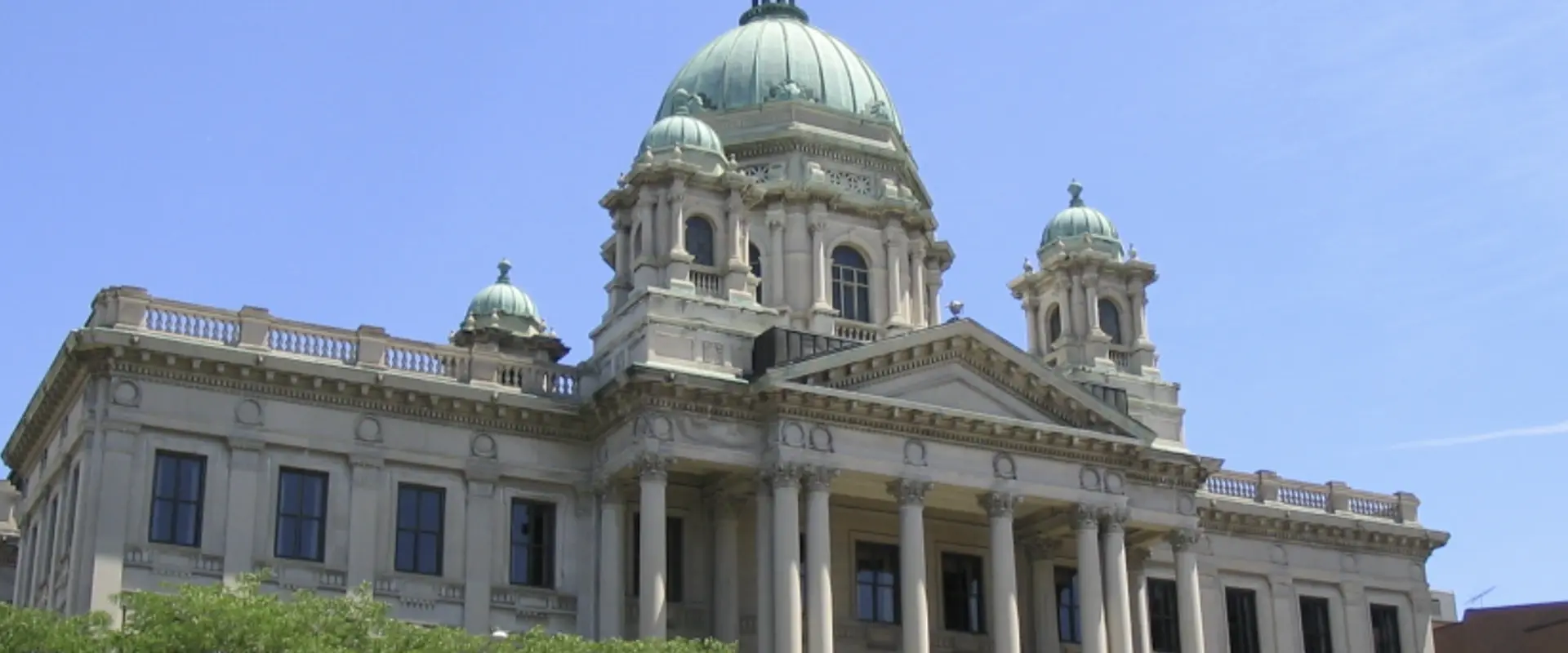
After the appellate courts, there are six types of trial courts found in Onondaga County: Supreme, County, Family, Surrogate's, City, and Town and Village Courts. These Onondaga County local courts are responsible for felony and misdemeanor criminal cases, family law matters, estates and will administrations, small claims, and traffic violations. The primary county courthouses in Onondaga County are the Honorable James C. Tormey III Criminal Courthouse and the Onondaga County Courthouse, in Syracuse, the county seat of Onondaga County.
Types of Courts in Onondaga County, New York
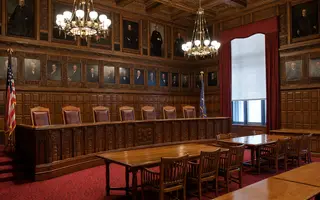
People seeking legal services need to know which court is relevant to their issue to avoid added delay, costs, or unnecessary transfers. Each level of the courts of Onondaga County has a specific jurisdiction and area of operation. Some of the courts are devoted exclusively to criminal matters, while others are family law, estates, civil, or local ordinance courts.
 Supreme Court
The highest trial court in the county for larger monetary civil and matrimonial actions is the Onondaga County Supreme Court, located in the 5th Judicial District of New York.
The types of cases heard at this court are:
- Larger civil cases
- Matrimonial actions: divorce, annulment, and separation.
- Injunctions.
- Felony criminal prosecution
This court is one of the busier courts in the county and hears most of the county's significant cases. The Supreme Court is the highest local court in terms of civil jurisdiction and the only local court with divorce jurisdiction.
Primary Location: Onondaga County Courthouse
 County Court
The County Court of Onondaga County handles important criminal cases; it has limited jurisdiction in civil matters.
This court's jurisdiction includes:
- Felony criminal cases
- Misdemeanor and other minor offenses for trial
- Civil claims under $25,000
- Appeals from town and village courts
The county court has very strong connections with prosecution and defense attorneys, probation, and police. It is from the town and justice courts where major criminal proceedings are commenced before ending up in the County Court. It is also common for judgments in lower courts to be appealed to the County Court.
Primary Location: The Honorable James C. Tormey III Criminal Courthouse
 Family Court
The Family Court in Onondaga County handles family law and child-related matters.
It is found within the County Courthouse, and cases heard in this court include:
- Custody and adoption
- Support enforcement
- Juvenile delinquency
- Abuse and neglect cases
- Foster care approvals and reviews
- Family offense petitions
In Family Court, attorneys for children, probation officers, social services workers, and counselors are present. This court handles family law matters, including child custody and support and domestic violence cases, but it does not address divorce cases.
Primary Location: Onondaga County Courthouse
 Surrogate's Court
The Onondaga County Surrogate's Court is located in the Onondaga County Courthouse and handles probate and other matters of estate administration.
The jurisdiction of the Surrogate's Court includes:
- Probate of Wills
- Estate Administration
- Guardianships
- Trust Litigation
- Adoption
The jurisdiction of the Surrogate's Court is invoked only after a person has died or when there are questions of legal guardianship. Probate and estate documents are made public records through the Surrogate's Court by an executor, relatives, genealogists, and attorneys.
Primary Location: Onondaga County Courthouse
 City Court
The Syracuse City Court serves as the venue for the vast majority of criminal and inferior civil cases heard within the City of Syracuse's limits.
- Civil cases which are heard at City Court include:
- Misdemeanors and inferior crimes
- Felony arraignments
- Civil claims up to $15,000
- Traffic infractions
- Small claims up to $5,000
- Landlord-tenant disputes
There are several problem-solving courts and other specialized courts located within the City Court system that address social and behavioral factors associated with criminal charges. The problem-solving courts include: the Domestic Violence Court, Syracuse Community Treatment Court, C.A.R.E. (Court for Addiction Recovery and Education) Court, and Veterans Court. These courts provide services such as treatment, supervision, and accountability.
Primary Location: The Honorable James C. Tormey III Criminal Courthouse
 Town & Village Justice Courts
The Town and Village Justice Courts in Onondaga County are the local courts most accessible to residents throughout the county. They are the most accessible local courts to Onondaga County citizens. These local courts can be found in most towns and cities in Onondaga County.
Jurisdiction in the local Town and Village Justice Courts includes:
- Traffic violations
- Small claims cases
- Minor crimes
- DWI cases
- Evictions within the Town boundaries
- Violations of local ordinances
- Arraignments for criminal matters
- Marriages
These community-based, local courts handle a great number of simple legal cases. The first time many citizens encounter the justice system is through traffic violations or small-claims matters handled in justice court.
Primary Locations: Town and Village Justice Courts throughout Onondaga County
How to Access Onondaga County Court Records
Most Onondaga County court records are open to public access unless restricted for privacy reasons or sealed by statute. Records concerning juveniles, confidential matters, adoptions, or protected criminal case data may not be publicly available. While search times have greatly increased due to online access, certified documents or archives might still require in-person requests and payment of a copying fee.
 Online Access
One statewide online search system used in County Court and Syracuse City Court cases is the New York State Courts Electronic Filing System (NYSCEF). Also, a public search is available on the New York State Courts eCourts website. Residents may look up appearances, future court dates, and basic case information through eCourts. A successful search typically depends on having as much information as possible before starting. Case numbers, the names of those involved in the litigation, and the dates the documents were filed are all useful data points. Broad searches are less useful if they yield many records, as can happen in high-volume courts, such as Onondaga County. Residents should know that online access is generally not available for Town and Village Courts.
 Alternative Online Options
Statewide access databases may seem cumbersome, and many out-of-state residents are unfamiliar with the system for searching court records in New York. Those searching for specific criminal cases, civil filings, divorces, or other court records can look on other platforms like the CourtCaseFinder. These platforms aggregate a wide range of public information for numerous courts and counties across states. They can quickly locate a court record, even when their information is missing from official systems. Additionally, they may be beneficial, especially when one needs to locate older cases or does not know which court holds the record they need.
 In-Person Requests
Researchers who need a certified copy, old archives, or any document related to probates or other documents that are not accessible online can visit the Onondaga County Clerk's Office to obtain them. Clerk personnel will help them locate:
- Hard copy files
- Archived documents
- Copies that are certified
- Judgment records
Providing as much information as possible when visiting the clerk's office will expedite the search. These include the case number, approximate dates when the documents were filed, the names of any parties, and relevant property descriptions.
 Archived Records
Archived court documents, especially older probate and civil matters, may not appear in the online system because they may not have been digitized. These archived materials may be on paper at the County Clerk's Office or at a records management facility. Those who require historical court records, including genealogy, old litigation, or past land cases, can visit the Onondaga County Historical Court Records. The New York State Archives also holds older and historical court records of trial and appellate courts, which are useful for those searching for historical Supreme Court records.
For Attorneys and Legal Professionals
Any attorney practicing in Onondaga County will regularly appear before courts with different procedural rules. A criminal attorney might appear before City Court one day and County Court the next; a family law attorney will appear before either the Supreme Court or Family Court. Thus, knowing all county rules and regulations is crucial for electronic filing, calendaring, and local practices.
Lawyers and legal professionals from outside Onondaga County rely on the e-filing system to track their cases statewide, to communicate with the Onondaga County Clerk's Office to confirm that documents are correctly processed, and to access the local court calendars. Besides these procedures, legal professionals must adhere to New York's Rules of Professional Conduct. Prompt communication when requesting court records and when consulting the clerk's office will facilitate the quick processing of the case.
How to File a Case in Onondaga County
Anyone seeking legal services in Onondaga County must file their case with the proper court clerk or through the correct online portal. Each court has its own rules, regulations, and deadlines. It is crucial to follow all instructions very carefully, as a filing with incorrect information or information missing could result in a denied filing or multiple court dates for correction.
Step 1: Choose the Correct Court
The first step in any court case is to determine which court has jurisdiction over the issues involved. For instance, divorce actions must go through the Supreme Court, probate matters through the Surrogate's Court, and custody matters through the Family Court. Persons accused of a crime may appear on the first date in Syracuse City Court or a local Town and Village Justice Court, after which the case may be moved to County Court. Those who file in the incorrect court may experience delays and unnecessary costs down the line.
 Step 2: Complete Required Forms
Once they know which court they should file with, the next step is to gather and complete all the appropriate forms and supporting documents, such as affidavits, exhibits, and financial disclosures. There are downloadable filing forms accessible through the County Clerk's official website. The New York Courts Forms portal provides many filing forms for several courts, including the Supreme, Family, and Surrogate's Courts. They must complete every fill-in space carefully, because anything missed can result in a filing being denied. It is always good to make extra copies of all submitted documents to keep as references for later dates.
 Step 3: File the Case
The next step is to file the documents with the appropriate clerk's office in Syracuse to ensure they are properly entered into the court record. For in-person filing, such as for people representing themselves, it is important to call ahead to verify courthouse hours, acceptable payment methods, and any required identification. E-filing is available through the NYSCEF, and e-filing is mandatory for Supreme Court cases and all civil matters in Onondaga County with attorney representation. Upon successful filing, the case will receive a case number for tracking its proceedings and information.
 Step 4: Pay Filing Fees
There are filing fees associated with court cases in any court in New York. Depending on the court in which the case is being filed and the nature of the case, fees can vary significantly. Those filing civil cases can check the rates through the County Clerk's official page. Persons unable to afford such fees may file an Application for Poor Person Relief form to request a waiver of filing fees. Then, the forms will be reviewed by the judge, who will decide whether to waive or reduce the fees. They should attach the proof of their financial challenges when submitting the fee waiver form.
 Step 5: Serve the Other Party
The respondent of the case must also be properly notified of the filing via a proper method of service. The notification documents may be served by a sheriff or a professional process server with a certificate of authority. Proof of service must always be filed with the court, usually in the form of an affidavit demonstrating who was served, how the papers were served, and the date it took place. Cases can be delayed or even dismissed if all service rules are not properly met.
 Step 6: Monitor the Case
After the case has been filed successfully, they can stay informed on future deadlines, hearing dates, and overall court updates by monitoring the case. The case number is very important for those seeking information via eCourts, NYSCEF, or the clerk at the courthouse. They may receive a scheduling order from the court, notifications of motion dates, or notices of settlement conferences. An individual having difficulty monitoring their cases should always consider visiting or calling the County Clerk's Office for assistance.
Onondaga County Courthouse Directory
Onondaga County Courthouse
The primary civil and family court in Onondaga County. It houses the Supreme Court, Family Court, Surrogate's Court, and part of the County Court.
Syracuse
Address: 401 Montgomery Street, Syracuse, NY 13202
Phone: (315) 671-1020
County Clerk: (315) 435-2227
Supreme Court: (Civil) (315) 671-1020 (Criminal) (315) 671-1030
Family: (315) 671-2000
Surrogate: (315) 671-2100
The Honorable James C. Tormey III Criminal Courthouse
The Criminal Courthouse processes City Court criminal cases and many County Court criminal cases, including felony cases and arraignments, as well as small claims and landlord-tenant issues.
Syracuse
Address: 505 South State Street, Syracuse, NY 13202
County Court: (Civil) (315) 671-1020 (Criminal) (315) 671-1030
Syracuse City Court: (315) 671-2700
Syracuse Community Treatment Court
Located at the Public Safety Building and houses the specialized Adult Drug Court. This is where court-monitored treatment and rehabilitation for litigants with substance abuse disorders occur.
Syracuse
Address: 511 S. State Street, Syracuse, NY 13202
Phone: (315) 671-2795
Website: Syracuse Community Treatment Court
Town and Village Justice Courts
Local justice courts across Onondaga County handle ordinance violations, misdemeanors, small claims, and traffic violations.
Legal Help and Self-Help Resources
Numerous statewide and local organizations have resources for individuals facing Onondaga County Court issues, providing legal support. Many of these resources focus on specific demographics such as veterans, senior citizens, immigrants, tenants, survivors of domestic violence, and low-income residents, while others aim to help the self-represented.
 Free Legal Assistance
There are organizations that offer free legal assistance in Onondaga County, including Legal Services of Central New York, which provides free civil legal help to low-income individuals and households. There is also the Frank H. Hiscock Legal Aid Society, which focuses on criminal defense, extradition appeals, Family Court cases, and civil matters. The website LawHelpNY also offers free legal help across the state, listing the statewide lawyers and legal rights resources for those seeking legal assistance.
The Volunteer Lawyers Project of Central New York uses volunteers to provide pro bono legal services and legal clinics. These resources help veterans, senior citizens, and those who are homeless get legal help. Court clerks can be used to obtain forms, help with filing, and find guidance on procedures.
Local Legal Support
There are also local legal support organizations, such as the College of Law at Syracuse University, which provides clients with assistance through its clinics across the county. They offer various legal practice areas to clients, including disability rights. Clients seeking legal help may also find assistance at the Volunteer Lawyers Project of Onondaga County, which helps with consumer, elder, estate planning, and family law cases. These resources are essential because self-representation may not always work in more complex litigation.
FAQs
How to find criminal cases in Onondaga County?
Are Onondaga County court records open to the public?
While many court records are publicly accessible, some court proceedings are considered confidential. Confidential court records include family court proceedings, adoption files, juvenile matters, sealed criminal cases, and ongoing cases, which may also be subject to restricted access.
Where can residents find probate records in Onondaga County?
Probate records for Onondaga County should typically be accessed through the Onondaga County Surrogate's Court Case Search portal under the eCourts system. Attorneys, heirs, genealogists, and executors consult this court when looking for wills, estate, and guardianship files. For older or historical probate files, one can visit the County Clerk's Office or the New York State Archives.
Can someone file a case online in Onondaga County?
Individuals may now file most civil case matters online through the NYSCEF. Attorneys are required to use e-filing, but it is also available to self-represented parties for cases such as civil lawsuits. Certain case types require in-person review due to the sensitive materials involved.
What should I do if I can't locate a case online?
First, people should ensure that all details, such as case numbers, spellings, filing dates, and courts, are accurate. Sometimes, very old records are not digitized, so it is best to visit the clerk's offices at the courthouses. Individuals who find it difficult to navigate the official systems can contact the clerk's office for guidance or use a broader database such as CourtCaseFinder, especially when they are unsure of the correct court venue.
Other Counties in New York
- Albany
- Allegany
- Bronx
- Broome
- Cattaraugus
- Cayuga
- Chautauqua
- Chemung
- Chenango
- Clinton
- Columbia
- Cortland
- Delaware
- Dutchess
- Erie
- Essex
- Franklin
- Fulton
- Genesee
- Greene
- Hamilton
- Herkimer
- Jefferson
- Kings
- Lewis
- Livingston
- Madison
- Monroe
- Montgomery
- Nassau
- New York
- Niagara
- Oneida
- Ontario
- Orange
- Orleans
- Oswego
- Otsego
- Putnam
- Queens
- Rensselaer
- Richmond
- Rockland
- Saint Lawrence
- Saratoga
- Schenectady
- Schoharie
- Schuyler
- Seneca
- Steuben
- Suffolk
- Sullivan
- Tioga
- Tompkins
- Ulster
- Warren
- Washington
- Wayne
- Westchester
- Wyoming
- Yates
Table of Contents