Table of Contents
Clinton County Courts, NY *
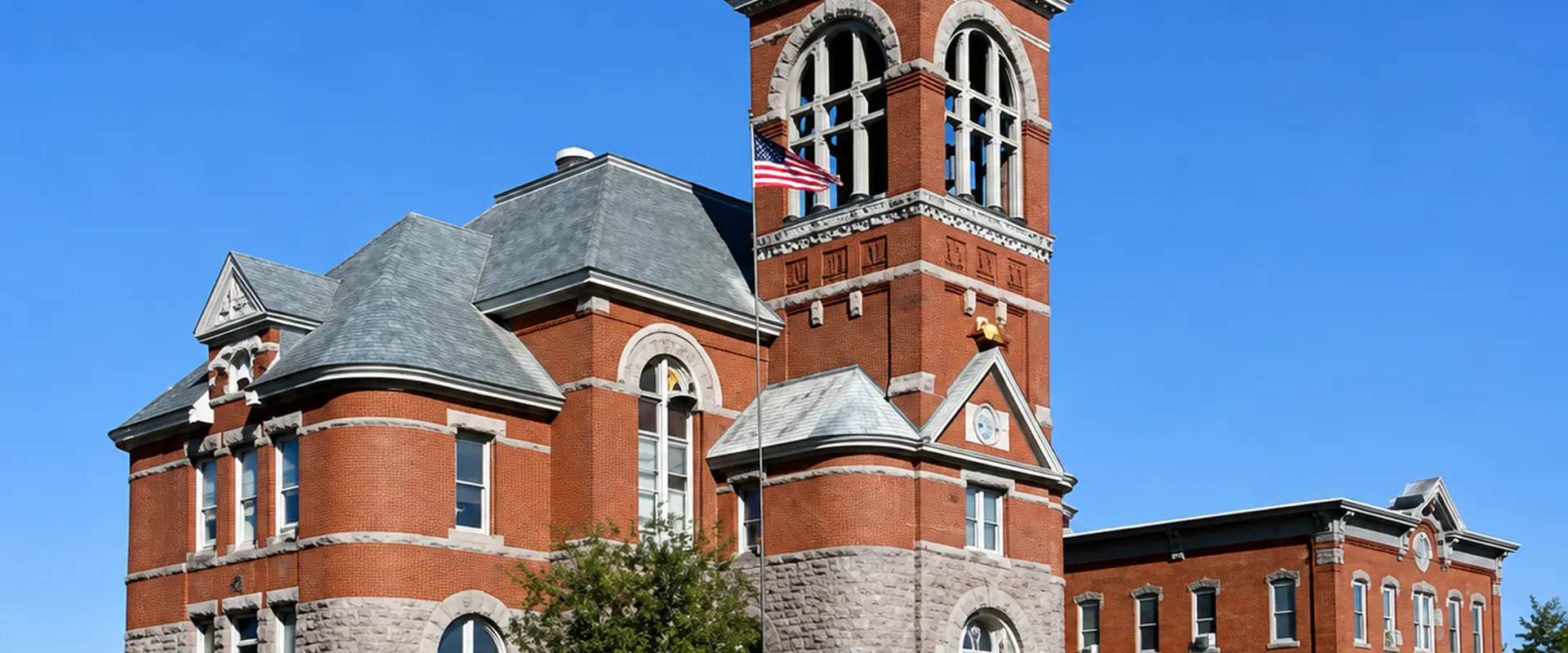
Clinton County is the northernmost county in the northeast corner of New York State. It shares a border with Canada on its north side and with Lake Champlain on its west. Clinton County is a small, rural county that has a rich historical heritage. Its county seat is Plattsburgh City, which is also the principal judicial and governmental center of the county.
As with other counties in New York State, the Clinton County Courts address numerous types of legal matters daily. Cases involving criminal law, civil suits, probate matters, traffic citations, landlord-tenant disputes, and family law are just some of the types of cases heard in the various Clinton County Courts.
Overview of the Clinton County Court System
The county court system operates under the New York State Unified Court System, which oversees the state's court system. Instead of being entirely court-by-court, as other states seem to have their systems organized, New York combines county-level administration with the statewide authority of the court system. This means that the legal procedures and court rules in the county are essentially the same across the state, with minor differences in scheduling or administration by county.
Much of the Clinton County Courts' operations are centered around the Clinton County Government Center in Plattsburgh. Several court offices are consolidated in this courthouse, where residents can file paperwork, attend a court hearing, and inquire about their cases. There are different levels and types of courts, each with different duties. When navigating the court system, one can ask local court clerks for procedural assistance, file required paperwork, inquire about scheduled hearings, or be directed to the appropriate office.
Types of Courts in Clinton County, New York
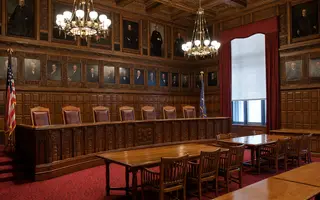
One of the key things to figure out in the legal system is which court will hear which case. A landlord-tenant dispute is not filed in the same court as a felony criminal matter, and probate is not heard in the same court as a traffic ticket. There are different courts in Clinton County, and they function differently.
 Supreme Court
The court of general jurisdiction for all serious civil and criminal cases in Clinton County is the Supreme Court. This court has jurisdiction over cases that the lower courts have no jurisdiction over.
Jurisdiction includes:
- Major civil lawsuits
- Felony criminal cases
- Divorce proceedings
- Certain appeals and motions
The Supreme Court is the highest court, handling cases with more complex proceedings, large monetary disputes, or felony charges. Many people find it somewhat shocking that in Clinton County, divorce cases can only be filed in the Supreme Court instead of the Family Court. New York law clearly states that the Supreme Court is the only court in the state that can grant a divorce, annulment, or separation.
Primary Location: Clinton County Supreme Court
 Clinton County Court
The Clinton County Court handles the prosecution of crimes within the county and can hear civil cases of $25,000.
Jurisdiction includes:
- Criminal cases
- Intermediate-level civil matters
- Appeals from lower courts
Clinton County Court sometimes complements the Supreme Court, depending on the case. Criminal prosecution that has moved beyond the initial lower local courts can end up here. Clinton County is not one of New York's larger counties, so there can sometimes be some interplay between the County Court and the Supreme Court operations and scheduling.
Primary Location: Clinton County Court
 Family Court
The Clinton County Family Court processes issues involving families and children. This court has the authority to issue an order for child support, visitation, child custody, and spousal support. The Family Court, however, has no authority to grant a divorce.
Cases commonly include:
- Child custody and support cases
- Juvenile delinquency cases
- Family offenses
- Adoption
The New York legislature created the Family Court to be more user-friendly than the Supreme Court. It can be a self-representing court because there is less paperwork, no filing fees, and everything moves more smoothly. This is a court devoted to the welfare of children and to family disputes. Divorces are generally not processed in the family court, although matters associated with divorce that fall under family disputes may be heard by both courts.
Primary Location: Clinton County Family Court
 Surrogate's Court
The Surrogate's Court in Clinton County primarily deals with probate cases and estate-related matters.
Jurisdiction includes:
- Wills and estates
- Probate cases
- Guardianships
- Estate administration
When a person has died, this court supervises the orderly distribution of their estate and handles disputes over a will, or issues regarding jurisdiction over estates and guardianships. However, even the simpler estate probate cases require time for the filings to be made, for notices to be given to creditors, and for approvals to be issued by the court.
Primary Location: Clinton County Surrogate's Court
 Specialized Courts
Clinton County has an Integrated Domestic Violence Court with a one-judge-one-family model to hear criminal domestic violence cases as well as related civil or family law cases for the same family. There's also a mental health court and a drug court.
Cases include:
- Custody and visitation matters
- Drug-related offenses
- Mental health cases
- Issuing protective orders
The goal of these problem-solving courts is to remedy the underlying causes of criminal behavior rather than incarcerate offenders.
Primary Location: Clinton County Specialty Courts
 Town & Village Justice Court
Clinton County has fifteen Town and Village Justice courts. The courts hear small claims, civil and criminal matters, and more in rural areas.
Cases include:
- Traffic violations
- Small claims cases
- Minor criminal offenses
- Local ordinance violations
- Evictions
Compared to the higher courts, local courts have a more informal environment, allowing most people to attend these proceedings without a lawyer. Local courts handle a large number of small claims cases, enabling citizens to resolve disputes under $3,000 (or under $5,000 depending on the town or village court) without incurring the high fees of civil court.
Primary Location: Clinton Town and Village Justice Courts
City Court
The Plattsburgh City Court handles civil suits, lesser offenses, and misdemeanors. It also handles small claims and housing-related cases.
Cases include:
- Civil suits up to $15,000
- Misdemeanors
- Small claims up to $5,000
- Landlord-tenant cases
- Arraign defendants accused of felonies
All local matters that arise within the city are handled by this court. If a matter occurs in the surrounding Town of Plattsburgh and not within the city, it will be handled in the town justice court.
Primary Location: Plattsburgh City Court
How to Access Clinton County Court Records
In Clinton County, most court records are public records, but whether or not residents have access to them varies with the type of case. Generally, criminal, civil, probate, and some traffic records are available from the clerks of the court or via electronic access to the system, while other case records remain confidential by law because they are protected by privacy statutes. A fee may be charged for the request or for physical and certified copies.
 Online Access
The State of New York offers online access systems for its courts. The New York Courts eCourts System is a statewide system that allows individuals to search for information about a particular case online. Access to case status, hearing dates, a filing summary, or basic docket information varies by court and case type. It is best to have at least one of the parties' names (or both names), case numbers, filing dates, and information regarding the court location.
 Alternative Online Options
Many people don't know which court jurisdiction handles a particular case in the first place. Some online third-party tools, like CourtCaseFinder, offer public record search assistance by collating information from many states and jurisdictions into a single database search. It may be useful when searching across counties, finding historical public records, or identifying court jurisdiction.
 In-Person Requests
Physical files and older court cases are usually easiest to get by visiting the courthouse or the clerk's office in person. The clerk can help people find:
- Physical file cases
- Archive documents
- Certified copies
Providing accurate information, such as names, filing year, and case numbers, helps one to get court records quickly. Clerks at the courthouse will tell citizens about court operations, but cannot give them legal advice.
 Archived Records
Older Clinton County documents may only exist as paper files or be stored in archival systems. It takes extra time to search historical records because files must be physically retrieved. It helps to ask the county clerk for assistance to obtain such records. The county clerk can help with land, court, and civil records. For genealogical or historical records, the county historian will provide these.
For Attorneys and Legal Professionals
Attorneys practicing in Clinton County will apply the New York Unified Court System rules and procedures statewide. However, local courtroom management and scheduling can vary to some extent. Even when systems are more standardized across New York, attorneys involved in probate, criminal, or family matters need to verify any unique local requirements and deadlines with the clerk's office. Scheduling hearing dates, arranging for record production, or setting a motion filing deadline should be done well in advance to avoid costly, time-consuming delays.
For lawyers visiting from out of the county or out of state, the first step for a legal professional is to become familiar with procedures and standing orders that are unique to Clinton County. Lawyers can first follow the guidelines within the state by following the guidelines set forth in the New York County Supreme Court Orders. Lawyers can always check with the Clerk of Court for Clinton County if they need further clarification on rules and procedures in the county.
How to File a Case in Clinton County
Filing a case in Clinton County requires specific steps, and any errors early on can cause frustrating problems down the road. Incorrect documents, improper paperwork, or filing in the wrong court will lead to rejection or unnecessary expenditures.
Step 1: Choose the Correct Court
The first step in the process is knowing which court has proper jurisdiction. For example, divorce is usually filed in the Supreme Court, custody issues are filed with the Family Court, estates and probate matters are most commonly filed with the Surrogate's Court, and simple local disputes are generally brought in town or village justice courts. Criminal cases initially involve town or village justice courts, then move to the County Court, then possibly the Supreme Court, depending on the nature of the crime and charges.
 Step 2: Complete Required Forms
When one selects the appropriate court, the relevant documents and forms must be completed accurately and thoroughly. Each case type will involve a unique set of documents, affidavits, and other supports. Documents could be petitions, complaints, notices to appear, probate filings, and financial disclosure documents. Forms can be obtained through the New York Unified Court System via the internet and from court clerk offices. Without all the proper documents, the individual will be stymied in their own filing. Any missing information or signatures will lead to a pause in processing.
 Step 3: File the Case
One can file a case with the proper clerk's office, either in person or electronically via the New York State Courts Electronic Filing system. However, one should first check which case types are authorized on the NYSCEF portal, because e-filing is only authorized in certain courts and case types. For instance, the Surrogate's Court is authorized for all estate types in certain courts. When the case is filed, a case number is assigned and used for all subsequent court matters and filings.
 Step 4: Pay Filing Fees
Filing fees are required for all matters. But there is an exception to paying a filing fee in some situations, specific to the court and case. The cost in this case may include a filing fee, a service fee, a certification fee, and a motion fee. The party may petition for indigent person status or apply for a fee waiver if they cannot afford the filing fees.
 Step 5: Serve the Other Party
After successfully filing the case, one will need to formally serve notice on the other person. This can be done by the Sheriff's Department, a professional process server, or anyone else legally permitted to serve notice. The time available to serve the other party is usually very limited. After service is effected on the respondent, proof of service is required. The proof of service must be in the form of an affidavit, which is then filed with the Court.
 Step 6: Monitor the Case
Once the filing has been completed, one must be very careful to monitor the case and every development. The parties should verify that they have received a case number to track the case. Case monitoring can be performed by observing court dates, hearing notices, document filing deadlines, and various motions and updates through the state's eTrack portal. Failure to meet the deadlines and hearing dates may be extremely detrimental to one's case.
Clinton County Courthouse Directory
Here are the key legal locations:
Clinton County Government Center
Houses nearly all the courts in Clinton County. It holds the Supreme and County courts, the Family court, the Surrogate's court, and specialized courts.
Plattsburgh
Address: 137 Margaret Street, Plattsburgh, NY 12901
Supreme and County Court: (518) 536 3840
Family Court: (518) 536 3820
Surrogate's Court: (518) 536 3830
Specialized Courts: (518) 565 4715
Plattsburgh City Court
Handles civil suits, lesser offenses, misdemeanors, small claims, and cases related to housing.
Plattsburgh
Address: 24 US Oval, Plattsburgh, NY 12903
Phone: (518) 536 3870
Town and Village Courts
Clinton County's Town and Village Justice Courts hear matters ranging from vehicle and traffic cases to small claims, evictions, civil matters, and criminal cases in rural communities. Over 15 local courts exist within Clinton County, and one can find a listing for all of them here: Clinton Town and Village Courts.
Legal Help and Self-Help Resources
Legal issues can be stressful and difficult to navigate, especially if one is unaccustomed to the court system. Fortunately, there are state and non-profit agencies offering assistance to citizens.
Free legal help programs are offered by some non-profit organizations, such as LawHelpNY. They offer self-help materials and referrals to agencies, and also help with housing, family law, public benefits, and consumer cases. The Legal Aid Society of Northeastern New York also assists low-income individuals with civil legal issues.
Court clerks can also provide free information on procedures, offer form documents, and explain the rules for filing those forms. However, they are not authorized to provide any legal advice.
Additional legal services may be available from neighborhood legal aid clinics or through pro bono services. They may provide services for small-claims court actions, child-custody cases, or probate matters. Institutions such as the Rural Law Center provide legal assistance to low-income rural residents, and the Clinton County Office for the Aging provides legal support to older adults. On the other hand, the VA Legal Assistance and the Clinton County Veterans Service Agency provide free, confidential advocacy and case management assistance in filing and appealing claims with federal and state benefits. The Legal Aid Society of Northeastern New York offers free civil legal assistance to survivors of domestic violence who cannot pay for a private lawyer.
FAQs
Are court records public in Clinton County?
Clinton County Court records are usually public and are accessible pursuant to the NYS Freedom of Information Law and Judiciary Law. They may be accessed online via the Clinton County Clerk's Office Portal, in person at the court where they were recorded, or via the statewide criminal records portal.
Where can I find eviction records?
Eviction records are available from the local court that heard the case. Most eviction cases are heard in the local city, town, or village court. However, if the case were in a higher court, the records can be found through the County Clerk. Eviction records can also be found through the New York State eCourts Portal.
What happens if someone misses a court date?
If one misses a court date, the judge will automatically issue a warrant for their arrest. One can be apprehended by law enforcement officers at any place and at any time they find them, even if one has pulled over for a speeding ticket. Beyond the warrant, one is going to experience subsequent criminal charges, forfeiture of the bail posted (if someone posted it), loss of Driver's License (if the charge involves a DWI or traffic ticket), and loss of any plea deal, which also means losing diversion programs or leniency from the judge.
When is it helpful to use a third-party records finder?
Third-party record search engines are helpful if a normal court record search is not helpful, or if someone does not know exactly which court is responsible for their records. Third-party systems, such as CourtCaseFinder, gather public records from multiple courts and save time when conducting a broad search that encompasses both criminal and civil actions.
Can someone request records on behalf of another person?
Records may be accessed on behalf of an individual, though the extent to which they are accessible will be dictated by the type of record and relation to the individual. Highly private records are obtainable only with a consent form or evidence of a legitimate interest. Access to vital records (birth, marriage, and death) will only be granted to spouses, children, parents, and siblings of the subject. Sealed records (divorce and family) are only available to the legal counsel of the individual and anyone with court orders authorizing the release of the records.
Other Counties in New York
- Albany
- Allegany
- Bronx
- Broome
- Cattaraugus
- Cayuga
- Chautauqua
- Chemung
- Chenango
- Columbia
- Cortland
- Delaware
- Dutchess
- Erie
- Essex
- Franklin
- Fulton
- Genesee
- Greene
- Hamilton
- Herkimer
- Jefferson
- Kings
- Lewis
- Livingston
- Madison
- Monroe
- Montgomery
- Nassau
- New York
- Niagara
- Oneida
- Onondaga
- Ontario
- Orange
- Orleans
- Oswego
- Otsego
- Putnam
- Queens
- Rensselaer
- Richmond
- Rockland
- Saint Lawrence
- Saratoga
- Schenectady
- Schoharie
- Schuyler
- Seneca
- Steuben
- Suffolk
- Sullivan
- Tioga
- Tompkins
- Ulster
- Warren
- Washington
- Wayne
- Westchester
- Wyoming
- Yates
Table of Contents