Table of Contents
Madison County Courts, NY *

Madison County is a rural county located in central New York State, east of Syracuse and within the Central New York region. The county seat is Wampsville, while Oneida is the county's largest city. Madison County has a population of approximately 68,000 residents and is famous for its rich agricultural heritage.
The people of Madison County depend on the Madison County court system, which is part of the New York State Unified Court System with high-level county courts under the 5th Judicial District. They depend on this system to solve their daily legal matters and disputes, and to protect and uphold their constitutional rights. The Madison County Clerk is the custodian for court records from the Supreme and County Courts. Residents and non-residents visit the Madison County Courts for legal matters, to search court records, attend hearings, serve jury duty, and file and answer lawsuits.
Overview of the Madison County Court System
The courts in Madison County work in a manner that aligns with the New York Unified Court System. For instance, the most serious and high-stakes civil cases are heard at the Supreme Court, while County Courts address smaller civil cases and criminal cases appealed from the Town and Village Courts. There is the Family Court, which handles cases related to families such as adoption, paternity petitions, and child support.
The Surrogate Court comes in to handle the issue of estate administration following a person's death. With the Village and Town Courts addressing smaller petitions and cases within their scope, the justice system in Madison County works well. For this reason, it is important for the public to be informed about how the legal issues are run in the whole county as the courts continue to support them in this course.
Types of Courts in Madison County, New York
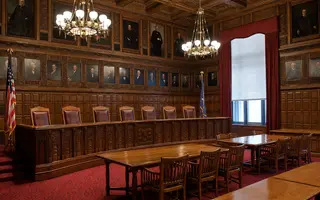
Courts in Madison County are classified according to their jurisdiction level, complexity of the matter, and geographical coverage area. There are specialized courts, such as the Family Court, designed to handle unique cases requiring special knowledge, experience, and training. The following are types of Courts in Madison County whose knowledge comes in handy when a citizen needs to decide where to seek legal recourse.
 Supreme Court
The New York Supreme Court is the general trial court, hearing Madison County's more serious matters. Its scope entails hearing of all civil cases with jurisdiction beyond the lower courts. Cases handled by the Supreme Court include the following:
- Felony matters transferred from the county court
- High-stakes disputes in contracts and personal injury
- High-value property cases
- Civil cases with a value above $25,000
- Divorce and separation
- Adoption
- Child protection
- Child paternity and support
- Probate of wills
As mentioned earlier, the 6th Judicial District Court is the administrative division of the lower courts, hearing and presiding over cases beyond its scope. For instance, it may determine cases for the Surrogate Court on matters involving estate administration when no will exists. The court remains committed to providing relevant information for justice seekers, like Guardianship Basics, which delegates guardians the decision-making power on behalf of people who may not legally do so.
Primary Location: Madison County Courthouse
 County Court
Madison County's County Court is at the frontline of handling felony level criminal cases. The County Court performs the following roles:
- Civil cases involving claims not exceeding $25,000
- Felony cases within the county
- Violations and misdemeanors
- Registration of sexual offenders
The court also handles appeals from smaller civil and criminal claims that come from the lower courts, such as Town and Village Courts.
Primary Location: Madison County Courthouse
 Family Court
The Family Court in Madison County has established the Family Defense Unit (FDU), running a program that ensures citizens have free access to an attorney whenever they need their services. Some of the typical cases handled here include:
- Review of foster care and its approval
- Child abuse, protection, and neglect
- Juvenile delinquency proceedings
- Adoption cases
- Domestic violence cases
In situations where there exists an overlap between crime arising from domestic violence and a family matter, an Integrated Domestic Violence and Family Treatment Court is considered. The FDU also provides vital information on one's rights whenever someone is under investigation.
Primary Location: Madison County Courthouse
 Surrogate's Court
The Surrogate's Court primarily handles matters revolving around estates and registered heirs. Some of these cases include:
- Estates administration
- Adoption proceedings
- Guardianship
- Small estate proceedings
- Probate of wills
Specifically, if an individual dies and leaves a will that may be deemed valid or invalid, the case will be handled by this court. Here, records are maintained for ease of access and reference upon request by any citizen intending to rely on this information for legal reasons.
Primary Location: Madison County Courthouse
 City Court
The Oneida City Court, Madison County's only city-level court, handles various types of cases, including civil, traffic, and commercial, within the town of Oneida. These cases are:
- Misdemeanor and violations
- Criminal matters
- Small claims up to $5,000
- Commercial claims up to $10,000
- Traffic violations
- Disorderly conducts
In many scenarios, the Oneida City Court has presided over landlord-tenant proceedings and housing-related claims.
Primary Location: Oneida City Court
 Town & Village Justice Courts
While the cases handled by the City Court and the Town and Village Courts are nearly the same, their mandates vary in terms of magnitude and geographical jurisdiction. These courts handle the following cases:
- Traffic infractions
- Misdemeanors and violations
- Civil claims up to $15,000
- Arraignment for felony cases up to the hearing stage
- Small claims up to $3,000
It is critical to know that these courts have a limited working schedule, where the doors open once or twice weekly. Decisions by the Town and Village courts can be appealed to a higher court, depending on their merit.
Primary Locations: Town and Village Courts across Madison County
How to Access Madison County Court Records
Unless expressly stipulated by the New York City law or a court order, the public is allowed free access to all court records. Such information may be available online, in person, or in the court's archived records.
 Online Access
There are various online tools one can use to access court records. Firstly, New York State Courts Electronic Filing (NYSCEF) comes in handy as it has documentation for cases filed electronically. Without having to create a profile for themselves, the public can easily navigate the platform and search for case information. Citizens may use a law firm, an attorney's name, a docket number, or a file number to search for the records.
Court clerks are tasked with accurately maintaining all records of the court for ease of access to the public. Individuals requiring this information may sign up through the IQS Portal free of charge or at a small fee, depending on rights. A small cost is incurred to view and download files, whereas searching and viewing remain free.
 Alternative Online Options
Alternatively, third-party tools like CourtCaseFinder have been crucial in helping people access accurate and detailed information about court cases, ensuring they are adequately informed for easier access to justice. The portal aggregates information from different court databases, allowing users to search for court information within counties in New York and beyond. For this reason, it is a good starting point for people who are not sure of the court in which a case was filed.
 In-Person Requests
Since some court records are not available online, people are advised to physically visit the courthouse and pay as low as $0.65 per copy of each page or $5 to have each document shared with them via email by the office of the court clerk. As custodians of all court records, clerks have made it seamless for those simply seeking to read the information using the public access computers. The staff is always available to assist those who might need it during office hours.
 Archived Records
Madison County provides access to archived court records dating back to the digital era. While it might take a lot of time, one is advised to place requests through the archive portal. Some records may require an appointment, like will files and probate records. Alternatively, the Madison County Historian, through the instruction of the County Clerk's Office, may help in accessing historical records needed by people conducting research.
For Attorneys and Legal Professionals
For all Supreme Court matters, Madison County-based attorneys file cases using the New York State Courts Electronic Filing (NYSCEF), which has become the standard rule. This requires one to register first to get access. It has made it easy for them to document, track court deadlines, and know case status.
Procedures vary when dealing with filings and motions of criminal matters within Madison County. In this case, there is the leeway to choose either electronic or physical submission at the clerk's window. With the direct assistance of the clerk's office, attorneys must ascertain that they have abided by the filing protocols specifically relevant to that court. They should also be familiar with the local court, which may come in handy in preparation for the case and court appearance.
How to File a Case in Madison County
Knowing how to navigate through the process of filing a case in Madison County remains fundamental, as it directly influences the turnaround time for getting justice and determines whether one will even get a hearing for a case in the first place. The following are some of the vital steps to follow to present a strong case in court:
Step 1: Choose the Correct Court
Courts are classified in terms of the type of case and the dollar amount in question. For example, the Supreme Court hears civil cases involving large amounts of money, while criminal matters (felonies) are taken to the County Court. The local justice courts and Oneida City Court preside over cases involving violations or misdemeanors. Also, the Surrogate's Court handles will and estate issues, whereas matters relating to families are mainly handled at the Family Court. The New York State Unified Court System provides all the information on choosing the right court for each case.
 Step 2: Complete Required Forms
There are court-specific forms that need filing, which may not apply across other courts. Therefore, to avoid being rejected, one must make sure they complete the correct set of forms. The New York Courts website is a responsive and highly resourceful platform, providing downloadable forms that one needs to complete, depending on the nature or type of case. These cases may vary from adoption, divorce, name change, or guardianship. The categorizations make the required information unique for each situation.
 Step 3: File the Case
Upon completion of the correct forms, one may proceed to file the case by presenting the forms appropriately. For instance, civil cases filed at the Supreme Court can go through New York State Courts Electronic Filing (NYSCEF), as it allows litigants representing themselves to use the platform. However, for the self-represented litigants, filing in person at the clerk's desk during working hours is also allowed. Usually, most courts are flexible; they advise people to call before presenting the documents for efficiency, while others accept filing as court proceedings continue during regular days.
 Step 4: Pay Filing Fees
Filing fees differ depending on the case type and the court. The Supreme Court charges the highest, with approximately $200 for its civil cases. Notably, custody filings at the Family Court are commonly free, whereas smaller claims attract a lower amount, averaging about $25. In case one cannot afford the filing fee, they can opt to apply for a waiver by submitting the Application to Waive Court Costs, Fees, and Expenses and having it approved.
 Step 5: Serve the Other Party
Service of process, which involves formal notification to the opposing party, should follow. There exist standardized methods for serving, which depend on the case type. Usually, court clerks conduct the service in Family court petitions, while sending emails works for smaller claims. Process servers are used for civil petitions at the Supreme Court. A proof of service must be filed back with the court for a case to proceed.
 Step 6: Monitor the Case
The success of filing a case significantly depends on this stage, as any misunderstanding could lead to an unintended judgment by the court. For this reason, eCourts assists in tracking the case. The court communicates the date, including what the court expects the two parties to do. It is important to note that a judge may issue a warrant of arrest or a default judgment for a criminal or civil case, respectively, if one fails to show up to a hearing.
Madison County Courthouse Directory
Courthouses and offices within Madison County are mostly within reach of citizens, as they are within Madison's geographical jurisdiction.
Madison County Courthouse
Hosts the Supreme Court, 6th Judicial District Court, County Court, Family Court, and Surrogate's Court.
Wampsville
Address: 138 North Court Street, P. O. Box 545, Wampsville, NY 13163
Supreme Court: (315) 231-5301
6th Judicial District Court: (607) 240-5954
County Court: (315) 366-3266
Family Court: (315) 366-3024
Surrogate Court: (315) 231-5321
Oneida City Court
Madison County's only city-level court handles various types of cases, including civil, traffic, and commercial cases.
Oneida
Address: 108 Main Street, Oneida, NY 13421
Phone: (315) 266-4740
Town and Village Courts
A network of 20 judicial courts spread across Madison County, handling a range of issues within their geographical jurisdictions. These handle issues related to traffic infractions, misdemeanors, and small claims, among other cases.
Website: Town and Village Courts
Legal Help and Self-Help Resources
Court processes can be time-consuming, draining, and costly, which may be stressful, especially when the petition is unsuccessful. To easily navigate these hurdles, citizens may use the following:
Court processes can be time-consuming, draining, and costly, which may be stressful, especially when the petition is unsuccessful. To easily navigate these hurdles, citizens may use the following:
 Free Legal Assistance
It remains expensive for many people to comfortably meet the costs involved in court processes, especially for civil cases where the right to an attorney is not guaranteed. Organizations such as the Legal Aid Society of Mid-New York are bridging access to justice by offering free legal representation, advice, and counsel to families living in Madison County. Similar services are offered by the Legal Services of Central New York, which also aims at promoting equity.
Local Legal Support
The New York State Unified Court System continues to maintain an up-to-date directory that supports the people of Madison County, highlighting all services residents need to guide them when seeking justice. For instance, they can now download the right forms they require when filing petitions. Legal advocacy has also spread within Madison County through consistent efforts by institutions such as the Veterans Service Agency.
FAQs
How do I search for a criminal case in Madison County?
Online platforms such as eCourts and the IQS Portal provide a platform where people can find records of criminal cases in Madison County. Additionally, other third-party tools, such as CourtCaseFinder, have made it easy to locate records of cases of different types. Once the information is located, it is important to verify with the official court websites.
Are court records public in Madison County?
Court records remain public information in Madison County. However, there are exceptions, like cases involving children that are restricted. It is worth noting that such exceptions are made by order of the court. Accessing the exempted ones may require one to visit the respective clerk's office in person.
Where can I find eviction records?
Eviction records are easily found upon request at the court clerk's office. Usually, the court charges $0.65 per page to have a copy or an average of $5 per document. One may also request to have it sent directly via email. The staff is always available to assist throughout the process, making access to the record easier.
Are online court record searches always accurate?
No, they are not always 100% accurate. Records can be incomplete or out-of-date, often due to human error and clerical mistakes during the data entry stage. There may also be processing delays from the Clerk's Office, since new cases take time before they are digitized.
How long does it take to get records in Madison County?
There is no standard time that it takes to get records in Madison County. This information is usually available online, which one can access in real time. However, for records taken in the pre-digital age, it may take a little longer, and prior request is advised.
Other Counties in New York
- Albany
- Allegany
- Bronx
- Broome
- Cattaraugus
- Cayuga
- Chautauqua
- Chemung
- Chenango
- Clinton
- Columbia
- Cortland
- Delaware
- Dutchess
- Erie
- Essex
- Franklin
- Fulton
- Genesee
- Greene
- Hamilton
- Herkimer
- Jefferson
- Kings
- Lewis
- Livingston
- Monroe
- Montgomery
- Nassau
- New York
- Niagara
- Oneida
- Onondaga
- Ontario
- Orange
- Orleans
- Oswego
- Otsego
- Putnam
- Queens
- Rensselaer
- Richmond
- Rockland
- Saint Lawrence
- Saratoga
- Schenectady
- Schoharie
- Schuyler
- Seneca
- Steuben
- Suffolk
- Sullivan
- Tioga
- Tompkins
- Ulster
- Warren
- Washington
- Wayne
- Westchester
- Wyoming
- Yates
Table of Contents