Table of Contents
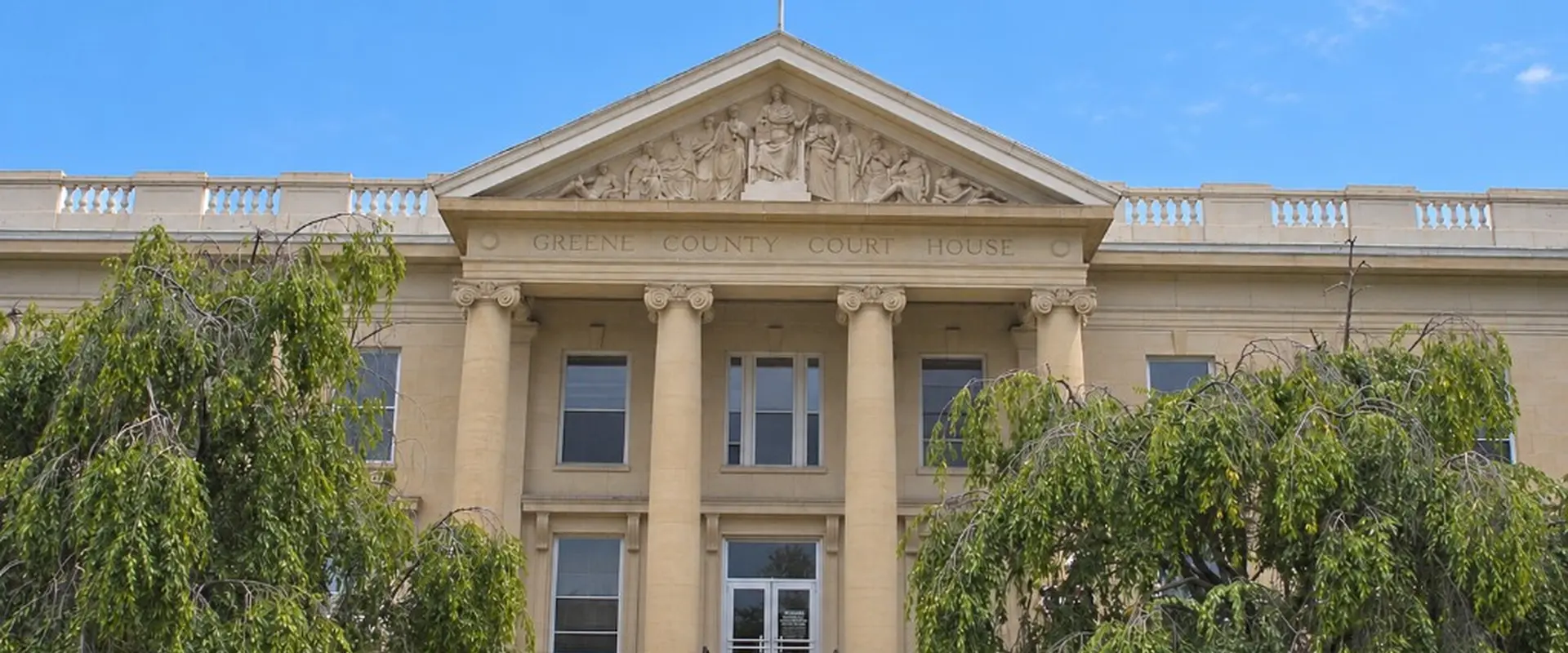
Greene County Courts, NY *
Greene County, popularly known as the "Great Northern Catskills", is located in the southeastern central region of New York State. The County was established on March 25, 1800, and has its county seat at Catskills. The Greene County court system is part of the 3rd Judicial District of the New York State Unified Court System. The county operates under a multi-tiered hierarchy where legal jurisdiction is distributed between the centralized courts and local municipal courts.
The people of Greene and its surrounding areas depend on the county's court system to solve their daily legal matters, disputes, and to protect and uphold their constitutional rights. Residents and non-residents visit the Greene County Courts for legal matters, to search court records, attend hearings and jury duty, and to file and answer lawsuits.
Overview of the Greene County Court System
The Greene County Court System works under the broader New York State Unified Court System. The Greene County courts are part of the 3rd Judicial District, which spans across the counties of Rensselaer, Sullivan, Albany, Ulster, Schoharie, and Columbia.
The Court System is divided into 4 County-Level and State Courts and 16 local municipal courts. The County-Level and State Courts include the Supreme Court, County Court, Family Courts, and Surrogate Courts. The courts are responsible for solving major legal cases within their jurisdiction. The local municipal courts are generally referred to as "Town and Village Justice Courts" or plainly as "Justice Courts." The Justice Courts are spread across towns such as Cairo, Windham, and Athens and have limited jurisdiction within town limits. The County Courts hear appeals from the Justice Courts, and the Supreme Court manages appeals from the County Court.
The County Clerk in Greene County handles major administrative activities of the Greene County courts. Besides being the custodian for court records, the clerk is responsible for case files, access to court records, and jury summons. Court records are public in Greene County and available for members of the public to copy and inspect.
Types of Courts in Greene County, New York
There are several courts in Greene County, each with authority to hear different cases. The two main categories of Greene County Courts are: County-Level and State Courts, and local Justice Courts.
 Supreme Court
The Greene County Supreme Court is the highest trial-level court within the Greene County Court System. The Supreme Court has unlimited and general jurisdiction over major civil cases in Greene County, including:
- Contested divorces
- Legal separations
- Annulments
- High-value civil claims
- medical malpractice claims
- Breach-of-contract
- Equity and injunctions
- Real estate litigation
- Commercial and residential foreclosure actions
- Boundary claims
- Eminent domain battles
Despite its name, "Supreme", the Supreme Court is a Statewide trial court and not just a high-level or appellate court. The Greene County Supreme Court handles high-value civil claims where the amount involved is more than $25,000.
 County Court
The Greene County Court is responsible for intermediate criminal cases in Greene County. The court also handles civil cases, but with limited jurisdiction. Because it's a multibench court, the judges of the County Court can preside over cases of the Surrogates Court and Family Court. The jurisdiction of Greene County includes:
- Criminal cases
- Lower-level misdemeanor appeals
- Grand jury indictments
- Civil cases disputed below $25,000
- Reviewing, granting, or revoking firearm and concealed carry permits
The Greene County Court is responsible for serious felony cases such as homicide, burglary, felony DWI, and grand larceny. It also handles managing misdemeanors and minor offenses along with the Town and Village Courts.
 Family Court
Family matters concerning children, families, and domestic relations are solely the responsibility of the Greene County Family Court. Although the Family Court has Jurisdiction over major family cases, it doesn't have the power to terminate a marriage. This is the role of the Supreme Courts. The Family Court has jurisdiction over:
- Child custody and visitation
- Child support enforcement
- Paternity
- Abuse and neglect
- Family offenses like domestic violence
- Child protective proceedings
- Adoptions & guardianships
- Juvenile justice
The Greene County Family Court upholds legal fatherhood and ensures the well-being of minor children by providing financial help and medical insurance.
 Surrogate's Court
The Greene County Surrogate's Court handles legal matters of the deceased in Greene County. The deceased must be in Greene County at the time of passing for the court to take over their case. The Greene County Surrogate's Court also has jurisdiction over the following:
- Probate proceedings
- Estate administration
- Small estates
- Contested estates
- Guardianships
- Probate of wills
The Greene County Surrogate's Court is responsible for authenticating the testament of the deceased in the county. The court is also the custodian of historical property and ancestral records after 1800.
 Town & Village Justice Courts
The Greene County Town and Village Justice Courts fulfill the state's Unified Court System by handling legal matters at the municipal level.
- Traffic violations
- Vehicle and traffic tickets
- Minor criminal violations
- Small claims up to $3,000
- Landlord and tenant evictions
- Initial arraignments for criminal offenses
The 17 Greene County Town and Village Justice Courts are responsible for municipal, traffic, and small claims matters.
How to Access Greene County Court Records
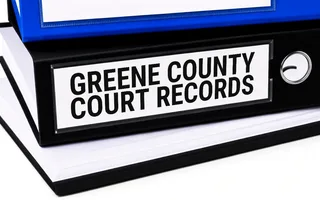
The Greene County Court Clerk is the chief custodian of court records in Greene County. One can access court records online using official and third-party websites. Alternatively, they can access court records in person at the County Clerk's Office.
 Online Access
Official Greene County Court records are available through multiple platforms. Court records for specific cases are available on their respective official websites. For example, court records from the Supreme and County Courts, including civil cases, judgments, liens, and real property, are available through the Greene County Records Center. Active civil lawsuits are available through the New York State Courts Electronic Filing. For criminal cases, criminal filings, tracking pending misdemeanor or felony dockets, one can use the WebCrims Portal. Lastly, wills and surrogate court records are available through the New York WebSurrogate Portal.
 Alternative Online Options
The various official platforms for searching court records are specific, meaning one has to visit several platforms for court records, which can be time-consuming. That's where third-party finders like CourtCaseFinder come in. Such platforms allow users to search for court records from multiple jurisdictions, whether civil, criminal, surrogate, or family, on one platform. This is possible thanks to their ability to aggregate data and pull records from multiple municipalities, counties, and states.
 In-Person Requests
In Greene County, court records are available by jurisdiction. To access court records in person, one must visit the relevant office with jurisdiction over the case. The County Clerk's Office is responsible for all court records from the county and supreme court for lawsuits, judgments, liens, foreclosures, divorce records, and property deeds. Wills and Probates are available at the Surrogate's Court Clerk's Office. Criminal court records are available at the court where the case was heard.
 Archived Records
Archived court records of Greene County Courts are available in person at the respective courthouse and online through relevant search platforms. Most archived records in the country are stored physically at the Greene County Records Center. However, one cannot just walk in and expect the clerk to provide records. The Office of the Clerk requires a call before making an appointment. The Vedder Research Library also has historical records. To access archived records online, one can search through the FamilySearch Greene County Catalog.
For Attorneys and Legal Professionals
Attorneys and legal professionals filing cases in Greene County must file online through the NYSCEF Portal. The platform gives them specialized access unavailable to the members of the public. Self-litigating individuals can also access court records and track cases through this portal. The Green County Clerk is the custodian of court records; therefore, attorneys who require active records, restricted or archived records can access them through the clerk.
Additionally, visiting attorneys should familiarize themselves with the Greene County court system, including filing procedures, courthouse schedules, motion practices, and judicial assignment rules. They can also file a case online or in person at the clerk's office. They are required to monitor hearing dates, review dockets, filings, judgments, and court calendars, which are also available online and in person at the Clerk's office. If one is unsure, they can confirm with the clerk's office to avoid delays and confusion and have a seamless experience. Bringing identification information, such as case number, filing year, and party names, will help speed up the process.
How to File a Case in Greene County
Individuals who want to start a legal case in Greene County should understand how to file a case. One can file a case in Greene County through online portals or in person at the respective Clerk's Office. During filing, they should file with the correct court and complete the appropriate forms to file successfully.
Step 1: Choose the Correct Court
The first step toward filing a case in Greene County is to identify the court with jurisdiction. This is crucial because there are several courts in the county, and one risks filing in the wrong court, which could lead to delays or the case being thrown out altogether. For large civil lawsuits and divorces, one files at the Supreme Court. Small claims and evictions are filed with Justice Courts, while the Surrogate's Court handles Wills and Probate.
 Step 2: Complete Required Forms
After identifying the correct court, the plaintiff needs to obtain the relevant forms for their lawsuit. Forms are available online or at the counter of the respective court. Self-representing litigants can complete forms online using the New York State Courts DIY Forms Portal. The platform offers official forms and a step-by-step guide on how to complete forms. One is required to complete the forms and supporting documents accurately as instructed.
 Step 3: File the Case
Once the forms are completed, one can file a case. Filing is available in person or online. In-person filing is done at the Clerk's Office by submitting the original documents and copies for stamping. Online filing is available through New York State Courts Electronic Filing. Those filing online should attach supporting documents such as summons, complaints, and petitions.
 Step 4: Pay Filing Fees
Individuals filing a case online are required to pay filing fees before opting out of the NYSCEF platform. This is usually the last step before one submits the case. Alternatively, those filing in person can pay at the County Clerk's Office of the respective county court or justice court. The amount of filing fees varies by case. Filing fees for cases from the multi-bench courts are likely to be higher than those from the justice courts. Sometimes an individual may not be able to afford the filing fees. If that's the case, they must apply for a waiver, also known as the application for Poor Person's Relief.
 Step 5: Serve the Other Party
After one settles the filing fees, they are required to inform the opposing party of the lawsuit. This is called the "Service of the Process" according to the New York Civil Practice Law and Rules. The law doesn't permit the plaintiff to serve the defendant by themselves. The plaintiff can hire a Private Professional Process Server or use the services of the Greene County Sheriff's Civil Division. Additionally, one can use a neutral third party to serve. Whoever serves the opposing party must file the proof of service by completing an official Affidavit of Services. After that, the judge will start the case.
 Step 6: Monitor the Case
Now that the case has been filed, the last crucial step is to monitor the case. Tracking is available online and in person at the respective clerk's office. For Civil and Supreme Court Actions, one can monitor cases through the WebCivil Supreme. Similarly, one can monitor family law cases through NYSCEF. On these platforms, one can set to receive email notifications. For all criminal matters, one can monitor on the WebCrims Portal. During monitoring, one will know when the case has moved to the discovery, mediation, and hearing stage.
Greene County Courthouse Directory
Greene County Courthouse
The multi-bench courts of Greene County are the Supreme Court, Family Court, Surrogate's Court, and County Court, all of which are located within the Greene County Courthouse.
Catskill
Address: 320 Main Street, Catskill, NY 12414
Phone: (518) 625-3160
Websites:
Greene County Town and Village Justice Courts
There are 17 Justice Courts in Greene County. Justice Courts operate from the respective courthouses in their municipalities. The official courthouse directory for these courts is available on the New York Courts platform.
Legal Help and Self-Help Resources
Legal help and self-help resources are available for self-representing litigants who cannot afford an attorney in Greene County. Non-profit organizations and legal aid clinics across Greene County offer Pro Bono services and free self-help advice. Those who need help should seek assistance at an early stage of their case to ensure they receive justice.
 Free Legal Assistance
Low-income individuals dealing with civil cases, such as eviction, debt collection, foreclosure, or child custody disputes, but cannot afford an attorney, can find free professional civil legal aid through theLegal Aid Society of Northeastern New York. LASNNY provides legal representation and legal counsel for various civil matters within the Housing, Family, and Bills categories. The elderly (at least 60 years old) can find help with probate matters such as drafting of wills and testaments, healthcare power of attorney documents, and elder financial abuse cases from Senior Citizen Legal Aid in Greene County.
Local Legal Support
Alternatively, if one needs free legal representation for criminal cases, for example, if they have been arrested, charged with a crime, or are facing a family court petition, they can find aid through the Greene County Public Defender's Office. Individuals can also find self-help resources on the NYS CourtHelp Portal. On this platform, one can find step-by-step legal information and courthouse locators. Also, the platform provides Do-It-Yourself (DIY) forms and glossaries for various civil and family legal matters. Lastly, for individuals who want to avoid the courts completely, they can use mediation and dispute resolution to find a common understanding for their cases through Common Ground.
FAQs
How do I search for a criminal case in Greene County?
In Greene County, an individual can search for active and pending criminal cases using the statewide New York WebCrims Portal. The platform allows them to search by case, docket number, and legal name. They can also search for past criminal convictions through the New York State Criminal History Record Search portal. If a criminal case is unavailable online, one can search in person at the Greene County Clerk's Office.
Are court records public in Greene County?
According to New York State Law, court records in Greene County are considered public information. Meaning members of the public can view, inspect, and download court records. It's only in special cases where the court record contains sensitive, family, and personal matters that the law restricts the public from accessing court records.
Are online court record searches always accurate?
No. Online court record searches aren't 100% accurate. Sometimes one can search records only to find incomplete or out-of-date court records. Sometimes this is due to human error and clerical mistakes, such as wrong spellings or court names. Inaccuracy could also arise from data entry and processing delays from the Clerk's Office, since new cases take time before they are digitized.
When is it helpful to use a third-party records finder?
In cases where one wants to run a broad background search, using a third-party record finder platform such as CourtCaseFinder is recommended. Unlike official record-finder portals that are more specific and only pull information from a single locality, third-party finders allow one to search multiple counties and states. Third-party platforms are also helpful when one doesn't have case information, such as the court of jurisdiction.
What do I do if I can't find my case online?
If an individual cannot find their case online, it doesn't mean that the case doesn't exist. Most of the time, it's because of one of three reasons: clerical errors, new cases, or upload delays at the clerk's office. Alternatively, it could be a restricted or sealed case that is not available to members of the public. One should confirm if they are searching correctly.
Can I save or download records for future reference?
Yes. One can absolutely save a court record for future reference. Court records are available through official state portals and third-party platforms. Court records are available for download on the NYSCEF E-Filing Portal and through CourtCaseFinder. One can use records for personal use and research. Non-original copies are not legally binding and cannot be used in a case.
Other Counties in New York
- Albany
- Allegany
- Bronx
- Broome
- Cattaraugus
- Cayuga
- Chautauqua
- Chemung
- Chenango
- Clinton
- Columbia
- Cortland
- Delaware
- Dutchess
- Erie
- Essex
- Franklin
- Fulton
- Genesee
- Hamilton
- Herkimer
- Jefferson
- Kings
- Lewis
- Livingston
- Madison
- Monroe
- Montgomery
- Nassau
- New York
- Niagara
- Oneida
- Onondaga
- Ontario
- Orange
- Orleans
- Oswego
- Otsego
- Putnam
- Queens
- Rensselaer
- Richmond
- Rockland
- Saint Lawrence
- Saratoga
- Schenectady
- Schoharie
- Schuyler
- Seneca
- Steuben
- Suffolk
- Sullivan
- Tioga
- Tompkins
- Ulster
- Warren
- Washington
- Wayne
- Westchester
- Wyoming
- Yates
Table of Contents