Table of Contents
Cortland County Courts, NY *

Named after Pierre Van Corlandt, New York's first lieutenant governor, Cortland County traces its roots to the splitting of Onondaga County in 1808. The first courts included the Court of Common Pleas, which handled civil disputes between private citizens. Today, Cortland County courts operate within New York's 6th Judicial District and hear criminal, civil, and family law cases at all levels.
The residents of Cortland County depend on the courts to resolve legal disputes, find solutions to legal questions, and defend their individual rights. Access to court records is equally important to citizens and business entities. These records are kept by the courts and are useful for researching case history, running background checks, validating legal standing, and upholding rulings.
Overview of the Cortland County Court System
The Cortland County courts operate under the New York State Unified Court System. This structured system comprises three tiers of courts that handle different types of legal issues. It includes the Court of Appeals, Appellate Divisions, Supreme Courts, County Courts, and Specialized Courts. Lower-level local courts include City, Town, and Village Courts. Unlike in other states and the federal system, the Court of Appeals is the state's highest court and the court of last resort, while the Supreme Court is the main trial court.
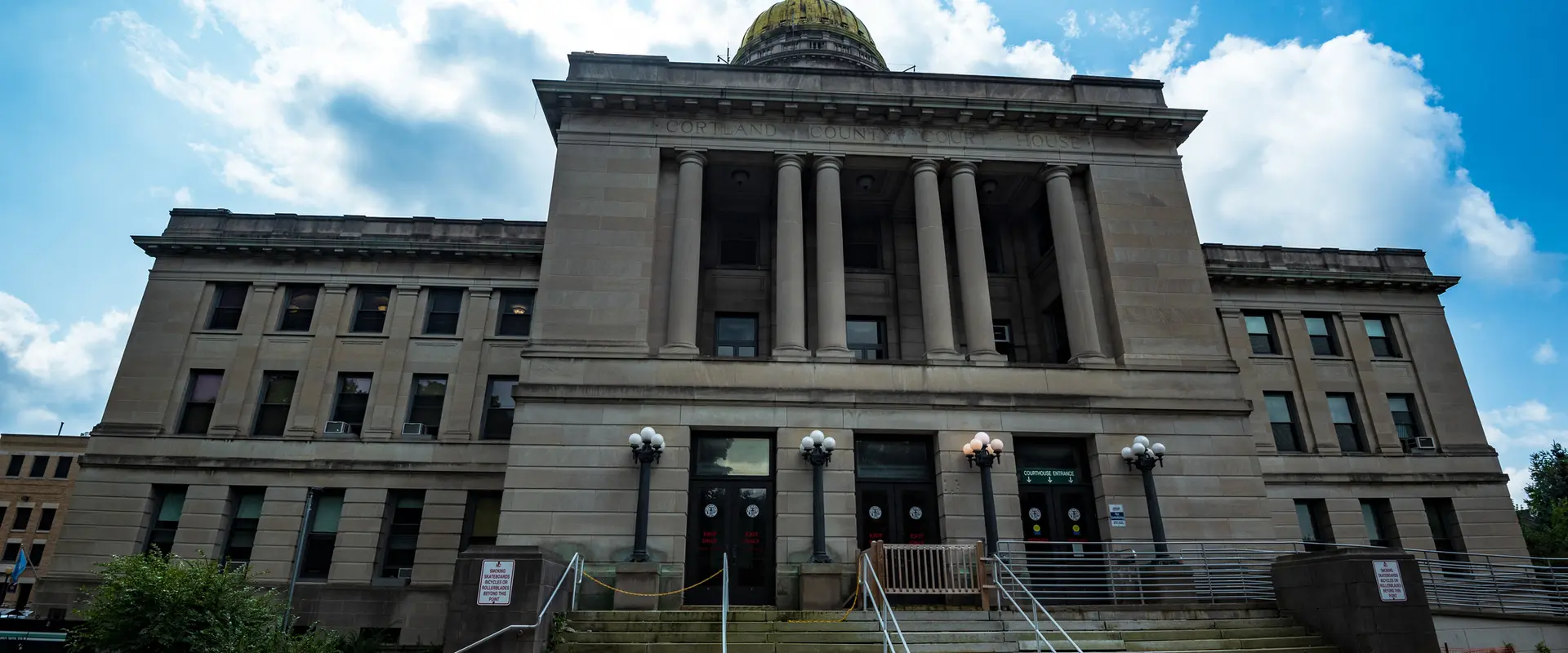
Cortland County Courthouse in Cortland City houses the Supreme Court, the County Court, the Family Court, and the Surrogate's Court. The City Court and the Town Courts operate from different locations, providing access to justice from anywhere across the county. Residents can visit the courts to retrieve court records, file cases, and resolve legal matters.
Types of Courts in Cortland County, New York
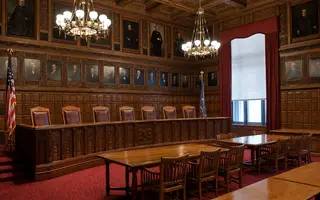
Cortland County has a number of state, citywide, and specialized trial courts. Residents visit these courts to obtain records, file cases, and resolve legal disputes. Each court has specific responsibilities for different types of cases. Whether filing case documents, retrieving records, or attending hearings, understanding each court's responsibilities can help litigants save time and resources.
 Supreme Court
The Cortland County Supreme Court is the highest trial court and handles civil disputes in which the amount in controversy exceeds $25,000.
Primary location: Cortland County Courthouse
Cases heard here include:
- High-value civil matters
- Divorce cases
- Guardianship
- Election law
Unlike in other Federal systems, the Courtland County Supreme Court is not a court of last resort but rather a trial court. It hears high-level civil lawsuits involving monetary limits outside the authority of lower county or town courts. The Supreme Court has exclusive jurisdiction to grant divorces and handle separation and annulment proceedings.
 County Court
The Courtland County Court is a constitutional court within the New York State Unified Court System.
It hears and decides the following cases:
- Civil lawsuits of up to $25,000
- Felony criminal charges
- Some appeals from lower courts
Each county in New York State, except for the five New York City counties, has a County Court. The Courtland County Court has exclusive authority over serious criminal offenses. It may also hear minor misdemeanor cases assigned to it by the local courts. Since the County Court operates at a higher level, it can hear appeals from lower courts.
 Family Court
The Cortland County Family Court is a specialized court with exclusive authority to hear family law matters except divorce cases.
Legal matters handled include:
- Child support and custody
- Child abuse and neglect
- Domestic violence
- Juvenile delinquency
- Adoption and guardianship
- Parental rights
- Foster care approval and review
This specialized court handles legal disputes involving children and families, prioritizing the best interests of the child when passing judgment. A judge hears and decides all family court cases rather than a jury. Since most family cases involve minors, court records from this court remain sealed or restricted from the public.
 Surrogate's Court
The Cortland County Surrogate's Court is another specialized court that deals with cases involving life transitions.
Legal matters handled include:
- Estate administration
- Will validation
- Adoption proceedings
- Guardianship
- Other probate matters
Under the New York State Unified Court System, each of New York's 62 counties has at least one Surrogate's Court. The court handles legal disputes concerning individuals who have passed away. It focuses on executing a decedent's wishes in accordance with their Will or Testament. Court records found here relate to probate and estate matters, adoptions, and guardianships.
 City Court
Located in downtown Cortland, the Cortland City Court deals with minor civil, criminal, and traffic offenses.
This court handles:
- Preliminary felony arraignments
- Misdemeanors
- Traffic violations within city limits
- Civil cases up to $15,000
- Small claims up to $10,000
- Landlord-tenant disputes
The Cortland City Court has jurisdiction over lesser offenses affecting local communities. This court is the first stop for felony arraignments before their transfer to the County Court. It also hears traffic infraction cases issued by the Cortland Police Department and handles housing disputes. The City Court also runs an adult drug treatment program for offenders with substance use disorders. Court schedules vary by case, with most sessions held on Monday, Wednesday, and Friday.
 Town & Village Justice Courts
Cortland County has 15 Town Courts spread throughout the county. These courts handle minor violations, mostly punishable by a fine.
Cases handled by these courts include:
- Small claims up to $3,000
- Traffic infractions
- Local code violations
- Minor misdemeanors
- Housing disputes (Evictions)
- Preliminary felony hearings
Also known as Justice Courts, these courts operate at a local level. They are spread across several towns in the county. While most town courts hold two or three monthly sessions, some have extremely busy caseloads and hold multiple weekly sessions to keep up with demand.
How to Access Cortland County Court Records
Most Cortland County court records are open to the public, unless sealed or restricted. Individuals may want to access Cortland County court records to review trials, research systemic trends, and resolve disputes. There are several ways to access Cortland County court records, including:
 Online Access
Cortland County courts have several online portals where one can search court records from the comfort of their home or office. The type of case determines which online records portal to use. E-filed civil court records are available through the New York State Courts Electronic Filing (NYSCEF) portal, while the eCourts portal provides civil, criminal, and family court records from the Supreme Court, City Court, and Specialized Courts. Online portals are convenient and deliver almost instant results. One can search for court records and case files by case or summons number, party name, attorney name, and even filing date.
 Alternative Online Options
Since Cortland County courts maintain multiple online portals, using these tools can sometimes be confusing. Here is where third-party portals like CourtCaseFinder come into play. This site consolidates court records from multiple courts throughout the state into a single repository. Litigants can search for civil, criminal, divorce, and even traffic records. The platform delivers instant results provided that the court record is available online. One can search by name, address, email, or phone number.
 In-Person Requests
Some court records may not be available through the public portals. If this is the case, one will need to go to the County Clerk's Office in person to view these records. The County Clerk maintains court records for all cases. While viewing records on site is free, certification and reproduction charges may apply.
 Archived Records
The County Clerk keeps certain court records for a designated retention period. Archived records may not be searchable online. The good news is that one can obtain historical court records from the Historical Society of the New York Courts. The organization preserves legal records dating back to 1794. Non-digitized archival court records from 1808 to 1990 are available at the County Clerk's Office.
The best way to ensure accurate, up-to-date results when searching court records is to use a combination of online searches, third-party record finders, and in-person requests.
For Attorneys and Legal Professionals
Attorneys and legal professionals seeking court records from the Cortland County courts can access them through the official New York State Courts Electronic Filing (NYSCEF) portal or the eCourts website. They provide access to e-filed cases and scanned court records, allowing users to research case precedents, review past hearings, and see upcoming court schedules.
Another great place to get court records is the County Clerk's Office. Attorneys may submit a request to the County Clerk directly for the records they need. For more accurate results, they should include relevant details, such as the case or summons number, the party's name, and the filing date. There may be fees for copying, certification, and extensive research.
How to File a Case in Cortland County
While filing a case may seem like a simple process, many litigants often falter at the first hurdle. Filing demands keen attention to detail to prevent frustrating delays and possible case dismissals. One needs to know what to file, where to file it, and the procedural rules.
Step 1: Choose the Correct Court
Since Cortland County has multiple courts with distinct responsibilities, identifying the appropriate court in which to file a case is critical. The Supreme Court deals with civil cases involving large sums of money, divorce proceedings, and election disputes. The County Court hears criminal cases and civil lawsuits involving smaller sums. Family Courts deal with children and families, while Surrogate's Courts handle probate matters. The lower-tier City and Town Courts handle local code violations, traffic infractions, and small claims.
 Step 2: Complete Required Forms
Cortland County courts offer standardized statewide forms to assist litigants and attorneys in dealing with legal matters. Filers must fill out these forms to submit their case to the court clerk for approval. All completed forms are subject to stringent procedural rules and filing requirements.
 Step 3: File the Case
Most cases in Cortland County require attorneys to file electronically. Unrepresented litigants are exempt from this requirement. Electronic filing requires one to register for a New York State Courts Electronic Filing (NYSCEF) account. Once logged in, filers should fill in the provided fields and upload their documents for review. The platform has free training sessions on e-filing procedures and rules. For in-person filings, filers may deliver their documents to the County Clerk's office for approval.
 Step 4: Pay Filing Fees
While using the NYSCEF system is free, filers must pay the statutory court filing fees. The precise amount depends on the court, type of case, and claim amount. If one cannot afford to pay the filing fees and other court costs, they can apply for a fee waiver by completing the Poor Person Affidavit and Order form. It must describe the applicant's income and financial status that are pertinent to a waiver.
 Step 5: Serve the Other Party
A case cannot proceed if the complainant has not served the other party. Service of process lets the other party know that they have a case to answer. Improper service can delay or derail the entire case. One of the most reliable ways of serving the defendant is via the local Sheriff's Office. With the defendant's consent, litigants can use certified mail or hire a private process server. Upon serving the papers, the server must file an affidavit with the court as proof of service.
 Step 6: Monitor the Case
Tracking a case protects the litigant's legal rights and helps prevent missed deadlines and potential penalties. If one fails to appear in court on the scheduled date, the judge can pass a default judgment or issue an arrest warrant. Parties to a case in Cortland County can use the eTrack Service to monitor active civil cases from the Supreme Court.
Cortland County Courthouse Directory
The highest trial courts operate from the main Cortland Courthouse, while the rest provide legal services in different cities and towns across the county. Key legal locations in Cortland County include:
Cortland County Courthouse Courts
The Cortland County Courthouse houses the Supreme Court, the County Court, the Family Court, and the Surrogate's Court.
Cortland
Address: 46 Greenbush Street, Cortland, NY, 13045
Supreme Court: (607) 218-3320
County Court: (607) 218-3320
Family Court: (607) 218-3325
Surrogate's Court: (607) 218-3335
Cortland City Court
Handles minor offenses and is the first stop for felony hearings before they go to the County Court.
Cortland
Address: 25 Court Street, Cortland, NY, 13045
Phone: (607) 218-3300
Website: Cortland City Court
Town & Village Courts
Cortland County has 15 town and village courts that serve local communities in the region. These courts hear minor local disputes that are mostly punishable by a fine or community service.
Website: Town & Village Courts
Legal Help and Self-Help Resources
A number of legal and self-help resources are available to help self-represented residents who cannot afford a private attorney. These resources provide helpful information on court procedures, legal assistance, and lawyer referral services.
 Free Legal Assistance
Legal representation can be expensive for low-income earners seeking justice. Individuals who cannot afford an attorney can turn to Legal Services of Central New York (LSCNY) for free legal assistance in housing, health, economic, and other civil cases. The YWCA Aid to Victims of Violence provides legal and financial assistance to victims of violence. Those facing criminal charges can contact the Cortland County Public Defender's Office for free legal representation.
Local Legal Support
The Cortland County Courthouse has a Help Center where unrepresented individuals can receive free legal support and procedural information. The statewide CourtHelp portal also provides information to help individuals manage their legal matters. Litigants in need of local legal support can contact the County Clerk. While the clerk does not give legal advice, they can help by providing procedural guidance and legal forms for various legal matters.
FAQs
Can one access Cortland County court records from a mobile device?
One can access Courtland County court records on a mobile device. The courts provide mobile-friendly search portals with an optimized design for easy access across all devices. Requesters can also use the mobile-friendly eCourts portal to access civil and criminal records, track cases, and view upcoming schedules on a mobile browser.
What self-help resources do Cortland County courts provide?
Cortland County courts offer several free self-help resources to unrepresented litigants. Self-represented individuals can access the 6th Judicial District Help Center for information on court operations, filing procedures, and legal forms. The courts also provide guided DIY forms to help litigants prepare court papers for their case. The Cortland County Law Library is an excellent resource for legal research materials and physical books.
Where can one file a complaint against a judge or court employee?
One can file a complaint against a judge by contacting the administrative office for the court the judge presides over. Alternatively, complainants can contact the Managing Inspector General for Bias Matters at 1-877-236-3242 toll-free. Cases of misconduct should be directed to the State Commission on Judicial Conduct. For complaints against a court employee, one should contact the Chief Clerk of the Court or the Office of the Inspector General to investigate the claims.
How long does it take to get records in Cortland County?
Online record searches are incredibly efficient and deliver instant results. The requester only needs to enter the case or summons number, the party name, and other relevant details to retrieve the records they need. In-person requests take a few hours to a few business days, depending on the records needed.
What are the benefits of third-party record finders?
Third-party record finders like CourtCaseFinder consolidate court records from multiple sources across the state for easy accessibility. These platforms simplify the search process by providing a single searchable interface. They also provide immediate access and deliver instant results, saving time. Users can search by different criteria, such as name, case number, phone number, address, and even email.
What can one do if they can't find their case online?
If one cannot find their case online, they should check if it is sealed or restricted. Cases related to minors, trade secrets, ongoing criminal investigations, and victim protection are not searchable online. One must obtain a court order to access these case files. Sometimes, the case might be under a different category. Requesters should confirm the correct category to find their case. It is also possible that the case has not been uploaded into the system yet.
Other Counties in New York
- Albany
- Allegany
- Bronx
- Broome
- Cattaraugus
- Cayuga
- Chautauqua
- Chemung
- Chenango
- Clinton
- Columbia
- Delaware
- Dutchess
- Erie
- Essex
- Franklin
- Fulton
- Genesee
- Greene
- Hamilton
- Herkimer
- Jefferson
- Kings
- Lewis
- Livingston
- Madison
- Monroe
- Montgomery
- Nassau
- New York
- Niagara
- Oneida
- Onondaga
- Ontario
- Orange
- Orleans
- Oswego
- Otsego
- Putnam
- Queens
- Rensselaer
- Richmond
- Rockland
- Saint Lawrence
- Saratoga
- Schenectady
- Schoharie
- Schuyler
- Seneca
- Steuben
- Suffolk
- Sullivan
- Tioga
- Tompkins
- Ulster
- Warren
- Washington
- Wayne
- Westchester
- Wyoming
- Yates
Table of Contents