Table of Contents
Schuyler County Courts, NY *
Schuyler County has different courts that work together to ensure all legal matters are well handled, from minor traffic violations to serious felony prosecutions. New York has one of the most complex court structures in the United States. It has the Supreme Court and County Court at the top for trial matters involving serious civil and felony criminal issues, and at the bottom of the structure are the City, Town, and Village courts that handle minor issues locally.
Also, the Family Court handles family-related issues, and the Surrogate Court handles probate matters. Having some basic knowledge of the courts, the filing process, and how to get legal help even without a lawyer is a step towards a seamless court process.
Overview of the Schuyler County Court System
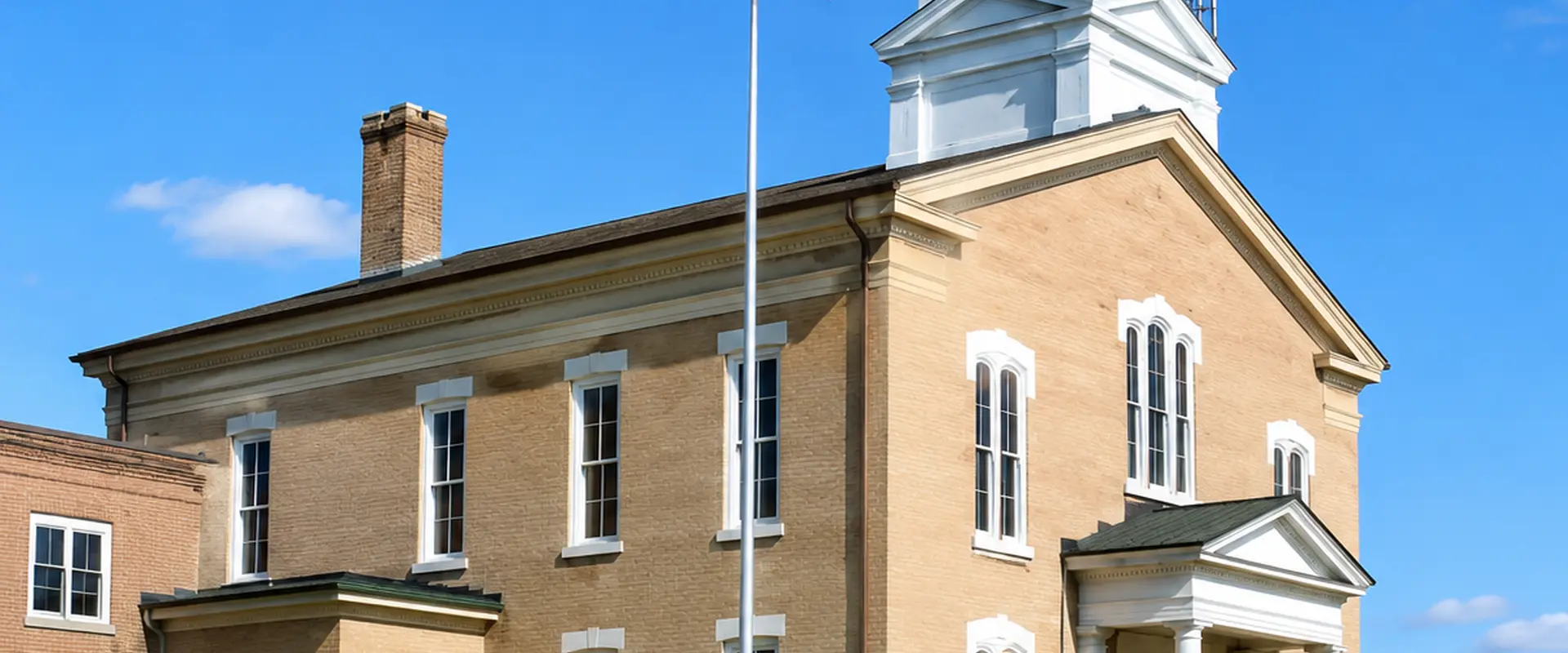
Schuyler County is one of the ten counties in the Sixth Judicial District of the New York Unified Court, which includes: Broome, Chemung, Chenango, Cortland, Delaware, Madison, Otsego, Tioga, and Tompkins counties. Within the District, each county, including Schuyler, has its own courts that handle trial matters in the county. Due to Schuyler County's small population and size, most of its courts are housed at the Schuyler County Courthouse Complex, making it easy for people to locate a court when needed.
Beyond the main courthouse, the county ensures its people receive the justice they deserve by strategically placing town and village courts close to them. Those with minor daily legal issues do not have to visit the main courthouse; they can take their matter to the nearest town or village court and be heard.
Types of Courts in Schuyler County, New York
Like any other county in New York, Schuyler has different courts at different levels with no overlapping responsibilities or functions. Their jurisdiction mainly depends on the type of case, the magnitude of the matter, and the geographical location. The section describes how each court functions.
Supreme Court
In New York, the Supreme Court is the highest trial court with general jurisdiction. The court has the authority to hear any civil or criminal matter not assigned to another court, but it primarily focuses on high-magnitude civil matters. Specifically, the court handles:
- Civil matters of disputes that exceed $25,000
- Divorce proceedings
- Injunctions or court orders to stop another party from doing something
- Appeals from the lower court
The Supreme Court is the only court with authority to make divorce decisions, as it has exclusive jurisdiction over divorce and matrimonial matters, which is easily confused with Family Court matters. Because of this, people facing both custody and divorce issues may be forced to deal with two courts, or the Supreme Court may incorporate the custody matter into the divorce case.
Primary Location: Schuyler County Courthouse
 County Court
The County Court in Schuyler County ranks second among the court structures. The people who end up in this court are those with serious felony cases, and it is the court with exclusive jurisdiction over such cases. It handles:
- Felony criminal cases
- Civil matters of monetary value between $0 and $25,000
- Mosdemeanors
- Appeals from town and village courts
The County Court may handle certain unique cases, such as those that involve drug addiction, as well as other specialized dockets, provided it has judicial resources and the caseload ranges within its jurisdiction. Schuyler County has a Drug Treatment Court under the County Court that offers eligible defendants who have a substance use disorder a supervised treatment program instead of incarceration.
Primary Location: Schuyler County Courthouse
 Family Court
If someone faces legal challenges involving families and children, the Family Court is the right place to seek intervention. It handles:
- Child custody and visitation disputes
- Child support proceedings
- Domestic violence
- Juvenile delinquency
- Foster care and adoption
- Child abuse and neglect
In Schuyler County, the County Court and Family Court share the same courthouse and judge. As mentioned before, parents who are divorcing and have custody matters take their case to the Supreme Court.
Primary Location: Schuyler County Courthouse
 Surrogate's Court
The Surrogate's Court is responsible for distributing the estates of deceased people. The court assists in appointing administrators whose primary responsibility is to assist with the distribution process, even when there is no will. Specifically, the court handles:
- Probate of wills
- Estates administration
- Adoption and guardianship
The filing fee for the Surrogate's Court depends on the size of the probate. Those of high value have a higher fee than those of low value. Attorneys who handle probate matters should confirm the court's current fee schedule before proceeding.
Primary Location: Schuyler County Courthouse
 Town & Village Justice Courts
Unlike other counties in New York, Schuyler does not have a city court. People depend on town and village courts to handle legal issues at the local level. They have jurisdiction over:
- Traffic violation
- Vehicle and traffic law infractions
- Misdemeanors
- Small claim matters
- Preliminary hearing of felony issues before getting to the County Court
The courts operate independently, with an elected judge who presides over all matters. The visiting hours vary depending on the specific court. The traffic issues are heard in a specific town or village court serving the geographic area where the incident occurred.
Primary Location: Town and Village Courts throughout Schuyler County
How to Access Schuyler County Court Records
Like other counties in New York, Schuyler ensures their court records are easily accessible to the public. As much as the citizens' ability to access them freely, there are a few exceptions that include those involving minors, juvenile delinquency cases, family proceedings, and those sealed and marked as confidential.
 Online Access
Schuyler County offers several options for accessing court records, including eCourts. The portal offers various options, each granting access to different types of courts. WebCrims provides access to criminal records; WebCivil Supreme provides access to civil matters in the Supreme Court; WebCivil Local provides access to the local courts; WebFamily provides information on family court cases; and WebSurrogate provides access to probate issues.
Also, citizens can use other sites like New York State Courts Electronic Filing (NYSCEF), which can help access files for civil cases filed in the Supreme Court, as it is used to update case status after a petition is filed.
 Alternative Online Options
Using a third-party tool like CourtCaseFinder also goes a long way toward helping anyone who wishes to search Schuyler County court records. This tool aggregates information from various sources, including multiple government portals, regardless of the court level at which the case was filed, heard, or determined. Because of this capability, people can search court records even when they are not sure which court handled the matter. Though the tools conduct thorough research, it is important to verify the most recent information with court websites.
 In-Person Requests
This method works best when an individual is looking for certified documents, which are typically unavailable online. In Schuyler County, these documents are maintained by the County Clerk, who can provide records upon request and may share them for a modest fee. It is worth noting that separate clerk offices handle these records in the Surrogate's Court and Family Court.
Usually, people are advised to contact the Clerk's Office before visiting to avoid the inconvenience of waiting for office staff to locate the document. Criminal case records cost $10 per name, and requests must be submitted in writing. People must pay $5 for certified copies. When residents provide as much information about the case as possible, such as the party name, case number, and the date the case was filed, it will make the search process easier for staff.
 Archived Records
Depending on how long the record has existed and the type of case in question, older records are stored either at the courthouse or transferred to the New York State Archives in Albany. Also, cases filed in the Surrogate's Court are maintained permanently, while small claims cases in the Town and Village Courts are not retained for long. Whenever residents or researchers are trying to access estate records, archivists suggest that people make an appointment and give office staff some lead time for the retrieval of the records. When visiting the archives, it is critical to carry as much case information as possible. Things like the party's name, case number, citation number, and the date a case was filed will make the process easier and faster.
For Attorneys and Legal Professionals
Because attorneys operate within the court system each day, there are rules and standards governing courtroom procedures at the state, county, and local levels. Most courts in Schuyler County follow the procedures from the New York State Bar Association (NYSBA). While the Bar Association is not the licensing body for attorneys in the state, because the court system does that, its guidance is followed by most courts in New York. While practicing in Schuyler County from out of the county, it is important to ask the Court Clerk for guidance.
To file civil cases, the Supreme Court requires submission via New York State Courts Electronic Filing (NYSCEF). Through this platform, they can easily access real-time information on proceedings upon registration. With the support of the Sixth Judicial District, the administrative unit, there are legal professionals on hand to guide court proceedings.
Also, lawyers and legal professionals can track their case files via eTrack alerts on the eCourts platforms. Whenever case information is updated, they can receive an email notification on the matter, ensuring they are always on top of their game even without manually visiting the portal.
How to File a Case in Schuyler County
To avoid mistakes that could weaken a case's chances of success, it is important to have sufficient knowledge of how to file a case in Schuyler County.
 Step 1: Choose the Correct Court
Choosing the right court determines whether the case will be accepted or not. Serious civil matters with claims of $25,000 or more are handled in the Supreme Court, while serious felony matters are taken to the County Court. The minor issues are handled at the Town and Village Courts. For family matters and probate issues, the Family Court and Surrogate's Court handle them respectively. Choosing the right location to file the case reduces the chances of dismissal.
 Step 2: Complete Required Forms
Usually, New York has different standardized forms for each case type. They are accessible online through the NY Courts forms library or physically at the court offices. Accuracy in choosing the correct court and filling out the forms is key. Another place to get forms for Supreme Court and County Court Cases is New York State Courts Electronic Filing (NYSCEF) when filing online. Filing a small claims case requires different forms than those used by justice courts. A small mistake can lead to a case dismissal or delays, denying the plaintiff justice. The court clerks are always available to help citizens who are unsure which forms to use to locate the correct ones.
 Step 3: File the Case
Once the forms are completed appropriately, be sure to file them in the prescribed format. For instance, one may present them at the respective clerk's desk, where they will be stamped appropriately. Otherwise, for a civil case being filed at the Supreme Court and County Court, use the New York State Courts Electronic Filing (NYSCEF). Litigants representing themselves can use the platform, but it is not mandatory, unlike for lawyers.
 Step 4: Pay Filing Fees
The relevant fee is paid at the court where the case is filed. The case type and the court determine the fee that one should pay. The cases filed in the Supreme Court and County courts have higher fees than those in the lower courts. Confirming the amount can be done through the Schuyler Clerk Fee Schedule and the Surrogate's Court fees online. People who may not be able to afford the fee are advised to apply for a waiver by submitting the Application to Waive Court Costs, Fees, and Expenses and having it approved. Once the waiver is approved by a judge, the court fees can be waived.
 Step 5: Serve the Other Party
When one files a case, it is mandatory to inform the other party of the lawsuit before proceeding to the next step. The way it is done depends on the court, but most courts in the state require that the documents be delivered by the Schuyler Sheriff's Department or a process server certified by the state. For the Supreme Court, a process server can deliver the documents. Service must be made within a specific time frame, after which an Affidavit of Service is prepared by the person who served the papers and filed with the court.
 Step 6: Monitor the Case
Finally, having taken every step correctly, the court schedules the appearance dates, which parties must strictly adhere to. Noncompliance may lead to a default judgment, dismissal, or an arrest warrant. Use tools such as eCourts and New York State Courts Electronic Filing (NYSCEF) in tracking the case. People who are unfamiliar with the electronic system can always ask a court clerk for assistance to monitor their case.
Schuyler County Courthouse Directory
While the trial courts are clustered in one place, Schuyler County has other local courts that residents may find difficult to locate. The directory below is comprehensive, directing users to court venues and phone contacts.
Supreme Court Chambers (6th Judicial District)
Hosts the Supreme Court in Schuyler County, where serious civil matters are handled
Elmira
Address: 203-209 William Street, P.O. Box 588, Elmira, NY 14902-0588
Phone: (607) 873-9461
Website: Schuyler County Supreme Court
Schuyler County Courthouse
Hosts the County, Family, and Surrogate's Courts, making it the main place where people get justice beyond the local issues.
Watkins Glen
Address: 105 9th Street, Unit 35, Watkins Glen, NY 14891
County Court: (607) 228-3350
Family Court: (607) 228-3352
Surrogate's Court: (607) 228-3351
Town and Village Courts
Ensure people get legal services at the local level. The courts are located in different geographic locations, with each one having its own website and phone number.
Website: Schuyler Town and Village Courts
Legal Help and Self-Help Resources
Some people are represented by legal professionals in court. However, others, without that privilege, find themselves in risky positions of missing justice due to the complexities of the ongoing proceedings. Therefore, getting legal assistance free or at a reduced cost goes a long way to ensure that all citizens of Schuyler County receive justice.
 Free Legal Assistance
In Schuyler County, some organizations provide free legal assistance in civil cases to individuals with very low or no income. For instance, the Legal Assistance of Western New York assists people with matters such as family law, housing, consumer issues, domestic violence, and more. Also, the state of New York provides a Help Center with plain-language forms and instructions to help self-represented litigants. Lastly, the Prisoners' Legal Service of New York serves incarcerated people by offering criminal legal assistance and civil rights.
Local Legal Support
The County of Schuyler also has an office for the aging that offers support to older residents with consumer, elder law, employment, and health care legal needs. Also, the Center for Disability Advocacy Rights helps residents with civil rights, elder law, employment, and health care legal needs. Schuyler County is also one of the 44 counties served by the Rural Law Center, which helps people in the less populated counties in New York State with their legal needs, especially with civil cases.
FAQs
How do I look up a court case in Schuyler County?
There are different ways of searching for a criminal case in Cayuga County. Using tools like eCourts and New York State Courts Electronic Filing (NYSCEF) works well and offers certain advantages. For instance, one can track their case progress and updates, ensuring they are always prepared and do not miss a court case.
Does Schuyler County have a city court?
No. Unlike many other New York counties, the Schuyler County court in Watkins Glen is a village and not a city. As a result, the county lacks a city court. The Town and Village Justice Courts take the lead in handling local-level issues such as traffic violations and minor criminal matters.
When is it helpful to use a third-party records finder?
Sometimes, one is uncertain about the specific court or jurisdiction where a case was handled, which makes it challenging to get a record using the courts' mainstream tools. However, by using third-party tools like CourtCaseFinder, it becomes easier to get the record because these tools collect data from multiple sites online, including government portals.
What do I do if I can't find my case online?
Various reasons may make the case unavailable online. Notably, despite not finding it online, one can visit the clerk's desk and request the details of the case. At the respective clerk's office, an individual may request that the personnel give them a copy of the case at a modest fee or ask for the information to be shared with them via email.
Are online court record searches always accurate?
Online court records from official sites like eCourts are always accurate. Uploaded information to such sites usually comes from the clerk, who is the custodian of all court records. As such, they are the first people to get updates whenever there is a change in the status of a case or record. Therefore, it is within their means to ensure the accuracy of online records.
Other Counties in New York
- Albany
- Allegany
- Bronx
- Broome
- Cattaraugus
- Cayuga
- Chautauqua
- Chemung
- Chenango
- Clinton
- Columbia
- Cortland
- Delaware
- Dutchess
- Erie
- Essex
- Franklin
- Fulton
- Genesee
- Greene
- Hamilton
- Herkimer
- Jefferson
- Kings
- Lewis
- Livingston
- Madison
- Monroe
- Montgomery
- Nassau
- New York
- Niagara
- Oneida
- Onondaga
- Ontario
- Orange
- Orleans
- Oswego
- Otsego
- Putnam
- Queens
- Rensselaer
- Richmond
- Rockland
- Saint Lawrence
- Saratoga
- Schenectady
- Schoharie
- Seneca
- Steuben
- Suffolk
- Sullivan
- Tioga
- Tompkins
- Ulster
- Warren
- Washington
- Wayne
- Westchester
- Wyoming
- Yates
Table of Contents